
Kia EV5 vs EV6 Australia: Which Electric SUV Should You Buy in 2026?

Choosing between the Kia EV5 and Kia EV6 in Australia is more complicated than it might initially seem. Both are fully electric SUVs from the same manufacturer, both offer impressive technology, and both provide enough driving range for most Australian motorists. However, they have been designed with noticeably different priorities.
The Kia EV5 is the more traditional family SUV. It has a boxier design, a taller cabin, generous luggage capacity and a significantly lower starting price. The Kia EV6, meanwhile, takes a sportier approach, combining sleek styling, stronger performance, greater driving efficiency and substantially faster charging.
So, is the more expensive Kia EV6 actually worth the extra money? Or does the Kia EV5 offer everything most Australian families need at a more affordable price?
In this comprehensive Kia EV5 vs EV6 Australia comparison, we'll examine their prices, specifications, driving range, battery technology, charging performance, interior dimensions, safety features and running costs to help you decide which electric Kia deserves a place in your driveway.
- Kia EV5 vs EV6 Australia: Quick Comparison
- Kia EV5 vs EV6 Price in Australia
- Kia EV5 vs EV6 Driving Range: Which Goes Further?
- Kia EV5 vs EV6 Charging Speed
- Kia EV5 vs EV6 Dimensions and Exterior Size
- Kia EV5 vs EV6 Boot Space and Practicality
- Kia EV5 vs EV6 Interior Comfort and Technology
- Kia EV5 vs EV6 Performance and Acceleration
- Kia EV5 vs EV6 Battery Technology
- Kia EV5 vs EV6 Electricity Consumption and Running Costs
- Kia EV5 vs EV6 Towing Capacity Australia
- Kia EV5 vs EV6 Safety Features
- Kia EV5 vs EV6 Reliability and Maintenance
- Kia EV5 vs EV6 for Australian Families
- Kia EV5 vs EV6: Pros and Cons
- Which Kia EV5 or EV6 Variant Should You Buy in Australia?
- Kia EV5 vs EV6 Australia: Final Verdict
- Frequently Asked Questions About Kia EV5 vs EV6 Australia
Kia EV5 vs EV6 Australia: Quick Comparison
Before exploring the differences in detail, let's compare the key specifications of the Australian-market models.
| Specification | Kia EV5 | Kia EV6 |
|---|---|---|
| Vehicle type | Mid-size electric SUV | Sporty electric crossover |
| Seating capacity | 5 | 5 |
| Length | 4,615 mm | 4,695 mm |
| Width | 1,875 mm | 1,890 mm |
| Height | 1,715 mm | 1,550 mm |
| Wheelbase | 2,750 mm | 2,900 mm |
| Battery capacity | 60.3–88.1 kWh | 84 kWh |
| Maximum WLTP range | 555 km | 582 km |
| Drivetrain | FWD or AWD | RWD or AWD |
| Maximum power | 230 kW | 478 kW |
| DC charging (10–80%) | Approximately 38 minutes | As little as 18 minutes |
| Boot capacity | 513 litres | 480 litres |
| Maximum boot capacity | 1,714 litres | 1,250 litres |
| Vehicle warranty | 7 years, unlimited km | 7 years, unlimited km |
| Main advantage | Practicality and affordability | Performance and charging |
Specifications are based on Australian-market 2026 models. Figures vary by variant, charging conditions and equipment. The EV6 maximum power figure refers to the performance-focused GT.
The biggest takeaway is that the EV5 isn't simply a cheaper EV6. Despite being slightly shorter, it provides a taller and more practical cargo area. The EV6, on the other hand, makes better use of its longer wheelbase to deliver a more spacious-feeling cabin and a sportier driving experience.
Kia EV5 vs EV6 Price in Australia
For many Australian buyers, pricing will be the deciding factor.
The EV5 is positioned below the EV6 in Kia's electric vehicle range, making it the more accessible option for families transitioning from petrol or hybrid SUVs.
Kia EV5 Price Australia
Indicative advertised 2026 drive-away pricing has included:
| Kia EV5 Variant | Advertised Drive-Away Price |
|---|---|
| EV5 Air Standard Range FWD | $49,990 |
| EV5 Air Long Range FWD | $59,990 |
| EV5 Earth Long Range AWD | $64,990 |
| EV5 GT-Line Long Range AWD | $75,990 |
The EV5 Air Standard Range is particularly appealing to buyers who want an electric SUV without spending more than $50,000.
However, we believe the EV5 Air Long Range offers a stronger combination of range, practicality and everyday usability for households planning to keep the vehicle for several years.
Kia EV6 Price Australia
The updated 2026 EV6 has been offered at the following recommended prices before on-road costs:
| Kia EV6 Variant | Price Before On-Road Costs |
|---|---|
| EV6 Air RWD | $72,660 |
| EV6 GT-Line RWD | $79,660 |
| EV6 GT-Line AWD | $87,660 |
| EV6 GT AWD | $99,660 |
These are reference prices rather than guaranteed current dealer quotes. EV5 promotional drive-away offers and EV6 prices excluding on-road costs are not directly equivalent, and actual costs depend on location, stock and promotions.
Is the Kia EV6 Worth the Extra Money?
That depends entirely on what you expect from your electric SUV.
If you choose the EV5 Air Long Range instead of the EV6 Air, you could save a substantial amount upfront. You also get a larger conventional boot, a taller seating position and a practical interior.
However, the EV6 offers several advantages that may justify its premium:
- Faster DC charging for long-distance travel.
- More sophisticated handling and stronger performance.
- A longer maximum official driving range.
- A sportier appearance and lower driving position.
- Rear-wheel drive in entry-level variants.
- Greater braked towing capability.
Price winner: Kia EV5. It delivers significantly better affordability, particularly in Air Long Range specification.
Specification clarification: the EV5 Standard Range battery capacity is 64.2 kWh, so the EV5 battery range in the comparison table should read 64.2–88.1 kWh.
Kia EV5 vs EV6 Driving Range: Which Goes Further?
Driving range is one of the most important considerations when buying an electric vehicle in Australia.
Although most daily journeys are relatively short, Australians frequently travel considerable distances between cities, particularly on holidays or weekend trips.
Both vehicles offer sufficient range for everyday commuting, but there are meaningful differences between their variants.
Kia EV5 Driving Range Australia
The EV5 offers four configurations.
| Kia EV5 Variant | Battery | WLTP Range |
|---|---|---|
| Air Standard Range FWD | 64.2 kWh | 400 km |
| Air Long Range FWD | 88.1 kWh | 555 km |
| Earth Long Range AWD | 88.1 kWh | 500 km |
| GT-Line Long Range AWD | 88.1 kWh | 470 km |
Interestingly, the EV5 Air Long Range offers the greatest driving range despite being less expensive than the Earth and GT-Line models.
This is primarily because it uses a single electric motor and front-wheel drive.
Adding a second motor and all-wheel drive improves acceleration and traction, but it also increases weight and electricity consumption.
For Australians who regularly travel between Melbourne and regional Victoria, Brisbane and the Gold Coast, or Sydney and Newcastle, the Air Long Range could be the most sensible EV5.
Kia EV6 Driving Range Australia
The 2026 EV6 benefits from an updated 84 kWh battery, providing improved driving range compared with the older 77.4 kWh version.
| Kia EV6 Variant | Battery | WLTP Range |
|---|---|---|
| EV6 Air RWD | 84 kWh | 582 km |
| EV6 GT-Line RWD | 84 kWh | 560 km |
| EV6 GT-Line AWD | 84 kWh | 522 km |
| EV6 GT AWD | 84 kWh | 450 km |
The EV6 Air achieves the highest official driving range of either model at 582 km.
That's 27 km more than the EV5 Air Long Range.
While this isn't an enormous difference, the EV6 has another advantage: its fast-charging technology makes long-distance trips considerably more convenient.
Real-World Range in Australian Conditions
Official WLTP figures are useful for comparing electric vehicles, but they shouldn't be interpreted as guaranteed driving distances.
Actual range depends on:
- Highway speed and driving style.
- Outside temperature and air conditioning use.
- Road gradients and wind conditions.
- Passenger and luggage weight.
- Tyre pressure and wheel size.
- Battery condition.
For example, sustained driving at 110 km/h can reduce range compared with mixed urban driving, particularly in a taller vehicle such as the EV5.
We would recommend allowing a comfortable charging reserve rather than planning every journey around the maximum advertised range.
Range winner: Kia EV6. Its Air variant achieves a slightly longer official range, while its greater highway efficiency and charging performance strengthen its long-distance credentials.
Kia EV5 vs EV6 Charging Speed
Charging speed is arguably the most significant technical difference between these two vehicles.
Both support home AC charging and public DC fast charging, but they use different electrical architectures.
Kia EV5 Charging Speed
The Australian Kia EV5 uses an approximately 400-volt electrical system, although it can connect to compatible 400V and 800V charging infrastructure.
Its maximum DC charging power is approximately 140 kW.
Under suitable conditions, Kia quotes roughly 38 minutes to charge from 10% to 80% using an appropriately powerful public DC charger.
This is perfectly manageable for occasional motorway stops, but it is not especially fast compared with newer electric vehicles.
The EV5 also supports home AC charging, with the charging rate depending on the variant.
The Standard Range model has a 6.6 kW onboard AC charger, while the Long Range models support up to 11 kW on suitable three-phase infrastructure.
Kia EV6 Charging Speed
The Kia EV6 has a major advantage thanks to its 800-volt electrical architecture.
Its charging system is designed to take advantage of high-power DC charging stations.
With a suitable 350 kW-rated charger and ideal battery conditions, the EV6 can charge from approximately 10% to 80% in as little as 18 minutes.
That makes a noticeable difference on longer trips.
Imagine travelling from Sydney to Melbourne and stopping to charge along the Hume Highway.
The EV5 might require around 38 minutes for a comparable 10–80% DC charging session, while the EV6 could complete its session in approximately 18 minutes.
Of course, these are ideal manufacturer figures rather than guaranteed charging times. The charger, battery temperature, initial charge level and charging curve all influence the result.
The EV6's 350 kW figure refers to the charger class used for the quoted time, not a promise that the car continuously draws 350 kW.
Does Faster Charging Matter for Everyday Driving?
Not necessarily.
If you charge at home overnight and rarely drive more than 200 km in a day, the EV5's slower DC charging performance may not affect your ownership experience.
However, for people who frequently travel long distances or depend on public fast chargers, the EV6 becomes considerably more appealing.
Charging winner: Kia EV6, by a substantial margin.
Kia EV5 vs EV6 Dimensions and Exterior Size
Despite their similar market positioning, the EV5 and EV6 have very different proportions.
The EV5 looks more like a conventional mid-size SUV, while the EV6 has the lower roofline and sweeping silhouette of a sporty crossover.
| Dimension | Kia EV5 | Kia EV6 | Difference |
|---|---|---|---|
| Length | 4,615 mm | 4,695 mm | EV6 +80 mm |
| Width | 1,875 mm | 1,890 mm | EV6 +15 mm |
| Height | 1,715 mm | 1,550 mm | EV5 +165 mm |
| Wheelbase | 2,750 mm | 2,900 mm | EV6 +150 mm |
Which Kia Electric SUV Is Easier to Park?
The EV5 is slightly shorter and narrower, which can be useful in suburban garages and shopping centre car parks.
Its upright design also provides excellent outward visibility.
However, it does not automatically have the smaller turning circle, so buyers should compare manoeuvrability during a test drive.
The EV6 is longer and wider, and its lower roofline can make it feel noticeably different when navigating tight spaces.
Parking sensors and camera systems help in both models, although the availability of advanced parking assistance depends on the variant.
Which Has Better Ground Clearance?
The EV5 generally provides more ground clearance, at approximately 175 mm compared with roughly 155–160 mm for the EV6, depending on specification.
That difference can be useful when dealing with steep driveways, uneven rural roads or raised surfaces.
This content may interest you!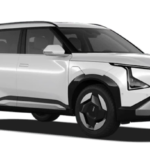 Kia EV5 vs Zeekr 7X Australia: Which Electric SUV Should You Buy?
Neither vehicle is a dedicated off-road SUV, though, and all-wheel drive should not be confused with serious four-wheel-drive capability.
Dimensions winner: Kia EV5 for traditional SUV practicality; Kia EV6 for a lower, sportier profile.
Kia EV5 vs EV6 Boot Space and Practicality
If you frequently carry luggage, sports equipment, prams or shopping, the EV5 has a clear advantage.
Kia EV5 Boot Space
The EV5 provides:
- 513 litres with the rear seats upright.
- Up to 1,714 litres with the rear seats folded.
- A 67-litre front storage compartment.
- A tall, practical luggage area.
The upright tailgate and squarer roofline make the boot particularly convenient for bulky items.
Families with young children will appreciate the additional vertical cargo space when transporting prams, suitcases and other equipment.
Kia EV6 Boot Space
The EV6 offers:
- 480 litres with the rear seats upright.
- Up to 1,250 litres with the rear seats folded.
- Additional front storage of approximately 52 litres in RWD models or 20 litres in AWD variants.
Although the EV6 has a respectable boot, its sloping roofline makes it less accommodating for tall objects.
The difference becomes particularly noticeable when the rear seats are folded.
With 464 litres more maximum rear cargo capacity, the EV5 is the better choice for transporting bulky luggage or furniture.
Boot space winner: Kia EV5.
Kia EV5 vs EV6 Interior Comfort and Technology
Both vehicles feature modern interiors with large digital displays, connected services and advanced driver assistance technology.
However, their cabin designs reflect their different personalities.
Kia EV5 Interior
The EV5 focuses on space, flexibility and comfort.
Its upright seating position makes entering and exiting relatively easy, while the tall cabin provides generous headroom for passengers.
Depending on the variant, available equipment includes:
- A panoramic digital display combining 12.3-inch instrument and infotainment screens with a 5-inch climate display.
- Heated front seats.
- Kia Connect services.
- Wireless Apple CarPlay and Android Auto.
- Driver's seat massage functionality.
- Panoramic glass sunroof.
- Ventilated front seats.
- Premium relaxation seats.
- Vehicle-to-load functionality.
Higher trims introduce additional convenience features, including improved parking assistance and more luxurious seating.
The GT-Line is especially well equipped, although the Air Long Range already offers much of the functionality most buyers will use daily.
Kia EV6 Interior
The EV6 feels more driver-focused.
Its lower seating position, sweeping dashboard and sportier design create a different atmosphere.
Depending on the grade, equipment includes:
- Dual 12.3-inch digital screens.
- Kia Connect and supported over-the-air updates.
- Heated and ventilated front seats.
- Premium audio.
- Head-up display.
- Surround-view camera system.
- Premium relaxation front seats.
- Ambient lighting.
- Vehicle-to-load functionality.
The GT-Line provides a particularly appealing blend of technology, luxury and sporty styling.
Which Has More Rear Passenger Space?
This comparison is surprisingly close.
The EV5 has the taller cabin, making it particularly appealing for adults who value generous headroom and easy access.
The EV6's much longer wheelbase helps it provide generous rear legroom despite its lower roofline.
However, taller rear passengers may prefer the more upright seating environment of the EV5.
For families regularly installing child seats, we would also give the EV5 an advantage for its conventional SUV proportions.
Interior winner: Kia EV5 for practicality and headroom; Kia EV6 for sporty design and driving ambience.
Kia EV5 vs EV6 Performance and Acceleration
Performance is another area where the EV5 and EV6 take different approaches.
The EV5 prioritises everyday usability, while the EV6 is designed to deliver a more engaging driving experience.
Kia EV5 Performance
The EV5 Air Standard Range and Long Range models use a single front-mounted electric motor producing 160 kW and 310 Nm of torque.
The Earth and GT-Line variants add a second motor, increasing combined output to 230 kW and 480 Nm.
| Kia EV5 Variant | Power | 0–100 km/h |
|---|---|---|
| Air Standard Range | 160 kW | 8.5 seconds |
| Air Long Range | 160 kW | 8.9 seconds |
| Earth AWD | 230 kW | 6.1 seconds |
| GT-Line AWD | 230 kW | 6.3 seconds |
The EV5 Air is perfectly adequate for city driving, merging onto motorways and overtaking slower traffic.
The AWD models feel noticeably stronger, especially when accelerating from lower speeds.
However, the EV5 is not primarily designed as a performance SUV.
Kia EV6 Performance
The EV6 offers a broader range of performance capabilities, culminating in the impressive GT.
| Kia EV6 Variant | Power | 0–100 km/h |
|---|---|---|
| Air RWD | 168 kW | 7.7 seconds |
| GT-Line RWD | 168 kW | 7.7 seconds |
| GT-Line AWD | 239 kW | 5.3 seconds |
| GT AWD | 478 kW | 3.5 seconds |
The EV6 GT is exceptionally quick, accelerating from 0 to 100 km/h in approximately 3.5 seconds.
Even the regular GT-Line AWD offers substantially stronger acceleration than many conventional petrol SUVs.
Which Is Better to Drive?
The EV6 is generally the more engaging option.
Its lower centre of gravity, rear-wheel-drive layout in single-motor variants and sportier chassis tuning contribute to a more responsive driving experience.
The EV5 feels more like a traditional SUV, with a higher driving position and greater emphasis on practicality.
However, ride quality deserves attention. Some Australian road tests have found the EV5 Earth AWD less composed over uneven surfaces than the EV5 Air Long Range.
We would therefore recommend testing the exact variant you're considering rather than assuming all EV5 models drive identically.
Performance winner: Kia EV6. It offers greater performance potential and a more driver-focused character.
Kia EV5 vs EV6 Battery Technology
Battery chemistry is another important difference between the two models.
The Australian-market EV5 uses lithium iron phosphate (LFP) battery technology, while the updated EV6 uses a different lithium-ion battery chemistry.
Kia EV5 LFP Battery
LFP batteries are commonly associated with durability, thermal stability and relatively affordable production costs.
They can be an appealing choice for everyday electric vehicles, particularly when buyers expect to keep their cars for many years.
However, battery lifespan also depends on temperature, charging practices, energy management software and overall usage.
Kia EV6 Lithium-Ion Battery
The EV6 uses a higher-energy-density battery design, helping it achieve competitive driving range without the EV5's larger Long Range battery capacity.
Combined with its advanced charging architecture, this contributes to the EV6's impressive balance of efficiency, range and charging performance.
Neither battery technology should be considered automatically superior in every situation.
For most Australian owners, the vehicle's efficiency, charging capability, warranty and suitability for their daily routine will matter more than the battery chemistry alone.
Kia EV5 vs EV6 Electricity Consumption and Running Costs
Both models are considerably cheaper to power than many comparable petrol SUVs when charged using reasonably priced home electricity.
However, the EV6 generally has an efficiency advantage.
Indicative combined energy consumption figures include:
| Variant | Claimed Electricity Consumption |
|---|---|
| Kia EV5 Air Long Range | Around 18.0 kWh/100 km |
| Kia EV5 Earth AWD | Around 20.1 kWh/100 km |
| Kia EV5 GT-Line AWD | Around 21.0 kWh/100 km |
| Kia EV6 Air RWD | 15.9 kWh/100 km |
| Kia EV6 GT-Line RWD | 16.9 kWh/100 km |
| Kia EV6 GT-Line AWD | 17.7 kWh/100 km |
Estimated Cost per 100 km in Australia
Let's assume a home electricity tariff of $0.30 per kWh.
| Variant | Estimated Electricity Cost per 100 km |
|---|---|
| EV5 Air Long Range | $5.40 |
| EV5 Earth AWD | $6.03 |
| EV5 GT-Line AWD | $6.30 |
| EV6 Air RWD | $4.77 |
| EV6 GT-Line RWD | $5.07 |
| EV6 GT-Line AWD | $5.31 |
These calculations use the listed energy consumption figures and exclude charging losses. Actual electricity tariffs and running costs will vary.
The EV6 Air could therefore cost slightly less to charge over the same distance than an EV5 Air Long Range.
Nevertheless, the difference may not be enough to offset the EV6's substantially higher purchase price.
For example, saving less than $1 per 100 km is unlikely to justify spending thousands more upfront purely for improved energy efficiency.
Efficiency winner: Kia EV6. Value-for-money winner: Kia EV5.
Kia EV5 vs EV6 Towing Capacity Australia
If you plan to tow a small trailer, jet ski or lightweight caravan, towing capacity is another important consideration.
The EV5 has variant-dependent braked towing ratings, reaching up to approximately 1,250 kg in suitable versions.
The updated EV6 offers a braked towing capacity of up to 1,800 kg.
This content may interest you!Kia EV5 vs Geely EX5 Australia: Which Electric SUV Should You Buy in 2026?This makes the EV6 the more capable choice for buyers who need to tow heavier trailers.
However, towing with an electric vehicle can significantly increase electricity consumption and reduce driving range.
Before purchasing either model for towing, we recommend checking the specific vehicle's braked and unbraked ratings, towball download, gross combination limits and approved towing equipment.
Towing winner: Kia EV6.
Kia EV5 vs EV6 Safety Features
Safety is a major consideration when choosing a family electric SUV.
Fortunately, both models offer comprehensive driver assistance systems and have achieved five-star ANCAP safety ratings for the relevant Australian specifications.
Depending on the variant, available safety technology includes:
- Autonomous emergency braking.
- Adaptive cruise control.
- Lane keeping assistance.
- Blind-spot monitoring.
- Rear cross-traffic alert.
- Driver attention monitoring.
- Front and rear parking sensors.
- Surround-view camera systems.
- Safe exit assistance.
The EV5's ANCAP rating is based on 2024 testing, while the EV6's rating originates from an earlier assessment.
Because ANCAP assessment criteria change over time, we wouldn't directly compare their percentage scores without considering the test protocols.
Both offer reassuring safety equipment, but buyers should always verify which features are standard on their preferred variant.
Safety winner: Both are competitive, with equipment and testing differences worth considering.
Kia EV5 vs EV6 Reliability and Maintenance
Electric vehicles typically have fewer routine mechanical maintenance requirements than comparable petrol-powered vehicles.
There is no conventional engine oil to replace, no spark plugs and no traditional exhaust system.
However, electric vehicles still require servicing.
Kia EV5 Maintenance
The EV5 requires scheduled maintenance every 12 months or 15,000 km, whichever comes first.
Typical checks include the braking system, suspension, tyres, battery cooling components and other safety-related systems.
Kia offers servicing plans to help owners manage maintenance costs.
Kia EV6 Maintenance
The EV6 follows a similar maintenance schedule, generally requiring servicing every 12 months or 15,000 km.
Its larger wheels and higher-performance variants may result in greater tyre replacement costs.
The GT, in particular, should be viewed as a performance vehicle rather than an economy-focused electric SUV.
Which Is More Reliable?
It's difficult to declare a definitive reliability winner.
Both are relatively recent electric vehicles, and long-term Australian ownership data remains more limited than for established petrol models.
The EV5's simpler single-motor variants may appeal to buyers who prioritise everyday transportation, while the EV6 benefits from Kia's experience with its dedicated electric vehicle architecture.
Both models are covered by Kia Australia's seven-year, unlimited-kilometre new-car warranty, subject to warranty conditions. High-voltage battery coverage has separate terms and kilometre limits, so it's worth checking the warranty documents for the exact model year.
Kia EV5 vs EV6 for Australian Families
For families, the EV5 has several practical advantages.
Its taller roofline, larger luggage compartment and conventional SUV design make it particularly suitable for school runs, shopping trips and family holidays.
The EV5 Air Long Range also provides enough driving range for many weekend trips without requiring constant charging stops.
The EV6, meanwhile, may appeal more to households with older children or couples who prioritise driving enjoyment.
Its rear passenger compartment is spacious, and its long wheelbase helps create a comfortable cabin.
However, its lower roofline and smaller luggage area can make it less practical for transporting bulky family equipment.
Which Is Better for City Driving?
We would lean towards the EV5 Air.
Its upright visibility, accessible seating position and slightly smaller footprint make everyday suburban driving straightforward.
Which Is Better for Australian Road Trips?
The EV6 is our preferred option.
Its combination of efficient driving, excellent range and substantially faster DC charging makes it better suited to frequent long-distance travel.
Which Is Better for a Family of Four?
The EV5 is likely the more practical option, particularly for families regularly transporting prams, bicycles or holiday luggage.
Kia EV5 vs EV6: Pros and Cons
Kia EV5 Advantages and Disadvantages
Pros
- Considerably lower starting price.
- Spacious and practical interior.
- Larger boot capacity.
- Taller SUV driving position.
- Competitive range in Long Range specification.
- Excellent everyday usability.
- Generous standard technology.
Cons
- Slower DC charging.
- Less engaging driving experience.
- Lower maximum towing capacity.
- AWD variants consume more electricity.
- Some variants have received mixed ride-quality assessments.
Kia EV6 Advantages and Disadvantages
Pros
- Much faster DC charging.
- Longer maximum official range.
- Better overall energy efficiency.
- More engaging handling.
- Stronger acceleration.
- Greater towing capacity.
- Powerful high-performance GT variant.
Cons
- Higher purchase price.
- Smaller luggage compartment.
- Lower roofline.
- Less conventional SUV practicality.
- Performance variants may have higher tyre and insurance costs.
Which Kia EV5 or EV6 Variant Should You Buy in Australia?
Not every buyer needs the most expensive version.
In fact, we think some of the less expensive variants represent the strongest overall choices.
Best Value: Kia EV5 Air Long Range
For most Australian families, the EV5 Air Long Range is our preferred EV5.
It offers up to 555 km of WLTP range, a spacious cabin and useful standard equipment without reaching the price of the higher AWD variants.
It's particularly appealing for people who can charge at home.
Best for Performance and Technology: Kia EV6 GT-Line AWD
The EV6 GT-Line AWD offers an excellent balance between acceleration, comfort and premium features.
With 239 kW and a claimed 0–100 km/h time of 5.3 seconds, it delivers more performance than most motorists will regularly need.
It's a good choice for buyers who want an exciting electric crossover without moving all the way to the GT.
Best for Long-Distance Driving: Kia EV6 Air
The EV6 Air deserves serious consideration for Australian drivers covering substantial distances each year.
Its 582 km WLTP range, impressive efficiency and 18-minute ideal fast-charging capability make it especially attractive for road trips.
Best Affordable Electric SUV: Kia EV5 Air Standard Range
If affordability is the top priority, the EV5 Air Standard Range offers plenty of appeal.
Its 400 km WLTP range should be sufficient for many commuters, particularly those with home charging.
However, buyers who regularly travel long distances may find the additional range of the Long Range version worth the extra cost.
Kia EV5 vs EV6 Australia: Final Verdict
So, which is better in Australia: the Kia EV5 or Kia EV6?
Our answer depends on how you intend to use your vehicle.
If you're looking for a practical, spacious and relatively affordable electric family SUV, the Kia EV5 Air Long Range is our recommendation.
It provides an excellent combination of usable driving range, generous cargo capacity, modern technology and everyday comfort.
However, the Kia EV6 is the more capable electric vehicle overall for drivers who value performance, driving dynamics and charging speed.
Its 800-volt electrical system gives it a particularly meaningful advantage on Australian road trips, where reducing charging stops can make longer journeys more convenient.
Here's how we would make the final decision:
| Your Priority | Our Choice |
|---|---|
| Lowest purchase price | Kia EV5 |
| Family practicality | Kia EV5 |
| Maximum boot space | Kia EV5 |
| Best official driving range | Kia EV6 |
| Fastest charging | Kia EV6 |
| Sportier driving experience | Kia EV6 |
| Better towing capability | Kia EV6 |
| Best value for everyday driving | Kia EV5 Air Long Range |
| Best for frequent road trips | Kia EV6 Air |
Ultimately, neither SUV is universally better.
For buyers focused on affordability and practicality, the EV5 is hard to ignore. For those who are willing to spend more for performance, efficiency and rapid charging, the EV6 makes a compelling argument.
We would test-drive both before making a final decision, paying particular attention to seating comfort, suspension behaviour and how easily the boot accommodates your everyday luggage.
Frequently Asked Questions About Kia EV5 vs EV6 Australia
1. Is the Kia EV5 Better Than the Kia EV6?
The Kia EV5 is generally better for families prioritising affordability, boot space and traditional SUV practicality. The Kia EV6 is better for drivers who want stronger performance, faster charging and a more engaging driving experience. Both are capable electric vehicles, but they serve different needs.
2. Which Has Better Range, the Kia EV5 or EV6?
The Kia EV6 has a slightly better maximum official driving range. The 2026 EV6 Air RWD offers up to 582 km WLTP, while the EV5 Air Long Range provides up to 555 km WLTP. Real-world range varies according to driving conditions, speed and weather.
3. Is the Kia EV5 Bigger Than the EV6?
The Kia EV5 is taller and offers more luggage capacity, but the EV6 is longer, slightly wider and has a longer wheelbase. The EV5 measures 4,615 mm long, while the EV6 measures 4,695 mm. Despite being shorter, the EV5 provides the larger boot.
This content may interest you!Kia EV5 vs XPeng G9 Australia 2026: Which Electric SUV Is Better?4. Does the Kia EV5 Charge as Fast as the EV6?
No. The EV6 supports much faster DC charging thanks to its 800-volt architecture. Under ideal conditions, it can charge from 10% to 80% in approximately 18 minutes, compared with around 38 minutes for the EV5 using a suitable high-power charger. Both can also be charged at home.
5. Should I Buy the Kia EV5 or EV6 in Australia in 2026?
We would choose the Kia EV5 Air Long Range for an affordable and practical family electric SUV. However, if your budget allows and you regularly travel long distances, the Kia EV6 Air may be the better investment in everyday convenience, thanks to its longer official range, greater efficiency and substantially faster charging.
Leave a Reply