
Renault Captur or Kadjar Australia: Which Used Renault SUV Makes More Sense?

Choosing between the Renault Captur or Kadjar in Australia is a little different from comparing two brand-new SUVs sitting side by side in a dealership. As of 2026, neither model remains part of Renault Australia’s current new-car range: the Kadjar disappeared from local showrooms years ago, while the Captur has more recently been replaced in Renault’s Australian lineup by the Symbioz.
That makes this primarily a used-car comparison, and perhaps a more interesting one because of it.
At first glance, these two French SUVs seem closely related. Both carry Renault badges, both use turbocharged petrol engines in their Australian forms, and both offer that slightly quirky European character that distinguishes them from the seemingly endless sea of Japanese and Korean SUVs.
Yet they serve noticeably different purposes.
The Captur is the urban athlete: compact, relatively light, easy to manoeuvre and suited to singles, couples or smaller families.
The Kadjar is the bigger backpack: more cabin room, greater luggage capacity, stronger towing ability and dimensions better suited to family duties.
So, which one deserves a spot in your driveway? We’re going to break it down properly.
- Renault Captur vs Kadjar Australia at a Glance
- The Biggest Difference: Captur Is Small, Kadjar Is Family-Sized
- Which Has the Better Engine?
- Does the Kadjar Feel More Powerful?
- Both Use Dual-Clutch Automatic Transmissions
- Fuel Economy: Captur Has the Advantage
- Renault Captur or Kadjar for Australian City Driving?
- Which Is Better on Australian Highways?
- Interior Space: Kadjar Wins
- Boot Space: Which Renault Carries More?
- Towing Capacity: Kadjar Wins Again
- Ground Clearance Favours the Kadjar
- Safety: Captur Has the Newer Safety Package
- Technology and Infotainment
- Which Looks Better?
- Reliability: Which One Should We Trust More?
- Servicing Costs in Australia
- Which One Should Families Buy?
- Which One Is Better for Couples and Singles?
- Which One Is Better for Regional Australia?
- Used-Car Availability: Captur Has the Advantage
- Why Was the Renault Kadjar Discontinued in Australia?
- Why Was the Renault Captur Discontinued in Australia?
- Renault Captur or Kadjar: Which Offers Better Value Used?
- Who Should Buy the Renault Captur?
- Who Should Buy the Renault Kadjar?
- Captur vs Kadjar: Our Category Winners
- Renault Captur or Kadjar Australia: Final Verdict
- Frequently Asked Questions
Renault Captur vs Kadjar Australia at a Glance
Before diving deep, here is the basic distinction between the Australian-market versions most buyers are likely to encounter.
| Category | Renault Captur | Renault Kadjar |
|---|---|---|
| Vehicle class | Small SUV | Medium SUV |
| Australian status | Discontinued | Discontinued |
| Typical Australian generation | 2021–2025 | 2019–2020 |
| Engine | 1.3L turbo petrol | 1.3L turbo petrol |
| Power | 113kW | 117kW |
| Torque | 270Nm | 260Nm |
| Transmission | 7-speed dual-clutch | 7-speed dual-clutch |
| Drive | Front-wheel drive | Front-wheel drive |
| Length | 4227mm | 4449mm |
| Width | 1797mm | 1836mm |
| Towing capacity | Up to 1200kg braked | Up to 1500kg braked |
| Best suited to | Urban driving | Families / touring |
Australian Captur specifications list a 1.3-litre turbo petrol engine producing 113kW and 270Nm, while the locally sold Kadjar produced 117kW and 260Nm. The Kadjar was also substantially longer, measuring 4449mm versus 4227mm for the Captur.
That size difference sounds modest on paper.
On the road, however, it changes the personality of the cars considerably.
The Biggest Difference: Captur Is Small, Kadjar Is Family-Sized
If we stripped away the badges and parked both cars next to each other, this would immediately become obvious.
The Captur belongs firmly in small-SUV territory.
Its 4227mm length and 1797mm width make it compact enough to deal comfortably with shopping centres, apartment car parks and inner-city streets.
The Kadjar stretches to 4449mm long and 1836mm wide.
That is roughly 22cm of extra length.
Twenty-two centimetres may not sound dramatic until we start loading passengers, suitcases, children's gear or a week's groceries.
Then it matters.
Captur Feels Like a Raised Hatchback
The Captur essentially behaves like a modern European hatchback wearing SUV boots.
Its footprint is manageable, visibility is generally friendly, and the cabin doesn't make the vehicle feel unnecessarily bulky.
That makes it particularly appealing for:
- city commuters;
- couples;
- downsizers;
- younger drivers;
- buyers with small garages;
- families with one young child.
If our regular driving involves narrow streets and packed supermarket car parks, we'd probably appreciate those smaller dimensions every single week.
Kadjar Feels Like a Conventional SUV
The Kadjar has more physical presence.
It still isn't enormous by Australian SUV standards, but compared with the Captur it feels broader, longer and more substantial.
Four adults fit more naturally into the Kadjar, and period testing found it spacious enough to comfortably accommodate adult passengers front and rear.
Think of the difference this way: the Captur feels like something we'd happily take through Melbourne laneways or dense Sydney suburbs, whereas the Kadjar feels happier swallowing luggage before a long weekend away.
Which Has the Better Engine?
Here's where the comparison becomes unexpectedly close.
Both Australian models use variations of Renault's 1.3-litre turbocharged four-cylinder petrol engine.
The later Captur produces:
113kW and 270Nm.
The Kadjar produces:
117kW and 260Nm.
So the Kadjar technically has 4kW more power, while the Captur has 10Nm more torque.
That's essentially a draw in raw output.
Yet numbers alone don't tell the whole story.
Captur Has the Better Power-to-Size Relationship
Because the Captur is smaller and lighter, the engine feels punchier than the modest 1.3-litre displacement might suggest.
Period Australian testing described the Captur as having decent punch around town.
That's exactly where we'd expect it to shine.
Turbo torque arrives early enough to make suburban gaps and motorway entry ramps relatively effortless, while its compact footprint means the engine isn't dragging around excessive mass.
It doesn't feel like a sports SUV.
It simply feels enthusiastic enough.
The Captur Is Particularly Suited to Urban Speeds
Around 40–80km/h, where Australian suburban SUVs spend much of their lives, the Captur's engine feels well matched to the car.
That's more important than a spectacular 0–100km/h figure for most owners.
Does the Kadjar Feel More Powerful?
Not dramatically.
Its extra 4kW is largely counterbalanced by its larger body.
What the Kadjar offers instead is a calmer sense of substance at highway speeds.
The longer wheelbase, wider body and more conventional medium-SUV proportions help it feel more like a touring vehicle than an oversized city hatchback.
If we're regularly driving Melbourne to Bendigo, Sydney to Newcastle or Brisbane to the Sunshine Coast, that difference may matter more than acceleration figures.
Both Use Dual-Clutch Automatic Transmissions
Australian versions of both vehicles were paired with seven-speed dual-clutch automatic transmissions.
The Captur sends power to the front wheels through a seven-speed DCT.
The Australian Kadjar was likewise available with a seven-speed automatic and front-wheel drive.
Dual-clutch gearboxes can provide quick, efficient shifts once moving.
However, anyone buying either Renault used should pay particular attention to how the transmission behaves at crawling speed.
What Should We Check During a Test Drive?
Try the car in situations where dual-clutch transmissions have to work hardest:
- reversing uphill;
- crawling through traffic;
- accelerating gently from a stop;
- parking;
- performing repeated stop-start manoeuvres.
A slight mechanical feel doesn't automatically indicate trouble. But violent shuddering, hesitation, warning lights or inconsistent engagement deserves investigation before money changes hands.
With a used European SUV, condition matters more than brochure specifications.
Fuel Economy: Captur Has the Advantage
The Captur's smaller body gives it another useful benefit: efficiency.
The 2024 Australian Captur carried a claimed combined fuel-consumption figure of 6.6L/100km, using 95 RON premium unleaded.
Australian Kadjar specification data lists consumption around 6.3L/100km, depending on variant and reporting methodology.
On paper, that actually makes them surprisingly similar.
Real life could tell a slightly different story.
Because the Captur is smaller and tends to suit urban duties better, we'd generally expect it to be the easier vehicle to run efficiently in mixed everyday driving.
Still, neither SUV should be chosen purely because we expect rock-bottom fuel bills.
Both require premium unleaded petrol, an important detail when calculating ownership expenses.
Renault Captur or Kadjar for Australian City Driving?
Captur.
This is one of the easiest rounds to call.
Its smaller dimensions make it less stressful in dense urban environments.
We get:
- easier parking;
- better suitability for compact garages;
- less bodywork to squeeze through narrow spaces;
- a more agile overall character;
- enough performance without carrying unnecessary size.
A Kadjar can obviously live perfectly happily in the city.
It simply gives us more vehicle than we may need.
Imagine wearing hiking boots to walk around the office. They work, but sneakers make more sense.
The Captur is the sneaker.
Which Is Better on Australian Highways?
Now the balance swings back toward the Kadjar.
Long-distance driving exposes advantages that don't always appear in specification tables.
A longer wheelbase and broader body generally create a more planted sensation at 100–110km/h.
The Kadjar also gives passengers more breathing room.
Period Australian testing praised its ability to comfortably accommodate four adults.
For a couple travelling alone, that may be irrelevant.
For parents taking two teenagers on a five-hour drive?
Suddenly it's valuable.
This content may interest you!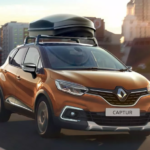 Renault Captur vs Symbioz Australia: Which Renault SUV Makes More Sense?
Kadjar Makes More Sense for Road Trips
If our weekends routinely involve suitcases, sporting equipment, eskies and passengers, the Kadjar earns its extra footprint.
The Captur can do road trips.
The Kadjar simply does them with less compromise.
Interior Space: Kadjar Wins
This category isn't really close.
The Kadjar exists one vehicle class above the Captur, so naturally it provides more cabin space.
Its 2646mm wheelbase is only slightly longer than the Captur's 2639mm figure, interestingly, but its overall body is substantially larger and wider.
That additional width is particularly noticeable when carrying adults.
Three people across a rear bench rarely feel luxurious in any mainstream SUV, but extra shoulder room certainly helps.
Captur Is Clever Rather Than Huge
The Captur's appeal lies more in intelligent packaging than outright volume.
It gives us enough room without making the car physically cumbersome.
That makes it a very different philosophy.
We wouldn't buy a Captur because we want maximum interior space.
We'd buy it because we want just enough space in the smallest convenient package.
Boot Space: Which Renault Carries More?
The Kadjar has the advantage in conventional luggage capacity.
Australian specification sources quote approximately 408 litres under the VDA measurement standard, while period testing has quoted up to 462L depending on measurement conventions, with as much as 1478L available once the rear seats are folded.
That is useful family-SUV territory.
The Captur is impressively flexible for its size, but its shorter body inevitably limits how easily large objects fit.
An Australian review noted that despite respectable quoted numbers, bulky items such as prams or golf clubs could still prove tight because the shape of the load area matters as much as the raw litre figure.
That's an excellent example of why specification sheets can mislead us.
Who Should Choose the Kadjar for Cargo Space?
We'd lean Kadjar if we regularly carry:
- a full-size pram;
- camping equipment;
- several large suitcases;
- children's sports equipment;
- bulky groceries;
- work gear.
For normal supermarket duty and occasional airport runs, the Captur should still be entirely workable.
Towing Capacity: Kadjar Wins Again
Anyone planning to tow should pay attention here.
The Captur is rated for up to 1200kg braked towing capacity.
The Kadjar can tow up to 1500kg braked according to Australian specifications.
That 300kg difference significantly expands what the Kadjar can comfortably be considered for.
Neither is an outback tow rig.
We aren't talking LandCruiser territory.
But if the job involves a small trailer, light camper or similar load, the Kadjar is clearly the more capable platform.
Neither Is Designed for Serious Off-Road Touring
Australian Kadjars were front-wheel drive, as were Australian Capturs.
So although both have SUV styling, we shouldn't confuse either with a serious four-wheel-drive vehicle.
Gravel access roads? Fine.
Remote tracks requiring low-range gearing and genuine 4WD traction?
Wrong tools for the job.
Ground Clearance Favours the Kadjar
The Kadjar's Australian specifications list approximately 200mm of unladen ground clearance, versus around 165mm for the Captur.
Again, that doesn't magically turn the Kadjar into an off-roader.
It does, however, make it a little more forgiving around rough driveways, dirt roads and poorly maintained rural surfaces.
For city buyers, we'd barely care.
For regional Australians, we might.
Safety: Captur Has the Newer Safety Package
This is where the newer Captur's age begins to show positively.
The Australian Captur generation introduced from 2021 carried a five-star ANCAP rating based on 2019 testing, although that rating expired at the end of 2025 under ANCAP's rating-expiry system. Its original assessment included 96 per cent adult occupant protection and 84 per cent child occupant protection.
Standard equipment included autonomous emergency braking and lane-keeping assistance.
It's worth stressing something here.
An expired ANCAP rating does not mean the car suddenly became unsafe in January 2026.
It means the rating was assessed against an older test protocol and is no longer current under ANCAP's expiry framework.
Captur's Newer Age Matters
Because most Australian Capturs from this generation are several years younger than local Kadjars, we're also likely to find newer driver-assistance systems and fresher electronic architecture.
When comparing used examples at similar money, we'd generally place considerable value on that.
Technology and Infotainment
Again, Captur benefits from being the newer design.
Later Captur variants were available with features such as digital instrumentation, smartphone integration and more contemporary infotainment.
Renault's R.S. Line, for example, added a 10.25-inch digital instrument cluster and Easy Park Assist, while adaptive cruise control became standard on selected higher grades during the model's Australian run.
Kadjar technology feels older.
That's hardly surprising.
Its Australian appearance was brief, and the basic design traces back considerably further.
Does That Make the Kadjar Cabin Bad?
No.
In fact, one of its appealing qualities is that the interior remains relatively straightforward.
Some drivers prefer physical controls and less screen dependence.
There is a certain charm to a car that doesn't demand a software tutorial before we can change the temperature.
But if Apple CarPlay, digital displays and more advanced assistance technology rank highly on our shopping list, Captur is easier to recommend.
Which Looks Better?
Now we enter subjective territory.


The Captur looks younger.
Its proportions are tauter, the surfacing feels more modern and the whole vehicle has a distinctly European fashion-conscious character.
The Kadjar is more conventional.
It has the stance of a traditional compact family SUV: larger grille, longer body and less playful proportions.
Neither screams for attention.
But Captur tends to look sportier, while Kadjar looks more mature.
Captur for Style, Kadjar for Presence
If we were buying partly with our eyes, we'd summarize it this way:
Captur: chic city crossover.
Kadjar: understated family SUV.
Simple.
Reliability: Which One Should We Trust More?
This is the part of any used-car comparison where sweeping statements become dangerous.
Neither badge, age nor model name guarantees reliability.
A meticulously serviced Kadjar can be a far smarter purchase than a neglected Captur.
Likewise, a low-mileage Captur with full dealer records could be preferable to a suspiciously cheap Kadjar with patchy maintenance.
Rather than asking only, "Is the Renault Captur more reliable than the Kadjar?" we'd ask:
Which individual car has been cared for better?
That is a much more useful question.
Used Renault Inspection Checklist
Before buying either model, we'd want to verify:
- Full servicing documentation.
- Smooth dual-clutch transmission behaviour.
- No dashboard warning lights.
- Consistent turbo performance.
- Proper operation of infotainment equipment.
- Air-conditioning performance.
- Condition of tyres and brakes.
- Evidence of accident repair.
- Cooling-system condition.
- Any outstanding recalls or service campaigns.
Have a qualified independent mechanic inspect the vehicle before purchase.
On a used European SUV, that inspection can be worth far more than hours spent comparing online specifications.
Servicing Costs in Australia
Renault Australia continues to publish servicing information covering Captur and Kadjar vehicles.
Its current capped-price servicing information lists eligible combustion-engine Kadjar, Arkana and MY21-onward Captur models with scheduled servicing intervals and associated capped-price arrangements.
This content may interest you!Renault Captur or Peugeot 2008 Australia: Which Small SUV Makes More Sense?That's encouraging for owners because discontinued doesn't mean unsupported.
Renault still operates an Australian dealer network, and servicing programs continue to reference both vehicles.
But Don't Assume Parts Costs Equal Japanese Rivals
Ownership budgeting should still include some breathing room.
European vehicles can occasionally require parts that cost more or take longer to source than equivalent components for ultra-common models from Toyota, Mazda, Kia or Hyundai.
That doesn't make them financially terrifying.
It simply means buying solely because a used Renault appears cheap can be false economy.
Purchase condition first.
Price second.
Which One Should Families Buy?
For a family of four, particularly with older children, we'd favour the Kadjar.
The extra length and width become valuable every day.
Passengers have more room, the luggage area handles bulkier items better, and the 1500kg braked towing rating gives us additional versatility.
If we have one young child and spend most of our lives navigating urban roads, the Captur becomes much more compelling.
It depends on whether we need actual space or simply like the idea of having it.
Many Australians buy vehicles one size larger than they realistically use.
The Captur challenges that habit.
Which One Is Better for Couples and Singles?
Captur, almost unquestionably.
Why haul an additional 222mm of body length around every day if the rear seats remain empty?
The Captur provides enough SUV practicality without turning mundane errands into manoeuvring exercises.
We also get the benefit of a newer overall design and, depending on model year and trim, more modern driver-assistance technology.
For a two-person household, it's arguably the sweeter package.
Which One Is Better for Regional Australia?
The decision gets closer.
Kadjar's additional ground clearance, greater cargo space and stronger towing capacity all work in its favour.
But availability matters.
The Kadjar had a remarkably short Australian sales career. Renault discontinued it after a little more than 12 months locally, with remaining stock already gone by early 2021.
That means there simply aren't huge numbers of them circulating.
CarExpert reported 132 Australian sales in 2019 and 500 during 2020.
Rarity has two sides.
It's fun owning something uncommon.
Finding an exact replacement trim piece five years later may be less fun.
Used-Car Availability: Captur Has the Advantage
The Captur had a much longer life in Australia.
Its newer generation arrived locally in 2021 and remained on sale through December 2025 according to ANCAP's model records.
Kadjar's Australian tenure, meanwhile, was exceptionally short.
That makes Captur shopping easier because we're more likely to encounter:
- different trim levels;
- different model years;
- lower-mileage examples;
- newer vehicles;
- more recent service histories.
More choice gives buyers leverage.
That's important.
Why Was the Renault Kadjar Discontinued in Australia?
Poor sales played a major role.
The Kadjar occupied an awkward position between Renault's smaller Captur and larger Koleos, and faced ferocious competition from established SUVs.
Renault discontinued it locally after just over a year, with the Arkana subsequently occupying a similar part of the lineup.
Its mechanical relationship with the Nissan Qashqai is nevertheless interesting.
The Kadjar shared underlying architecture with the Qashqai, pairing familiar Renault styling with a practical medium-SUV layout.
In other words, being discontinued doesn't necessarily mean it was a bad car.
Sometimes the Australian market simply shrugs at an otherwise perfectly competent vehicle.
Why Was the Renault Captur Discontinued in Australia?
The Captur story is more recent.
Renault had planned to bring the facelifted model to Australia, but that updated Captur ultimately never launched under the Renault badge locally. Renault instead introduced the Symbioz in 2026 as its new small-SUV offering.
Interestingly, the updated Captur platform still effectively reached Australia via the closely related Mitsubishi ASX.
So when we're talking about Captur versus Kadjar today, we're definitely discussing Renault's recent history rather than two current showroom competitors.
Renault Captur or Kadjar: Which Offers Better Value Used?
This depends heavily on individual asking prices.
But conceptually, Kadjar can be fascinating value because rarity and weak historical sales may keep used prices relatively modest compared with similarly sized mainstream SUVs.
We're potentially getting:
- medium-SUV dimensions;
- strong turbo performance;
- generous passenger space;
- 1500kg towing;
- distinctive styling;
without paying Toyota RAV4-style popularity premiums.
Captur offers a different type of value.
Because it's newer, we're buying extra years of design development, safety technology and potentially warranty history.
Our Value Rule
If prices are similar and space isn't crucial:
Choose the newer Captur.
If a well-maintained Kadjar is meaningfully cheaper and we genuinely need the additional room:
The Kadjar becomes very tempting.
Who Should Buy the Renault Captur?
We'd choose the Captur if most of these statements sound familiar:
- We mainly drive in the city.
- Parking convenience matters.
- We don't regularly carry three adults in the back.
- We prefer newer technology.
- We want a newer used car.
- We value efficiency and manoeuvrability.
- We don't need more than 1200kg of towing capacity.
In that context, buying the larger Kadjar doesn't solve any real problem.
Who Should Buy the Renault Kadjar?
We'd choose Kadjar if:
- We have a family.
- We travel long distances regularly.
- Boot space matters.
- Adults frequently use the rear seats.
- We occasionally tow.
- We drive on rougher regional roads.
- We can find a carefully maintained example at an attractive price.
The key phrase there is carefully maintained.
Because supply is relatively limited, we'd rather wait for a good Kadjar than compromise simply because one happens to be available nearby.
Captur vs Kadjar: Our Category Winners
Let's make the decision even simpler.
City driving: Captur
Parking: Captur
Newer technology: Captur
Performance relative to size: Captur
Family practicality: Kadjar
Rear passenger space: Kadjar
Cargo carrying: Kadjar
Towing: Kadjar
Rough-road suitability: Kadjar
Used-market choice: Captur
Distinctiveness: Kadjar
Best all-rounder for two people: Captur
Best all-rounder for four people: Kadjar
It's almost perfectly divided by lifestyle.
Renault Captur or Kadjar Australia: Final Verdict
So, Renault Captur or Kadjar in Australia?
For most Australian used-car buyers who don't genuinely need medium-SUV space, we'd choose the Renault Captur.
It's newer, easier to park, appropriately powerful, relatively economical and better aligned with modern urban life. Its 113kW/270Nm turbo engine gives it plenty of usable performance, while the 4227mm body keeps it manageable.
The Kadjar, however, deserves more credit than its short Australian career might suggest.
Its 4449mm length, larger cabin, 1500kg towing ability and stronger family credentials make it the better choice when practicality outweighs compactness.
Ultimately, these SUVs aren't really rivals in the traditional sense.
They're two different answers to the same question.
The Captur asks, "How little SUV do we actually need?"
The Kadjar asks, "How much extra room would make everyday life easier?"
For city-focused couples and smaller households, we'd take Captur.
For families, frequent travellers and buyers who routinely fill the boot, we'd take Kadjar.
And because we're now shopping exclusively in the used market, we'd happily sacrifice our preferred model if the alternative had a substantially better history. A beautifully maintained Renault beats the "right" Renault with questionable servicing every time.
Frequently Asked Questions
Is the Renault Kadjar bigger than the Captur?
Yes. The Australian Kadjar measures approximately 4449mm long and 1836mm wide, compared with around 4227mm long and 1797mm wide for the later Captur. The Kadjar therefore provides a noticeably larger overall footprint and is better suited to family use.
Is the Renault Kadjar still sold in Australia?
No. Renault discontinued the Kadjar in Australia after just over 12 months on sale, and remaining stock had disappeared by early 2021.
Is the Renault Captur still available new in Australia?
Not as of September 2026. Renault has shelved the Captur locally and introduced the Symbioz as its new small-SUV offering.
Which is better for families, Renault Captur or Kadjar?
We'd normally choose the Kadjar for families because its larger body provides more passenger and luggage space. It also offers a higher 1500kg braked towing rating versus up to 1200kg for the Captur.
This content may interest you!Renault Captur vs Mitsubishi ASX Australia: Which Small SUV Is Better?Which is better for city driving, Renault Captur or Kadjar?
The Captur. Its shorter 4227mm body makes parking and manoeuvring easier, while its 113kW/270Nm turbocharged engine provides more than enough performance for everyday urban driving.
Leave a Reply