
Toyota Yaris Cross Models Australia: Complete Guide to Every Grade

If we are shopping for a compact SUV in Australia, the Toyota Yaris Cross models Australia range can look deceptively simple at first. There are only four main grade names—GX, GXL, Urban and GR Sport—but once we add front-wheel drive and electric all-wheel drive choices, the range becomes considerably more interesting.
Toyota's current Australian lineup consists of the GX, GXL, Urban and GR Sport. The GX, GXL and Urban can be ordered with either front-wheel drive (2WD) or electric AWD, while the sportier GR Sport is offered exclusively with front-wheel drive. In practical terms, that gives Australian buyers seven grade-and-drivetrain combinations.
Even better, Toyota has simplified one major decision: the Yaris Cross is now essentially a hybrid-focused proposition in Australia. The current specifications list a 1.5-litre three-cylinder Toyota Hybrid Electric system producing 85 kW of combined system power, paired with an automatic CVT.
So which Yaris Cross should we actually buy? Is the GX already good enough? Does the GXL hit the sweet spot? Is the Urban worth paying more for? And does the GR Sport deliver meaningful substance beyond its sharper clothes?
Let's break down every Australian Yaris Cross model.
- Toyota Yaris Cross Models Australia at a Glance
- What Engine Do Australian Toyota Yaris Cross Models Use?
- Toyota Yaris Cross GX: The Entry-Level Model
- Toyota Yaris Cross GX AWD
- Toyota Yaris Cross GXL: The Sweet Spot?
- Toyota Yaris Cross GXL AWD
- Toyota Yaris Cross Urban: The Premium Choice
- Toyota Yaris Cross Urban 2WD
- Toyota Yaris Cross Urban AWD
- Toyota Yaris Cross GR Sport: The Sportiest Model
- 2WD vs AWD Toyota Yaris Cross Models
- Safety Across the Toyota Yaris Cross Range
- Interior and Technology Differences
- Toyota Yaris Cross Dimensions and Practicality
- Which Toyota Yaris Cross Model Is Best?
- Best Yaris Cross Model for City Driving
- Best Yaris Cross Model for Maximum Equipment
- Best Yaris Cross Model for Style
- Are All Toyota Yaris Cross Models Hybrid in Australia?
- Should You Buy a Toyota Yaris Cross in Australia?
- Conclusion: Which Toyota Yaris Cross Model Should We Choose?
- FAQs About Toyota Yaris Cross Models Australia
Toyota Yaris Cross Models Australia at a Glance
Before getting buried in equipment lists, it helps to understand the family tree.
| Model | Drivetrain | Wheels | Key Character |
|---|---|---|---|
| Yaris Cross GX | 2WD | 16-inch alloys | Entry-level value |
| Yaris Cross GX | AWD | 16-inch alloys | Affordable AWD option |
| Yaris Cross GXL | 2WD | 16-inch alloys | Best all-rounder |
| Yaris Cross GXL | AWD | 16-inch alloys | Technology plus AWD |
| Yaris Cross Urban | 2WD | 18-inch alloys | Luxury-focused flagship |
| Yaris Cross Urban | AWD | 18-inch alloys | Premium specification with AWD |
| Yaris Cross GR Sport | 2WD | Unique 18-inch alloys | Sportier styling and chassis tune |
The interesting thing is that Toyota hasn't created wildly different mechanical personalities for each grade. Instead, it builds layers of technology, comfort, styling and chassis equipment onto the same efficient foundation.
Think of it like ordering coffee from the same good café. The beans remain familiar; what changes is how elaborate we want the final cup to become.
What Engine Do Australian Toyota Yaris Cross Models Use?
The current Australian Yaris Cross uses Toyota's M15A-FXE 1.5-litre three-cylinder hybrid-electric powertrain.
Toyota lists combined hybrid system output at 85 kW, with an automatic CVT fitted across the range. Official combined fuel-consumption figures are 3.8 L/100 km for 2WD versions and 4.0 L/100 km for AWD models under laboratory testing.
That common powertrain is important when comparing grades.
Buying an Urban instead of a GX doesn't suddenly give us a substantially more powerful engine. Likewise, choosing the GXL isn't about unlocking another level of straight-line performance.
Instead, we are mainly paying for equipment, technology, styling or drivetrain differences.
Why the Hybrid Setup Makes Sense
A small hybrid SUV is arguably at its happiest in urban Australia.
Slow-moving traffic, suburban roads and frequent stops give the hybrid system plenty of opportunities to recuperate energy and use electric assistance. That's exactly where conventional petrol cars can become thirsty.
Toyota's official figures underline the point. The company lists urban laboratory fuel economy at 3.3 L/100 km for the 2WD configuration and 3.6 L/100 km for AWD. Real-world consumption will naturally vary with traffic, weather, tyres, payload and driving style.
Toyota Yaris Cross GX: The Entry-Level Model
The Yaris Cross GX sits at the bottom of the range, but calling it a bare-bones model would be unfair.
Toyota equips the GX with the hybrid drivetrain, 16-inch alloy wheels, an 8-inch multimedia system, wireless Apple CarPlay and Android Auto, Toyota Connected Services, automatic climate control, smart entry and start, front and rear parking sensors and a sizeable collection of driver-assistance technology.
That's a healthy starting point.
We don't have to climb two grades just to obtain the conveniences most owners use every morning.
Yaris Cross GX 2WD
For many buyers, the GX 2WD is all the Yaris Cross they actually need.
We get the fuel-efficient hybrid system without the additional weight and mechanical complexity associated with AWD. Toyota quotes combined laboratory consumption of 3.8 L/100 km for 2WD Yaris Cross variants.
The GX also rides on 16-inch wheels rather than the Urban and GR Sport's 18-inch setups.
That may sound less glamorous in a showroom, but smaller wheels can have everyday advantages. There is more tyre sidewall between the wheel and road, which can be welcome on coarse or broken Australian surfaces.
Who Should Buy the GX 2WD?
We would put this version near the top of the list for commuters, singles, couples and small families who mainly drive on sealed roads and want the Yaris Cross experience without paying for luxury extras.
It's the rational choice.
And rational doesn't have to mean boring.
Toyota Yaris Cross GX AWD
The GX can also be configured with Toyota's electric all-wheel-drive system.
Rather than employing the sort of traditional mechanical AWD arrangement we might associate with a large four-wheel drive, the Yaris Cross hybrid AWD system can direct electric drive to the rear axle when required. Toyota originally described the system as operating primarily through the front wheels in normal driving and engaging rear assistance when additional traction is needed.
This isn't a miniature LandCruiser.
That's worth remembering.
Its AWD system is more about adding traction and confidence on slippery surfaces than turning the Yaris Cross into a hardcore off-road machine.
Is Yaris Cross AWD Worth It?
That depends on where we live and how we use the vehicle.
If nearly every kilometre happens on metropolitan roads, the extra capability may rarely matter. But buyers regularly travelling along wet rural roads, loose surfaces or into areas where traction deteriorates may appreciate it.
There are trade-offs.
Toyota's current specifications quote combined consumption at 4.0 L/100 km for AWD versus 3.8 L/100 km for 2WD, while maximum VDA cargo capacity drops from 390 litres in 2WD configurations to 314 litres in AWD versions.
So AWD isn't a free lunch.
We gain traction but sacrifice a little efficiency and luggage volume.
Toyota Yaris Cross GXL: The Sweet Spot?
Move one step higher and we reach the Yaris Cross GXL.
This is where the range becomes particularly compelling.
This content may interest you!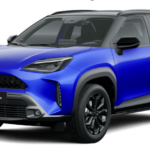 Toyota Yaris Cross GX vs GXL Australia: Which One Is Better?
The GXL retains 16-inch alloy wheels and the same hybrid drivetrain but adds features such as embedded satellite navigation and a Panoramic View Monitor. Toyota also lists wireless Apple CarPlay, Android Auto, an 8-inch display and six-speaker audio among its equipment.
For many buyers, this is the Goldilocks version.
Not too basic. Not excessively dressed up. Just right.
Why We Like the GXL
Parking a small SUV isn't especially difficult, but a panoramic camera still makes life easier.
Narrow shopping-centre spaces, high kerbs and cramped residential driveways have a special ability to make even experienced drivers suddenly question their spatial awareness.
A surround-view system removes much of that guesswork.
The GXL therefore feels less like an indulgence and more like a sensible equipment upgrade.
Yaris Cross GXL 2WD
If our priorities are technology, efficiency and everyday comfort, we'd take a serious look at the GXL 2WD.
It retains the 2WD model's official 3.8 L/100 km combined laboratory figure while adding conveniences absent from the regular GX 2WD specification.
For city and suburban use, this may be the most balanced version in the Australian range.
Toyota Yaris Cross GXL AWD
The GXL AWD takes the same middle-grade formula and adds electric all-wheel drive.
That combination will appeal to buyers who don't necessarily want the visual extravagance of the Urban but still want more technology than the entry-level version.
There's another subtle distinction: Toyota states that embedded satellite navigation is available on GX AWD and above, whereas the GXL includes embedded navigation as part of its standard specification.
If we're comparing models carefully rather than simply looking at grade badges, details like this matter.
The Yaris Cross Urban takes the little SUV noticeably further upmarket.
Toyota fits 18-inch alloy wheels, a head-up display, Nanoe-X air-conditioning technology, heated front seats and a power tailgate with kick sensor. The Urban retains the multimedia, connectivity, navigation and panoramic-camera technology found further down the range.
Suddenly our economical little crossover feels considerably more luxurious.
What Makes the Urban Different?
The Urban's upgrades aren't about one giant headline feature. Instead, several smaller conveniences accumulate until the ownership experience starts to feel substantially richer.
A head-up display keeps useful driving information closer to our line of sight. Heated front seats become surprisingly addictive in Australia's colder regions. The powered tailgate can be handy when we're standing behind the car holding shopping bags.
Then there are those 18-inch wheels.
They give the Urban considerably more visual presence than the GX and GXL.
Is the Urban Worth Paying Extra For?
It can be—but only if we're going to enjoy the equipment we're buying.
Someone simply seeking inexpensive hybrid motoring isn't automatically better served by the most expensive conventional grade.
But if we're already planning to keep the vehicle for many years, premium conveniences become easier to justify. We interact with seats, cameras, displays, climate control and the tailgate thousands of times over an ownership cycle.
Little luxuries eventually stop feeling little.
Toyota Yaris Cross Urban 2WD
The Urban 2WD is arguably the sophisticated city-dweller of the family.
We get the richer cabin equipment, bigger wheels and flagship conveniences without moving to AWD.
And despite its higher specification, Toyota still quotes the familiar 3.8 L/100 km combined laboratory fuel-consumption figure for the Urban 2WD.
That makes it an intriguing proposition.
The Urban doesn't force us to abandon the Yaris Cross's efficiency-focused personality merely because we want more equipment.
Toyota Yaris Cross Urban AWD
At the other end of the mainstream range sits the Urban AWD.
This version combines almost everything the regular Yaris Cross offers: premium equipment, electric AWD, hybrid efficiency and the more assertive appearance created by its 18-inch wheels.
It is probably the model for buyers who don't want to wonder later whether they should have ticked another box.
However, its advantages need to match our circumstances.
Remember that AWD models have less quoted maximum cargo capacity than 2WD versions—314 litres versus 390 litres—and slightly higher official combined fuel consumption.
Sometimes the simpler car is actually the more practical one.
Toyota Yaris Cross GR Sport: The Sportiest Model
Now we reach the outlier.
The Yaris Cross GR Sport isn't simply an Urban wearing different badges.
Toyota gives it unique 18-inch alloy wheels, front and rear GR Sport suspension tuning, red brake callipers, unique front and rear bumpers, GR branding inside the cabin and aluminium pedals. It is available with the hybrid drivetrain and front-wheel drive only.
Visually, it's the extrovert of the family.
This content may interest you!Toyota Yaris Cross Years: Complete Model-Year GuideWhere the GX whispers practicality and the Urban talks luxury, the GR Sport walks into the room wearing trainers.
Does GR Sport Mean More Engine Power?
Here's the important distinction: don't confuse GR Sport with Toyota's full-fat GR performance cars.
The Australian Yaris Cross GR Sport continues to use the 1.5-litre hybrid architecture, and Toyota quotes the same 3.8 L/100 km combined laboratory fuel-economy figure shown for the other 2WD variants.
The attraction lies more in its suspension changes, styling and cabin treatment than in transforming the Yaris Cross into a straight-line performance machine.
GR Sport vs Urban
These two aren't necessarily arranged as a simple ladder.
The Urban is the luxury-oriented interpretation. The GR Sport is the sporty interpretation.
That distinction makes choosing between them easier.
Want heated front seats, a head-up display and powered tailgate convenience? The Urban is probably speaking your language.
Want distinctive bumpers, GR trim, red callipers and specially tuned suspension? The GR Sport makes more sense.
Neither answer is universally correct.
Personality matters.
2WD vs AWD Toyota Yaris Cross Models
This may be the most important choice in the whole range.
We should resist choosing AWD simply because four driven wheels sound inherently superior.
The 2WD Yaris Cross has several compelling arguments on its side. It achieves Toyota's lower official combined fuel-consumption figure and offers greater quoted maximum cargo capacity. The AWD system, meanwhile, gives us additional traction capability but raises the official combined consumption from 3.8 to 4.0 L/100 km.
For urban owners, 2WD is likely to make more sense.
For drivers who regularly encounter slippery or loose surfaces, AWD becomes easier to justify.
What About Boot Space?
This is one of the differences buyers can easily overlook.
Toyota lists 390 litres maximum VDA cargo capacity for 2WD models and 314 litres for AWD models.
That's a 76-litre difference.
If we regularly carry a pram, luggage, sports gear or bulky shopping, that gap may matter more than AWD itself.
Numbers on a specification sheet have a funny habit of becoming very real when we're standing in a car park trying to make one final suitcase fit.
Safety Across the Toyota Yaris Cross Range
One strength of the Australian lineup is that Toyota doesn't reserve every useful safety technology for the most expensive grade.
The GX already includes Toyota Safety Sense technology along with features such as pre-collision assistance, road-sign assistance, lane-trace assistance, active cruise control, blind-spot monitoring, safe-exit assistance, a reversing camera and eight SRS airbags.
Moving to GXL introduces the Panoramic View Monitor, while the Urban adds equipment such as its head-up display.
That makes the grade structure feel sensible.
We're mostly upgrading convenience and sophistication rather than being forced upward just to obtain a decent baseline safety package.
Interior and Technology Differences
All current versions are better equipped technologically than early Yaris Cross models.
Toyota's update introduced an 8-inch multimedia system, USB-C connectivity and a 7-inch digital instrument cluster across the range, alongside updated safety technology.
That helps the GX avoid feeling conspicuously cheap.
Nevertheless, the gap between grades becomes apparent as we move upward. GXL's surround-view camera and embedded navigation add convenience, while the Urban introduces more premium touches.
This is where we should stop comparing brochures and imagine Monday morning instead.
Which features will we actually touch?
Which ones will make commuting easier?
Those are usually worth more than equipment that merely looks impressive in an advertisement.
Toyota Yaris Cross Dimensions and Practicality
Regardless of model, the Yaris Cross remains genuinely compact.
Toyota's published specifications list an overall width of 1,765 mm, a 2,560 mm wheelbase, and an overall length of 4,180 mm for regular variants, with the GR Sport extending fractionally to 4,185 mm.
That's part of the vehicle's appeal.
It gives us the raised seating position and visual character of an SUV without turning an ordinary supermarket parking space into a geometry exam.
Five seats are standard across the range, and Toyota specifies a 36-litre fuel tank.
Which Toyota Yaris Cross Model Is Best?
We can reduce the whole Australian range to four personalities:
This content may interest you!Toyota Yaris Cross Fuel Tank Capacity: Complete Guide- Choose the GX if value and essential equipment matter most.
- Choose the GXL if we want the strongest balance between cost, convenience and technology.
- Choose the Urban if comfort and premium features justify spending more.
- Choose the GR Sport if distinctive styling and a sportier chassis character matter more than AWD availability.
Within GX, GXL and Urban, we'd then ask a second question: do we genuinely need AWD?
That order is important.
Choose the grade according to the equipment we use every day, then choose the drivetrain according to the roads we actually drive.
Best Yaris Cross Model for City Driving
Our pick for typical urban driving would be the GXL 2WD.
Why?
It keeps the efficient 2WD configuration and useful 16-inch wheels while adding the Panoramic View Monitor and embedded navigation. It feels meaningfully better equipped than the base car without requiring us to climb all the way into premium-grade territory.
The GX 2WD remains the better choice if budget dominates the decision.
The Urban 2WD is the nicer choice if comfort dominates it.
Best Yaris Cross Model for Maximum Equipment
That honour goes to the Urban, particularly if we value features such as the head-up display, heated front seats and powered kick-sensor tailgate.
The AWD version adds extra traction capability, whereas the 2WD version preserves the larger quoted cargo capacity and marginally better official fuel economy.
We therefore wouldn't automatically call Urban AWD the "best" simply because it contains three expensive letters.
Best means best suited to us.
Best Yaris Cross Model for Style
The GR Sport wins this one.
Its dedicated bumpers, distinctive 18-inch wheels, red brake callipers, GR-branded interior details, aluminium pedals and specific suspension package create a noticeably different flavour from the rest of the family.
It's the Yaris Cross for somebody whose head says "efficient compact hybrid SUV" while their heart still wants the car in the driveway to have a little attitude.
Are All Toyota Yaris Cross Models Hybrid in Australia?
The current Australian range listed by Toyota uses the 1.5-litre Toyota Hybrid Electric system across GX, GXL, Urban and GR Sport variants. Toyota's broader Australian strategy has also moved models offering hybrid alternatives toward hybrid-electric-only lineups.
For a buyer, this greatly simplifies the showroom decision.
We no longer need to decide first whether we want a basic petrol Yaris Cross or the hybrid. Instead, we can focus on trim level and drivetrain.
That's arguably where the real differences lie anyway.
Should You Buy a Toyota Yaris Cross in Australia?
The Yaris Cross makes the strongest argument for itself when we treat it as a highly efficient urban crossover rather than a shrunken traditional 4WD.
It's compact, available with AWD, loaded with useful assistance technology and built around an exceptionally economical hybrid drivetrain on paper.
Its limitations follow naturally from its dimensions. Buyers wanting enormous rear-seat accommodation, a cavernous luggage area or serious towing ability should look further up the SUV ladder. Toyota lists braked towing capacity at only 400 kg for applicable Yaris Cross configurations.
But that's almost beside the point.
Asking the Yaris Cross to behave like a Prado is like asking a Swiss Army knife to replace a chainsaw. The little Toyota has a different job.
It wants to squeeze through crowded streets, sip fuel, park without drama and still give us enough SUV flavour for everyday life.
At that, the formula makes considerable sense.
Conclusion: Which Toyota Yaris Cross Model Should We Choose?
The Toyota Yaris Cross models Australia range is easier to understand once we stop looking at every variant as a separate car.
There are essentially four personalities.
The GX provides the core hybrid experience at the accessible end of the lineup. The GXL adds genuinely useful technology and is arguably the smartest all-round buy. The Urban dresses the formula in more comfort and convenience, while the GR Sport trades luxury emphasis for sharper styling and specific chassis touches.
Then we decide whether AWD is necessary.
For most metropolitan drivers, we'd lean toward 2WD—especially because it carries the lower official fuel-consumption figure and greater maximum quoted cargo capacity. Buyers regularly facing slippery conditions may find AWD's additional traction worth those compromises.
If we had to identify the sweet spot? Yaris Cross GXL 2WD.
It captures what this small Toyota does best: compact dimensions, remarkably low official fuel use, solid safety equipment and enough technology to make daily driving easy without piling on luxuries we may never use.
Sometimes the middle of the range isn't a compromise.
Sometimes it's exactly where the clever money lands.
FAQs About Toyota Yaris Cross Models Australia
1. What Toyota Yaris Cross models are available in Australia?
Toyota Australia's current range lists four grades: GX, GXL, Urban and GR Sport. GX, GXL and Urban are available with either 2WD or electric AWD, while GR Sport is front-wheel drive only.
2. Which Toyota Yaris Cross model is the best value?
For many buyers, the GXL 2WD provides the strongest balance. It retains the efficient hybrid 2WD configuration while adding equipment such as embedded satellite navigation and a Panoramic View Monitor. Buyers prioritising the lowest entry point should consider the GX instead.
3. What is the difference between Yaris Cross GXL and Urban?
The Urban builds on the equipment theme with 18-inch alloy wheels, a head-up display, heated front seats, Nanoe-X climate technology and a power tailgate with kick sensor. The GXL uses 16-inch alloys and concentrates more heavily on useful mid-range technology.
4. Does the Toyota Yaris Cross GR Sport have a more powerful engine?
The GR Sport uses the Yaris Cross's 1.5-litre hybrid-electric architecture rather than receiving a radically more powerful performance engine. Its differentiation comes mainly through unique styling, 18-inch wheels, GR Sport suspension, red brake callipers and interior details.
5. Is the AWD Toyota Yaris Cross better than the 2WD?
Not automatically. AWD provides additional traction, but Toyota lists 4.0 L/100 km combined fuel consumption and 314 litres of maximum VDA luggage capacity for AWD, compared with 3.8 L/100 km and 390 litres for 2WD. For mostly urban use, the 2WD configuration may therefore be the more practical choice.
This content may interest you!Weight of Toyota Yaris Cross: Complete Guide by Model and Drivetrain
Leave a Reply