
Toyota Yaris Cross Years: Complete Model-Year Guide

The Toyota Yaris Cross arrived with a fairly simple mission: take the easy-going efficiency and urban friendliness of the Yaris and package those qualities in a small SUV that feels more practical. The result has become an increasingly familiar sight in cities, suburbs, and crowded supermarket car parks.
But when we're shopping used, one question quickly appears: which Toyota Yaris Cross years are actually worth buying?
That's more complicated than simply picking the newest example we can afford. Different markets received the Yaris Cross at different times, equipment has evolved, hybrid technology has become increasingly important, and later cars may offer refinements that early examples lack.
The good news is that the Yaris Cross is still a relatively young model. We aren't dealing with decades of wildly different generations. Instead, we're looking at the evolution of one modern compact SUV and deciding where the sweet spots lie.
In this guide, we'll explore the Toyota Yaris Cross years, how the model has changed, what buyers should look for, and whether an early or later example makes more sense.
- Toyota Yaris Cross Years at a Glance
- When Did the Toyota Yaris Cross Come Out?
- 2020 Toyota Yaris Cross
- 2021 Toyota Yaris Cross
- 2022 Toyota Yaris Cross
- 2023 Toyota Yaris Cross
- 2024 Toyota Yaris Cross
- 2025 Toyota Yaris Cross
- 2026 Toyota Yaris Cross
- How Many Generations of Toyota Yaris Cross Are There?
- Toyota Yaris Cross Hybrid Years
- Toyota Yaris Cross Petrol Years
- Best Toyota Yaris Cross Years to Buy
- Are There Toyota Yaris Cross Years to Avoid?
- Toyota Yaris Cross Reliability by Year
- Toyota Yaris Cross Changes Over the Years
- Which Toyota Yaris Cross Year Has the Best Value?
- Which Toyota Yaris Cross Year Is Best for Long-Term Ownership?
- Should We Buy a Used Toyota Yaris Cross?
- What to Check Before Buying Any Yaris Cross Year
- Toyota Yaris Cross Years vs Mileage
- Toyota Yaris Cross Years and Depreciation
- How to Choose Between Toyota Yaris Cross Years
- Final Thoughts on Toyota Yaris Cross Years
- Frequently Asked Questions
Toyota Yaris Cross Years at a Glance
The current Yaris Cross story begins around 2020, when Toyota introduced the model as a compact SUV related to the fourth-generation Yaris.
Availability depends heavily on country. Japan was among the first markets, while European and Australian deliveries followed. Consequently, a vehicle described as a 2020, 2021, or 2022 Yaris Cross may represent a slightly different point in the model's local history.
A simplified timeline looks like this:
| Model year/period | General significance |
|---|---|
| 2020 | Initial launch period in Japan |
| 2021 | Wider international rollout |
| 2022 | Established early-production model |
| 2023 | Mature pre-update period |
| 2024 | Important updates in several markets |
| 2025 | Refined later-production versions |
| 2026 | Current-era Yaris Cross, depending on market |
That doesn't mean every market follows exactly this pattern. Specifications, engines, trim names, safety equipment, and release dates vary considerably.
Why Model Year Isn't the Whole Story
Here's something worth remembering: registration year and specification aren't always perfectly aligned.
A Yaris Cross registered in one calendar year might have been manufactured earlier. Likewise, Toyota can introduce equipment changes midway through a year.
That's why we'd always check the VIN, build date, trim specification, engine, drivetrain, and local Toyota documentation rather than relying solely on the year shown in an advertisement.
When Did the Toyota Yaris Cross Come Out?
The Toyota Yaris Cross made its debut in 2020, initially targeting the rapidly expanding small-SUV market.
Toyota already had the regular Yaris for drivers wanting something compact and economical. The Yaris Cross essentially stretched that philosophy vertically.
It offered the SUV-like ingredients buyers increasingly wanted:
- Higher seating position
- Increased ground clearance
- More practical cargo capacity
- Chunkier exterior styling
- Available hybrid power
- Available all-wheel-drive configurations in certain markets
- Toyota's modern driver-assistance technology
Think of it as the regular Yaris putting on hiking boots.
It still wants to be efficient and easy to live with, but it's more willing to carry luggage and venture beyond perfectly smooth city streets.
2020 Toyota Yaris Cross
The 2020 Toyota Yaris Cross represents the beginning of the story, particularly in Japan.
As with many first-year vehicles, early examples deserve slightly more scrutiny than later ones. That doesn't automatically make them bad purchases. In fact, an early Yaris Cross can potentially offer excellent value if depreciation has already done some of the financial heavy lifting.
What Makes a 2020 Yaris Cross Interesting?
The biggest attraction is usually price.
Early-production vehicles can sit toward the cheaper end of the used market while still delivering most of the characteristics that define the Yaris Cross today.
We're still getting a modern platform, contemporary safety technology and, depending on specification, Toyota's hybrid system.
Should We Avoid the First Year?
Not automatically.
There's an old rule in car buying that says, "Never buy the first year of a new model." There's some logic behind it because manufacturers occasionally discover small production or software issues after vehicles reach customers.
But rules like this shouldn't replace an individual vehicle inspection.
A well-maintained early Yaris Cross with complete records can be a much smarter purchase than a neglected later example.
2021 Toyota Yaris Cross
For many international buyers, 2021 is the year the Yaris Cross really enters the conversation.
This is particularly relevant when researching used cars in markets where deliveries began after the Japanese launch.
By this point, the model's identity was clear: compact dimensions outside, surprisingly useful space inside, and a strong emphasis on efficiency.
Is the 2021 Toyota Yaris Cross Worth Buying?
It certainly can be.
A 2021 vehicle may offer an attractive compromise between purchase price and modern technology. These examples are old enough to have depreciated but young enough to remain contemporary compared with many traditional used SUVs.
However, we'd pay particular attention to:
- Complete service history
- Recall completion
- Hybrid-system condition where applicable
- 12-volt battery health
- Tyre wear
- Brake condition
- Accident history
- Infotainment functionality
- Driver-assistance warning lights
Age alone tells us surprisingly little about how well a car has been treated.
2022 Toyota Yaris Cross
The 2022 Toyota Yaris Cross is arguably where the early-production phase begins feeling more established.
By now the vehicle had spent meaningful time in several major markets, making ownership information easier to find and used inventory more plentiful.
For shoppers who don't necessarily need the latest infotainment or newest equipment, 2022 models can make a lot of sense.
Why 2022 Can Be a Sweet Spot
Used-car shopping is fundamentally a balancing act.
Go too new and depreciation can still sting. Go too old and wear, mileage, ageing components, and outdated technology become more significant.
The 2022 Yaris Cross can land somewhere in the middle.
We get a relatively modern compact SUV without necessarily paying later-model prices.
2023 Toyota Yaris Cross
The 2023 Toyota Yaris Cross is another particularly interesting year because it represents a mature version of the original specification before significant updates appeared in various markets.
That maturity can be appealing.
Manufacturing has had time to settle, dealers and technicians are familiar with the vehicle, and there's more real-world ownership experience available.
Who Should Consider a 2023 Model?
A 2023 Yaris Cross makes particular sense if we want something relatively fresh but aren't obsessed with obtaining every later technological improvement.
It's the automotive equivalent of buying last year's flagship smartphone. It may not contain every newest trick, but it still feels thoroughly modern.
2024 Toyota Yaris Cross
Things become especially interesting around 2024, because Toyota introduced meaningful updates to the Yaris Cross in some markets.
Depending on location and specification, improvements could include changes to hybrid performance, technology, digital displays, connectivity, safety systems, comfort, or refinement.
That's important when comparing apparently similar used examples.
Why the 2024 Updates Matter
Small SUVs spend enormous amounts of time in urban environments.
Consequently, improvements that look minor on paper can become noticeable every day.
A better infotainment interface matters when we use it constantly. Improved sound insulation matters on the motorway. Enhanced safety technology matters in busy traffic.
This means the 2024-era Yaris Cross deserves serious consideration from buyers who plan to keep their vehicle for many years.
Is 2024 Better Than 2023?
Technologically, a later updated version will generally have advantages.
Financially? Not necessarily.
Suppose a 2023 model costs significantly less than a comparable 2024 example. In that situation, the earlier vehicle might represent better value.
We're not buying a specification sheet. We're buying a car.
2025 Toyota Yaris Cross
By 2025, the Yaris Cross had become a well-established member of Toyota's SUV family in many markets.
Later-production cars benefit from the model's accumulated development while retaining the compact proportions that made the original concept appealing.
Reasons to Choose a 2025 Yaris Cross
The obvious attraction is freshness.
Mileage is typically lower, warranty coverage may be more substantial depending on country and registration date, and the vehicle should incorporate many of the latest available improvements for that version.
That makes a 2025 example attractive for buyers who want something close to new without necessarily walking into a showroom and ordering a factory-fresh vehicle.
The trade-off is price.
Later cars haven't travelled as far down the depreciation curve.
2026 Toyota Yaris Cross
By 2026, the Toyota Yaris Cross remains part of the modern compact-SUV landscape, although exact configurations continue to depend on the country.
At this stage, we should resist assuming that every 2026 Yaris Cross worldwide is identical.
Toyota's regional strategies differ. A trim available in Australia might not correspond directly with something sold in Europe, Japan, or another market.
This content may interest you!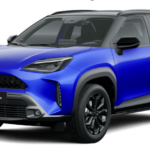 Is Toyota Yaris Cross a Good Car in Australia? Complete 2026 Review
Should We Buy the Newest Yaris Cross?
If budget allows and we're planning long-term ownership, buying a newer example has obvious advantages.
We generally receive newer technology, less accumulated wear, potentially stronger warranty protection, and fewer uncertainties about previous ownership.
But value-conscious buyers shouldn't ignore older cars.
Sometimes the best Yaris Cross isn't the newest one. It's the cleanest, best-maintained example at the right price.
How Many Generations of Toyota Yaris Cross Are There?
For the globally familiar Yaris Cross introduced in 2020, we're essentially dealing with the first generation, albeit with updates and regional variations along the way.
This makes shopping easier than with something like a Toyota Corolla or RAV4, where decades of production create numerous generations, engines, transmissions, and platforms.
One Generation Doesn't Mean Every Year Is Identical
Manufacturers constantly tweak vehicles during a generation.
Changes may include:
- Infotainment software
- Safety systems
- Interior materials
- Hybrid calibration
- Power output
- Noise insulation
- Trim structure
- Digital displays
- Standard equipment
So although two Yaris Cross vehicles may belong to the same generation, their ownership experience can still differ.
Toyota Yaris Cross Hybrid Years
Hybrid technology is central to the Yaris Cross story.
Toyota's experience with hybrids stretches back much further than this particular model, which is reassuring because the Yaris Cross didn't introduce an entirely experimental concept.
Instead, it adapted Toyota's established hybrid philosophy to a small SUV.
Why the Hybrid Is So Popular
The hybrid Yaris Cross is particularly well suited to city driving.
Frequent slowing and stopping gives the system opportunities to recover energy, while electric assistance can reduce petrol consumption during low-speed operation.
The experience feels almost backwards compared with traditional petrol cars: congested urban driving is where the hybrid system gets to show off.
Are Older Yaris Cross Hybrids Worth Buying?
Yes, provided the vehicle has been properly maintained and inspected.
We shouldn't assume a hybrid battery is problematic simply because the vehicle has several years behind it. Equally, we shouldn't blindly assume everything is perfect because Toyota has a strong hybrid reputation.
Condition still matters.
A proper pre-purchase inspection remains worthwhile.
Toyota Yaris Cross Petrol Years
Some markets have also offered non-hybrid petrol versions.
These can appeal to drivers wanting a simpler purchase price or those who don't drive enough kilometres for fuel savings to dominate the ownership equation.
The decision isn't simply "hybrid good, petrol bad."
It depends on how we use the car.
Petrol vs Hybrid by Model Year
If most journeys involve dense city traffic, the hybrid becomes increasingly attractive.
If the vehicle covers relatively low annual mileage or purchase price is the primary consideration, a conventional petrol version may make financial sense.
We should compare actual purchase prices rather than assuming future fuel savings automatically justify a large upfront premium.
Best Toyota Yaris Cross Years to Buy
So, which Toyota Yaris Cross years should sit near the top of our shopping list?
There's no universal winner, but we can divide the market into three useful categories.
Best for Budget Buyers: Early Models
A well-maintained 2020-2022 example can be appealing where available.
These vehicles have experienced more depreciation and still provide the fundamental Yaris Cross formula.
The key phrase is well maintained.
We'd happily choose a pristine 2021 car over a battered 2024 vehicle.
Best Balance: 2022-2023
For many used buyers, this period can represent an appealing middle ground.
The cars are relatively modern, the model had become established, and pricing may be more attractive than updated later versions.
It's the Goldilocks zone: not too old, not unnecessarily new.
Best for Technology: 2024 and Later
If newer equipment and refinements matter most, later updated examples are the obvious direction.
You'll probably pay more, but you're buying closer to the current specification.
Are There Toyota Yaris Cross Years to Avoid?
This is where internet car advice often gets dramatic.
One owner experiences a problem, another forum repeats it, and suddenly an entire production year becomes "the year to avoid."
We prefer a more measured approach.
There isn't enough justification to automatically condemn an entire Yaris Cross model year simply because it's earlier.
Instead, evaluate the individual vehicle.
What Matters More Than Model Year?
For a used Yaris Cross, we'd rank these factors highly:
- Service history
- Accident history
- Mileage
- Previous ownership
- Recall status
- Mechanical condition
- Hybrid-system health where relevant
- Tyre and brake condition
- Warranty coverage
- Purchase price
A model year is one piece of the puzzle, not the whole picture.
Toyota Yaris Cross Reliability by Year
Reliability is one of the reasons buyers naturally gravitate toward Toyota.
However, even a dependable model requires maintenance.
Later examples have the obvious advantage of being younger, but early vehicles may already have demonstrated their reliability over several years.
What Should We Inspect?
Before buying, we'd check everything from mundane wear items to electronics.
Pay attention to unusual warning lights, uneven tyre wear, suspension noises, inconsistent braking, damaged cameras or sensors, infotainment problems, and incomplete maintenance records.
On hybrid versions, we'd also want the hybrid system assessed appropriately.
Don't Ignore the 12-Volt Battery
People often focus entirely on the large hybrid battery and forget the ordinary 12-volt battery.
Like the battery in other cars, it ages.
On older Yaris Cross examples, a tired 12-volt battery can potentially cause frustrating electrical symptoms or starting issues.
It's a relatively small component, but small components have a talent for ruining Monday mornings.
Toyota Yaris Cross Changes Over the Years
The Yaris Cross hasn't undergone a complete identity crisis since launch.
Its basic recipe remains familiar.
What has changed is the polish around that recipe.
Early Years
Early versions established the fundamentals:
Compact dimensions, efficient engines, available hybrid technology, modern safety features, and SUV-inspired practicality.
Middle Years
The middle period brought greater market maturity.
Used inventory expanded, ownership knowledge increased, and the Yaris Cross became a known quantity rather than the new kid on the block.
Later Years
Later updates concentrated on keeping technology, efficiency, safety, connectivity, and refinement competitive.
That's normal automotive evolution.
Rather than reinventing the sandwich, Toyota changed the filling.
Which Toyota Yaris Cross Year Has the Best Value?
If we're hunting for maximum value rather than maximum equipment, roughly 2022-2023 examples deserve close attention.
Why?
This content may interest you!Toyota Yaris Cross vs Corolla Cross Australia: Which Toyota SUV Should We Buy?They're old enough for meaningful depreciation yet young enough to feel modern.
However, local pricing can completely change that calculation.
If a discounted newer model costs only slightly more, buying newer may make sense.
Conversely, an immaculate early car at a substantial discount can be difficult to resist.
Which Toyota Yaris Cross Year Is Best for Long-Term Ownership?
For someone planning to keep the vehicle for eight or ten years, we'd naturally lean toward a later example if the budget permits.
Starting with less age and mileage gives us more runway.
But long-term reliability isn't created by the number printed on the registration document.
Maintenance is king.
A carefully serviced Yaris Cross can age gracefully, while neglected cars can become troublesome surprisingly quickly.
Should We Buy a Used Toyota Yaris Cross?
For the right buyer, absolutely.
The Yaris Cross occupies an appealing niche between traditional hatchbacks and larger SUVs.
It's compact enough for urban environments but provides the elevated seating position and added versatility many drivers prefer.
Used examples become especially interesting because depreciation can reduce the premium associated with buying new.
Who Is the Yaris Cross Best For?
We'd put it high on the list for:
- Urban commuters
- Small families
- Couples
- Older drivers wanting easier entry and exit
- Buyers prioritising fuel economy
- Drivers downsizing from larger SUVs
- People wanting Toyota hybrid technology in a compact package
It's less compelling if we regularly need enormous cargo capacity, substantial towing ability, serious off-road performance, or generous rear-seat room for several adults.
What to Check Before Buying Any Yaris Cross Year
This part matters more than arguing endlessly about whether 2022 is better than 2023.
Check the Service Records
A documented maintenance history tells us how seriously previous owners treated the vehicle.
Missing paperwork isn't automatically disastrous, but it adds uncertainty.
Check for Recalls
Recall campaigns can vary by country, production period, and vehicle specification.
Use the VIN with Toyota or the relevant national recall database rather than relying on generic online lists.
Inspect the Body Carefully
Look for inconsistent panel gaps, mismatched paint, overspray, damaged wheels, cracked lights, and unusual tyre wear.
Small SUVs spend their lives navigating tight parking spaces. Cosmetic scars aren't unusual.
Test Every Electronic Feature
Don't just drive around the block.
Try the cameras, parking sensors, infotainment system, smartphone connectivity, climate control, electric windows, instrument display, driver-assistance systems, and keyless functions where equipped.
Take a Proper Test Drive
Drive slowly.
Drive quickly where legal.
Try rough roads.
Try tight turns.
Brake progressively and firmly.
Listen.
Cars often tell us what's wrong—we simply need to stop talking long enough to hear them.
Toyota Yaris Cross Years vs Mileage
Would we rather buy a 2022 Yaris Cross with 30,000 km or a 2024 vehicle with 100,000 km?
Probably the 2022, assuming everything else checks out.
Mileage and usage history can matter more than calendar age.
A newer car that spent its life accumulating heavy commercial mileage may have experienced substantially more wear than an older privately owned vehicle.
Highway Mileage Isn't Necessarily Bad
Mileage needs context too.
Long highway journeys can be relatively gentle compared with endless short urban trips involving cold starts, potholes, speed bumps, parking manoeuvres, and constant braking.
Ask how the vehicle was used, not simply how far it travelled.
Toyota Yaris Cross Years and Depreciation
Depreciation is the silent expense we rarely notice because it doesn't arrive as a bill.
New vehicles typically lose value fastest during their earlier ownership years.
That's precisely why slightly older Yaris Cross models can become attractive.
Someone else absorbed part of the initial depreciation.
We get the car.
They got the expensive first kilometres.
New vs Used Yaris Cross
Buying new gives us specification choice, maximum warranty potential, known history, and that unmistakable new-car feeling.
Buying used gives us a potentially much better price.
Neither strategy is inherently superior.
The better decision depends on the price gap.
How to Choose Between Toyota Yaris Cross Years
Rather than starting with a specific year, we'd start with a budget.
Then compare every good Yaris Cross available within that range.
Our hierarchy would look something like this:
Condition → history → specification → mileage → year → price.
Yes, price comes last in that sequence.
A cheap problem isn't a bargain.
Final Thoughts on Toyota Yaris Cross Years
The Toyota Yaris Cross years are relatively straightforward because the model itself is still young.
The story begins around 2020, expands internationally from roughly 2021 onward, matures through 2022 and 2023, and receives meaningful refinement during the later years.
If we're shopping used, 2022 and 2023 models can represent particularly attractive value, while 2024 and later examples deserve consideration for buyers who prioritise updated technology and refinement.
Early vehicles shouldn't automatically be dismissed either. A clean, carefully maintained example with a strong history can still make an excellent purchase.
Ultimately, the badge on the boot doesn't know what year is printed on the registration certificate.
Condition matters.
Maintenance matters.
History matters.
And when we find a Yaris Cross where all three line up with the right price, that's usually the year worth buying.
Frequently Asked Questions
1. What year did the Toyota Yaris Cross come out?
The current Toyota Yaris Cross was introduced in 2020, initially appearing in Japan before expanding into additional international markets. Exact sales-launch dates vary by country.
2. What are the best Toyota Yaris Cross years?
There isn't one universally best year, but 2022-2023 examples can be attractive used buys because they combine relatively modern equipment with greater depreciation than newer cars. Later updated models may suit buyers prioritising technology and refinement.
3. Are there any Toyota Yaris Cross years to avoid?
We wouldn't automatically blacklist an entire year without considering the specific market, engine, recalls, and individual vehicle history. A thorough inspection and VIN-based recall check are more useful than relying on broad "avoid this year" claims.
This content may interest you!Toyota Yaris Cross Problems Australia: What Owners Should Know4. Is an older Toyota Yaris Cross hybrid worth buying?
It can be. Toyota has extensive experience with hybrid systems, but any used hybrid should still be evaluated based on mileage, maintenance history, overall condition, and hybrid-system health.
5. Should I buy a 2023 or 2024 Toyota Yaris Cross?
A 2023 model may offer better value if it's substantially cheaper, while an updated 2024-era version may provide newer technology, equipment, and refinement depending on your market. Compare exact specifications rather than choosing solely by registration year.
Leave a Reply