
Toyota Yaris Cross vs Mazda CX-3: Which Small SUV Is Better?

Choosing between the Toyota Yaris Cross and Mazda CX-3 looks easy until we actually start comparing them. Both are compact SUVs aimed squarely at drivers who want something easy to park, economical to run, and practical enough for everyday life. Yet underneath that common mission, they take surprisingly different approaches.
The Mazda CX-3 sticks to a more traditional recipe. We get a relatively powerful 2.0-litre petrol engine, a conventional six-speed automatic transmission, handsome styling and the lively road manners Mazda has built much of its reputation around.
The Toyota Yaris Cross approaches the same problem from the opposite direction. Its headline attraction is its petrol-electric hybrid drivetrain, backed by exceptionally low official fuel consumption, a surprisingly useful cargo area and the option of electric all-wheel drive.
So which one deserves our money?
For this comparison, we're primarily looking at the Australian-market Toyota Yaris Cross and Mazda CX-3, where both remain relevant choices in the compact SUV segment. Specifications and equipment can vary between trims, so buyers should always check the exact grade they are considering.
- Toyota Yaris Cross vs Mazda CX-3 at a Glance
- Exterior Design: Sleek Mazda or Rugged Toyota?
- Size and Dimensions
- Interior Design and Cabin Quality
- Passenger Space
- Boot Space: Toyota Yaris Cross vs Mazda CX-3
- Engine Performance
- Fuel Economy: The Yaris Cross Strikes Back Hard
- Toyota Yaris Cross AWD vs Mazda CX-3 FWD
- Driving Experience
- Ride Comfort
- Technology and Infotainment
- Safety Equipment
- Practicality for Everyday Life
- Towing Capacity
- Running Costs
- Which Is Better for Highway Driving?
- Which Is Better for First-Time SUV Buyers?
- Which Is Better for Couples?
- Which Is Better for Families?
- Toyota Yaris Cross Advantages
- Mazda CX-3 Advantages
- Where the Toyota Yaris Cross Falls Short
- Where the Mazda CX-3 Falls Short
- Toyota Yaris Cross vs Mazda CX-3: Which Offers Better Value?
- Who Should Buy the Mazda CX-3?
- Who Should Buy the Toyota Yaris Cross?
- Toyota Yaris Cross vs Mazda CX-3: Our Verdict
- Frequently Asked Questions
Toyota Yaris Cross vs Mazda CX-3 at a Glance
Before diving into the details, here's where the biggest differences lie.
| Specification | Toyota Yaris Cross | Mazda CX-3 |
|---|---|---|
| Engine | 1.5L 3-cylinder hybrid | 2.0L 4-cylinder petrol |
| Maximum output | 85kW combined hybrid output | 110kW |
| Transmission | Automatic CVT | 6-speed automatic |
| Drive | 2WD or electric AWD | FWD |
| Official combined fuel use | 3.8L/100km 2WD, 4.0L/100km AWD | 6.3L/100km |
| Length | 4,180mm | 4,275mm |
| Width | 1,765mm | 1,765mm |
| Wheelbase | 2,560mm | 2,570mm |
| Cargo capacity | Up to 390L 2WD | 264L on Pure/Evolve |
| Seats | 5 | 5 |
Toyota's current Yaris Cross uses a 1.5-litre hybrid system producing a combined maximum output of 85kW. Official combined consumption is 3.8L/100km for 2WD versions and 4.0L/100km for AWD models. Mazda's current CX-3 uses a 2.0-litre petrol engine producing 110kW and 195Nm, with an official combined figure of 6.3L/100km for the automatic FWD model.
Those numbers tell us something immediately: the CX-3 wins the conventional power contest, while the Yaris Cross wins the efficiency battle convincingly.
And that's essentially the personality of these cars distilled into one sentence.
Exterior Design: Sleek Mazda or Rugged Toyota?
Beauty will always be subjective, but these two vehicles wear their SUV clothing very differently.
The Mazda CX-3 feels almost like a raised hatchback, with smooth body surfacing, a relatively low roofline and proportions that prioritize visual elegance over ruggedness. Mazda's designers have historically been very good at making affordable cars look more expensive than they really are, and the CX-3 continues that tradition.
It has aged remarkably gracefully.
Park one beside newer compact SUVs and it doesn't immediately scream “old design.” The flowing bodywork and restrained detailing keep it attractive without resorting to giant grilles, fake vents or excessive body cladding.
The Yaris Cross looks chunkier and more adventurous. Its upright stance, pronounced wheel arches and taller body make it appear more obviously SUV-like.
Toyota isn't trying to hide what the vehicle is. The styling says city-sized crossover rather than miniature sports car.
Which One Looks Better?
If we want elegance, the Mazda has an advantage.
If we want something that communicates “SUV” more strongly, we'd lean toward the Toyota.
The Yaris Cross also arguably looks newer because its design language reflects the current generation of compact crossovers more closely.
There is no objective winner here, but the two personalities couldn't be clearer.
Style winner: Mazda CX-3 for elegance; Yaris Cross for SUV presence.
Size and Dimensions
Interestingly, the Mazda CX-3 is the longer vehicle.
Current Australian specifications list the CX-3 at 4,275mm long, while the mainstream Yaris Cross measures 4,180mm. Both measure 1,765mm wide, while their wheelbases are also close: 2,570mm for the Mazda and 2,560mm for the Toyota.
That makes what happens inside even more interesting.
You might expect the longer Mazda to provide noticeably more usable space.
It doesn't.
Toyota Makes Better Use of Its Footprint
This is one of the Yaris Cross's strongest qualities.
Toyota has packaged the vehicle around practicality. The cabin is relatively upright, and the boxier rear gives luggage more room to breathe.
The CX-3 sacrifices some practical volume for its curvier exterior proportions.
It's the automotive equivalent of comparing a stylish suitcase with a rectangular travel case. The stylish one may look better, but the square case usually swallows more luggage.
Interior Design and Cabin Quality
Open the Mazda's door and you'll quickly understand why the CX-3 has maintained a loyal following.
Mazda interiors tend to emphasize straightforward layouts and driver orientation. The cabin feels less gimmicky than many newer small SUVs, and its controls are relatively intuitive.
Materials and trim quality also create a mature atmosphere.
The Toyota Yaris Cross takes a more functional approach.
Its interior isn't unattractive, but practicality and technology play a larger role than visual sophistication. Toyota has concentrated on visibility, usable storage and straightforward controls.
Mazda Feels More Driver Focused
The seating position and dashboard layout in the CX-3 make it feel somewhat more like a conventional passenger car.
That's a compliment if we enjoy driving.
The Yaris Cross feels taller and more SUV-like from behind the steering wheel. We get a clearer sense of sitting in a crossover rather than simply sitting slightly higher than in a hatchback.
Neither philosophy is inherently superior.
A driver who values style and intimacy may prefer Mazda.
Someone who wants visibility and easy daily usability may feel more comfortable in Toyota.
Which Cabin Feels More Modern?
This one is closer than we might expect.
Mazda currently equips the CX-3 with an 8-inch MZD Connect display, while the Toyota GX also receives an 8-inch display with wireless Apple CarPlay and Android Auto. Mazda lists wireless Apple CarPlay and wired Android Auto on its Pure grade, while Toyota provides wireless connectivity for both smartphone platforms on the GX.
Higher trims add more equipment in both ranges, but the Toyota's newer underlying architecture gives it an advantage in some technology and driver-assistance areas.
Passenger Space
This is where potential CX-3 buyers need to pay attention.
The Mazda works very well as a car for one or two adults. Add occasional rear passengers and it's still perfectly usable.
Start carrying adults in the back regularly, though, and compromises become more noticeable.
The sloping shape and compact rear compartment make the CX-3 feel tighter than its exterior dimensions suggest.
The Yaris Cross isn't a limousine either. We're still talking about a compact SUV.
But its taller roofline and packaging make the cabin feel more accommodating.
Which Is Better for a Small Family?
We'd choose the Yaris Cross.
Parents frequently deal with child seats, backpacks, shopping bags, sports equipment and the thousand other objects that magically appear once children enter the equation.
The Toyota's more practical shape simply works better in that environment.
For couples, singles or drivers whose rear seats are usually empty, the Mazda's limitations matter far less.
Boot Space: Toyota Yaris Cross vs Mazda CX-3
Here's one of the clearest differences in the entire comparison.
Toyota lists up to 390 litres of VDA cargo capacity for 2WD versions of the Yaris Cross, while AWD versions fall to 314 litres because the additional rear drivetrain hardware occupies space.
Mazda's current brochure lists 264 litres for CX-3 Pure and Evolve models, falling to 231 litres in certain upper grades. With the rear seats folded, Pure and Evolve versions provide up to 1,174 litres.
That means the 2WD Toyota has a major advantage when all five seats are in use.
Why Boot Capacity Matters More Than We Think
Numbers on specification sheets can feel abstract until the first airport run.
That's when another 100-plus litres suddenly becomes useful.
A bigger boot means less stacking, fewer bags on rear seats and less time playing luggage Tetris before a weekend away.
For grocery shopping or day-to-day commuting, either vehicle can cope.
For strollers, suitcases and family duties, the Yaris Cross has the more useful cargo area.
Boot-space winner: Toyota Yaris Cross.
Engine Performance
This is where Mazda punches back.
The CX-3's naturally aspirated 2.0-litre four-cylinder petrol engine produces 110kW and 195Nm, paired with a six-speed automatic transmission.
The current Yaris Cross hybrid produces a combined maximum output of 85kW. Toyota's system combines a 1.5-litre three-cylinder petrol engine with electric assistance.
On paper, Mazda has the advantage.
And under stronger acceleration, it generally feels that way too.
Mazda CX-3: More Traditional and Energetic
The CX-3 responds like a conventional petrol-powered car.
Press the accelerator, the gearbox chooses a ratio, the engine revs and the car moves forward in a familiar fashion.
It feels natural and predictable.
The six-speed automatic also gives the drivetrain a traditional character that some drivers prefer over the continuously variable sensation associated with hybrid systems.
Toyota Yaris Cross: Built Around Efficiency
The Toyota doesn't chase outright performance.
Its hybrid system is happiest around town, where the electric motor can assist acceleration and low-speed movement.
Drive gently and it feels smooth and relaxed.
Ask for maximum acceleration and the engine becomes more noticeable.
That's the compromise.
Toyota has optimized the drivetrain to save fuel rather than make every traffic light feel like a qualifying lap.
Fuel Economy: The Yaris Cross Strikes Back Hard
If fuel economy matters, the comparison becomes dramatically easier.
Toyota quotes just 3.8L/100km combined for the Yaris Cross 2WD and 4.0L/100km for AWD versions under laboratory testing.
Mazda quotes 6.3L/100km combined for the 2.0-litre automatic CX-3.
Real-world results depend on traffic, weather, driving style and other conditions, so neither figure should be treated as a guarantee.
Nevertheless, the gap is substantial.
Why the Hybrid Works Especially Well Around Town
Hybrids thrive in environments that conventional petrol cars dislike.
Stop.
Accelerate.
This content may interest you! Renault Captur Boot Space: Size, Practicality and Luggage Guide
Brake.
Stop again.
Repeat.
That sounds like ordinary city traffic, doesn't it?
The Toyota can recover energy during deceleration through regenerative braking and use electric assistance when moving away again.
The Mazda simply relies on its petrol engine.
On long highway journeys, the efficiency difference may become less dramatic than it is in stop-start traffic. For urban drivers, however, the Toyota's hybrid advantage is difficult to ignore.
Fuel-economy winner: Toyota Yaris Cross.
Toyota Yaris Cross AWD vs Mazda CX-3 FWD
Another important distinction is drivetrain choice.
Toyota offers both 2WD and electric all-wheel-drive Yaris Cross variants in Australia. AWD models gain an additional electric motor at the rear axle, allowing torque to be distributed rearward when conditions require additional traction.
The current Australian CX-3 range is front-wheel drive.
Does that automatically make the Toyota an off-roader?
No.
We wouldn't buy either vehicle expecting Land Cruiser capability.
But AWD can provide additional reassurance on slippery roads, loose surfaces or wet inclines.
For purely urban use, we'd save the money and choose 2WD unless we specifically needed the extra traction.
Driving Experience
Here's where specification tables stop helping.
Cars have personalities.
The Mazda CX-3 feels more enthusiastic. Steering response and traditional drivetrain behavior give it the edge for drivers who still enjoy taking the long route home.
The Yaris Cross feels more focused on making transportation easy.
Its controls are light, visibility is good and the hybrid drivetrain suits traffic exceptionally well.
Think of the Mazda as the small SUV that secretly wants to be a hatchback.
Think of the Toyota as the small SUV that wants your commute to consume as little fuel and mental energy as possible.
City Driving
For dense urban traffic, we'd take the Toyota.
The hybrid drivetrain is ideally suited to frequent stopping, parking and low-speed operation.
Its shorter overall length also helps. At 4,180mm versus the Mazda's 4,275mm, the Yaris Cross gives away nearly 100mm in length while preserving a strong amount of interior practicality.
Every centimetre suddenly matters when we're trying to squeeze into the last parking space outside a crowded shopping centre.
Country Roads
On flowing roads, the Mazda becomes more appealing.
The stronger petrol engine and driver-focused personality make the CX-3 entertaining in a way the efficiency-first Toyota doesn't necessarily try to match.
Driving-fun winner: Mazda CX-3.
Ride Comfort
Neither model is a large, soft family SUV.
Short-wheelbase crossovers naturally react more noticeably to poor surfaces, and larger wheels on premium trims can make that more obvious.
The Yaris Cross's elevated seating position and relaxed hybrid character make it feel comfortable for everyday commuting.
Mazda's suspension setup tends to communicate slightly more of what's happening underneath the tyres.
Some people call that engaging.
Others call it firm.
The difference depends heavily on what we expect from our small SUV.
If comfort and calmness come first, the Toyota makes more sense.
If steering feel and road connection matter, we'd lean Mazda.
Technology and Infotainment
Technology can age quickly, and the CX-3's longevity in the marketplace becomes more obvious here than it does when looking at the exterior.
That doesn't mean it's poorly equipped.
Mazda's current CX-3 includes an 8-inch MZD Connect display, while depending on the grade buyers can find equipment such as navigation, wireless Apple CarPlay, premium Bose audio and an Active Driving Display.
Toyota's Yaris Cross likewise offers an 8-inch display on GX, wireless Apple CarPlay and Android Auto, connected services and additional equipment as we move through the range.
Toyota Has the Newer Tech Philosophy
The Yaris Cross feels more like a product conceived for today's connected-car environment.
Toyota Connected Services, modern driver assistance and smartphone integration fit naturally into that philosophy.
Mazda's setup remains functional, but some elements betray the age of the underlying CX-3 design.
That's important because we interact with infotainment almost every time we drive.
Safety Equipment
Both manufacturers equip their vehicles with substantial active-safety technology, although exact features depend on grade and model year.
Toyota lists features on the Yaris Cross GX including pre-collision assistance, pedestrian and cyclist detection under specified conditions, road-sign assistance, Lane Trace Assist, active cruise control, blind-spot monitoring, Safe Exit Assist, a reversing camera and front and rear parking sensors. The GX also has eight SRS airbags.
Mazda's current CX-3 range includes features such as Smart Brake Support, Mazda Radar Cruise Control, Blind Spot Monitoring, Rear Cross Traffic Alert and Lane Departure Warning on the Pure grade, according to Mazda Australia's current model information.
Both deserve consideration, but because safety packages can change and certain functions depend on grade, this is one area where we should verify the exact vehicle's specification rather than relying solely on the model badge.
Practicality for Everyday Life
Let's forget specifications for a moment.
Imagine Monday morning.
We've got two coffees, a laptop bag, someone's school gear and half a tank of fuel. Traffic isn't moving. There's a supermarket visit after work and perhaps a weekend trip coming.
Which vehicle would we rather live with?
For that scenario, the Yaris Cross makes a compelling case.
The hybrid powertrain saves fuel in traffic. The larger 2WD cargo compartment makes shopping easier. The high seating position helps visibility. Its compact exterior makes parking painless.
Now imagine Sunday morning.
The roads are clear, we aren't carrying much, and we'd rather enjoy the drive than measure every tenth of a litre of petrol.
The CX-3 suddenly makes more emotional sense.
That's why this isn't simply a good-car-versus-bad-car comparison.
They prioritize different things.
Towing Capacity
Here's one category where the Mazda has a surprisingly large advantage.
Toyota's May 2026 Yaris Cross specification sheet lists a 400kg braked and 400kg unbraked towing capacity for applicable variants.
Mazda's brochure lists 1,535kg braked towing capacity when appropriately equipped with the Mazda Genuine towing kit, subject to applicable regulations.
That's a huge difference.
Anyone genuinely planning to tow should therefore investigate the Mazda much more closely.
Of course, towing limits aren't the whole story. Tow-ball load, trailer type, vehicle payload and local regulations matter too.
But the headline conclusion remains obvious.
Towing winner: Mazda CX-3.
Running Costs
This category involves more than fuel.
We should think about servicing, tyres, registration where applicable, insurance, depreciation and unexpected repairs.
The Toyota's biggest weapon is straightforward: it uses much less petrol according to the official figures.
Someone driving 15,000 or 20,000 kilometres every year through urban traffic could find that difference meaningful over several years.
Mazda counters with mechanical familiarity. A naturally aspirated four-cylinder engine connected to a conventional six-speed automatic is an established recipe.
That simplicity may appeal to buyers who prefer traditional mechanical systems.
Hybrid Ownership Shouldn't Automatically Scare Us
Some buyers still hear “hybrid” and imagine complicated experimental technology.
That perception is increasingly outdated.
Toyota has been developing and mass-producing hybrid passenger cars for decades. The Yaris Cross simply brings that concept into a small-SUV format.
The more relevant question isn't whether hybrid technology is unusual.
It's whether our driving pattern allows us to benefit from it.
Lots of urban kilometres?
Absolutely.
Very low annual mileage?
The fuel savings become less financially significant.
Which Is Better for Highway Driving?
The Mazda's larger 2.0-litre engine gives it a confident, conventional character at speed.
This content may interest you!Renault Captur Tyre Pressure: PSI, Bar, TPMS and Full GuideWhen overtaking or climbing hills, the extra engine output is useful.
Toyota's Yaris Cross can certainly handle highway travel, but sustained high-speed driving doesn't showcase hybrid technology as effectively as urban use.
If most of our week consists of commuting around town with occasional highway trips, we'd still prefer the Toyota.
If we spend most of our time on open roads and prioritize stronger conventional acceleration, the Mazda becomes more attractive.
Which Is Better for First-Time SUV Buyers?
Both are approachable choices.
The CX-3 feels familiar to anyone coming from a Mazda2, Mazda3 or another conventional hatchback. The controls are predictable and the driving position isn't excessively tall.
The Yaris Cross gives us more of the crossover experience.
Its higher body, spacious boot and available AWD make it feel more distinctly SUV-like despite its compact dimensions.
For a first SUV that needs to serve several roles, we'd choose the Toyota.
For a first SUV chosen mostly because we want hatchback agility with a slightly raised seating position, the Mazda is still very appealing.
Which Is Better for Couples?
This could genuinely go either way.
A couple without children may never care about the Mazda's smaller cargo compartment or tighter rear seating.
Instead, they might appreciate the CX-3's styling, stronger petrol engine and enjoyable dynamics.
That's why we shouldn't automatically treat practicality as the only measure of value.
Cars are emotional purchases too.
If we glance back at our CX-3 after parking it, that's worth something.
On the other hand, couples who travel frequently or carry lots of equipment will appreciate the Yaris Cross's extra cargo flexibility.
Which Is Better for Families?
Toyota.
Not because the Mazda can't carry a family, but because the Yaris Cross asks us to make fewer compromises.
The 2WD Toyota's 390-litre maximum cargo figure gives it substantially more space behind the rear seats than the 264 litres listed for CX-3 Pure and Evolve variants.
Add better fuel economy and a taller cabin, and Toyota becomes the more logical family tool.
A CX-3 can still work for a family with young children, particularly if most trips are short.
But if we're planning to keep the vehicle as children grow, we'd appreciate every extra bit of room.
Toyota Yaris Cross Advantages
The Toyota's strongest qualities are easy to identify:
- Outstanding official hybrid fuel economy, particularly around town.
- Larger cargo capacity in 2WD form.
- Available electric AWD.
- Compact exterior dimensions.
- Modern driver-assistance and connected technology.
- Better suitability for families and regular urban commuting.
- Higher, more SUV-like driving position.
- Strong packaging relative to its footprint.
The clever thing about the Yaris Cross isn't that it dominates one glamorous category.
It's that it solves a lot of everyday problems simultaneously.
Mazda CX-3 Advantages
Mazda answers with a different set of strengths.
Its 2.0-litre engine produces considerably more power than the Toyota's combined hybrid output. The six-speed automatic feels traditional and responsive, and the CX-3's road manners appeal to anyone who still regards driving as something more than getting from A to B.
Its styling has also aged impressively.
And then there's towing.
The Mazda's published braked towing capacity places it in another league compared with the Yaris Cross's modest figure.
Where the Toyota Yaris Cross Falls Short
No vehicle gets everything right.
The Toyota's efficiency-first powertrain won't excite everyone.
Accelerate hard and the experience can feel less natural than the Mazda's conventional engine-and-gearbox combination.
The interior also focuses more on function than luxury. If tactile materials and sophisticated visual design are major priorities, Mazda may appeal more strongly.
AWD versions additionally lose cargo volume, dropping from the maximum 390 litres quoted for 2WD versions to 314 litres.
So AWD isn't free practicality.
We're exchanging some luggage space for added traction.
Where the Mazda CX-3 Falls Short
The CX-3's biggest problem isn't that it does something badly.
It's that the market moved.
Today's compact SUV buyers increasingly expect hybrid drivetrains, clever interior packaging, substantial rear-seat space and large cargo areas.
The Mazda's 264-litre boot on Pure and Evolve grades looks modest beside the Yaris Cross's 390-litre 2WD figure.
Its 6.3L/100km official consumption also looks ordinary next to Toyota's 3.8L/100km.
Neither number makes the Mazda inefficient in absolute terms.
Toyota has simply moved the benchmark.
Toyota Yaris Cross vs Mazda CX-3: Which Offers Better Value?
Value depends on what we're buying.
If value means obtaining the most power for our money, Mazda deserves serious attention.
If value means minimizing fuel consumption while maximizing everyday practicality, Toyota has the stronger argument.
We should also consider how long we're keeping the vehicle.
Over a short ownership period with relatively little driving, fuel economy may matter less.
Over seven or ten years with substantial city mileage, even relatively small savings per 100 kilometres begin accumulating.
And Toyota's official advantage isn't small.
It's several litres per 100 kilometres.
Who Should Buy the Mazda CX-3?
Choose the Mazda CX-3 if driving enjoyment matters more than maximum efficiency.
It's particularly appealing if we want a compact crossover with handsome styling, a straightforward naturally aspirated petrol engine and a conventional automatic transmission.
It's also clearly the better option of these two for anyone who genuinely needs meaningful towing capacity.
For singles and couples who don't routinely use the rear seats or carry large amounts of luggage, some of its practicality disadvantages may simply not matter.
The CX-3 is less about optimizing every metric and more about preserving a little personality.
Who Should Buy the Toyota Yaris Cross?
Choose the Toyota Yaris Cross if efficiency and practicality sit at the top of the priority list.
Urban commuters should particularly appreciate the hybrid drivetrain.
Families will probably appreciate the cargo space even more.
And buyers who live somewhere that makes additional traction useful have access to an AWD version, something Mazda's current Australian CX-3 lineup doesn't provide.
The Toyota isn't the more exciting choice.
It's the more rational one.
And for an everyday vehicle, rationality can become surprisingly satisfying.
Toyota Yaris Cross vs Mazda CX-3: Our Verdict
After comparing these two compact SUVs, we'd give the overall victory to the Toyota Yaris Cross for most buyers.
Its combination of outstanding fuel economy, smarter packaging, useful boot space, modern safety technology and available all-wheel drive makes it extraordinarily well suited to everyday driving.
The Yaris Cross feels like the vehicle designed around what small-SUV buyers need now.
The Mazda CX-3 remains appealing, though.
In fact, we'd argue that the CX-3 wins several emotional categories. It offers considerably more engine output, traditional automatic transmission behavior and engaging road manners. It also offers vastly greater published towing capability.
So the decision ultimately becomes a question of priorities.
Buy the Toyota Yaris Cross if we want efficiency, space, technology and everyday practicality.
Buy the Mazda CX-3 if we want stronger petrol performance, enjoyable handling, attractive styling and serious towing capability for a vehicle this size.
The Toyota wins the spreadsheet.
The Mazda may still win someone's heart.
And that is precisely why both remain worth test-driving.
Frequently Asked Questions
1. Is the Toyota Yaris Cross better than the Mazda CX-3?
For most urban drivers and small families, we'd consider the Toyota Yaris Cross the better all-round choice because it combines hybrid fuel economy with a larger boot, compact dimensions and available AWD.
The Mazda CX-3 remains preferable for buyers who prioritize stronger conventional petrol performance and a more traditional driving experience.
2. Which is more fuel efficient, the Yaris Cross or CX-3?
The Toyota wins comfortably based on official Australian figures.
Toyota quotes combined consumption of 3.8L/100km for 2WD Yaris Cross models and 4.0L/100km for AWD versions. Mazda quotes 6.3L/100km for the automatic 2.0-litre FWD CX-3. Real-world consumption will vary.
3. Which has more boot space, Mazda CX-3 or Toyota Yaris Cross?
The Toyota Yaris Cross offers considerably more cargo space in 2WD specification.
Toyota lists a maximum of 390 litres for 2WD versions and 314 litres for AWD models. Mazda lists 264 litres for CX-3 Pure and Evolve variants, with some higher grades offering 231 litres.
4. Which is more powerful, Toyota Yaris Cross or Mazda CX-3?
The Mazda CX-3 has the stronger headline power figure.
Its 2.0-litre four-cylinder petrol engine produces 110kW and 195Nm, whereas the Yaris Cross hybrid has a combined maximum system output of 85kW.
That doesn't necessarily mean the Mazda will feel superior in every situation, however, because electric assistance gives the Toyota useful low-speed response.
5. Which should we buy for city driving?
We'd choose the Toyota Yaris Cross.
This content may interest you!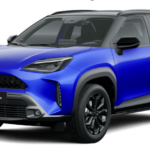 Toyota Yaris Cross vs Hyundai Kona Australia: Which Small SUV Wins?
Its hybrid system is particularly well suited to stop-start traffic, while its 4,180mm length makes it slightly easier to manoeuvre than the 4,275mm Mazda CX-3. The larger 2WD cargo compartment also makes the Toyota more versatile once the weekday commute turns into a supermarket run or weekend getaway.
Leave a Reply