
Renault Captur vs Opel Mokka Australia: Which Small SUV Makes More Sense?

The Renault Captur vs Opel Mokka Australia comparison is a slightly unusual one. On paper, these two compact European SUVs look like natural rivals. They are stylish, city-sized, relatively light on their feet and designed for buyers who want something with more personality than the typical small SUV.
But there is an elephant in the showroom.
Actually, there are two.
The Renault Captur is no longer part of Renault Australia's current new-car range, having effectively been replaced by the larger Renault Symbioz. Meanwhile, the modern Opel Mokka is not officially sold through an Australian Opel dealer network. That means Australian buyers are largely comparing a locally sold former Renault model with a vehicle they may encounter through imports, overseas research or the used-car market.
Does that make the comparison pointless?
Not at all.
For used-car shoppers, enthusiasts and anyone considering an imported Mokka, there is plenty worth examining. In fact, once we look beyond the badges, the differences between these SUVs become surprisingly interesting.
The Captur approaches the small-SUV formula like a comfortable pair of European trainers: flexible, easygoing and practical. The Mokka feels more like a sharply tailored jacket. It sacrifices a little softness for design drama.
So, which one would we rather own in Australia?
Let's dig in.
- Renault Captur vs Opel Mokka Australia at a Glance
- Is the Renault Captur Still Sold in Australia?
- Is the Opel Mokka Sold in Australia?
- Exterior Design: French Elegance vs German Attitude
- Interior Design and Cabin Atmosphere
- Cabin Winner: Captur or Mokka?
- Passenger Space
- Boot Space and Everyday Practicality
- Engines and Performance
- Fuel Economy
- Ride Comfort
- Handling and Steering
- Technology and Infotainment
- Safety
- Reliability: Renault Captur vs Opel Mokka
- Servicing and Parts Availability in Australia
- Insurance
- Resale Value
- Which Is Better for City Driving?
- Which Is Better for Families?
- Which Is Better for Enthusiasts?
- Renault Captur Advantages
- Renault Captur Disadvantages
- Opel Mokka Advantages
- Opel Mokka Disadvantages in Australia
- Used Renault Captur vs Imported Opel Mokka
- What About the Renault Symbioz?
- What About the Mitsubishi ASX?
- Which One Offers Better Value?
- Renault Captur vs Opel Mokka Australia: Our Verdict
- Closing Thoughts
- Frequently Asked Questions
Renault Captur vs Opel Mokka Australia at a Glance
Before disappearing down the rabbit hole of specifications, it helps to understand what each SUV is trying to achieve.
The Renault Captur was designed as an urban crossover sitting between a conventional hatchback and a larger family SUV. Australian versions of the second-generation Captur paired compact dimensions with a turbocharged petrol engine, front-wheel drive and a seven-speed dual-clutch automatic transmission.
The Opel Mokka takes a similar basic approach but wraps it in much more angular styling. Overseas versions have been available with petrol engines and fully electric powertrains, depending on model year and market.
Australian buyers, however, have to add another category to the comparison: ownership practicality.
| Category | Renault Captur | Opel Mokka |
|---|---|---|
| Official Australian new-car presence | No longer sold new | Not officially sold |
| Body style | Small SUV | Small SUV |
| Character | Comfortable and practical | Stylish and sporty |
| Best environment | City/suburban driving | City/suburban driving |
| Australian support | Stronger | Limited |
| Used-car practicality | Better | More complicated |
| Design personality | Chic | Bold and futuristic |
Immediately, the Captur has one enormous advantage: Australian market history.
Renault Australia still recognises the Captur within its servicing and warranty ecosystem, while Opel does not operate the same mainstream local network for the current Mokka. Renault's Australian servicing terms continue to list Captur among eligible models.
And that changes everything.
Is the Renault Captur Still Sold in Australia?
No, not as a current new Renault in 2026.
Renault Australia originally planned to introduce the facelifted Captur locally, but those plans changed. The company instead brought in the Renault Symbioz, effectively putting the Captur nameplate on ice in Australia.
That doesn't mean the Captur has vanished.
Used examples remain available, and the model was officially sold here for years. Australian-market Capturs therefore benefit from an established history involving dealers, service procedures, parts catalogues and owner familiarity.
Interestingly, the Captur's DNA hasn't completely disappeared from Australian showrooms either. The newer Mitsubishi ASX sold locally is closely related to the facelifted European Renault Captur.
Why This Matters for Buyers
Buying a discontinued model isn't automatically a bad decision.
Cars disappear from Australian showrooms all the time because manufacturers adjust their product strategies. What matters more is whether owners can still obtain:
- servicing,
- mechanical parts,
- consumables,
- diagnostic support,
- warranty assistance where applicable,
- independent specialist knowledge.
On those points, a locally delivered Captur has a significant advantage over an independently imported Opel Mokka.
Is the Opel Mokka Sold in Australia?
The modern Opel Mokka is not part of Australia's mainstream new-car market.
Opel itself had a short-lived Australian sales presence more than a decade ago, but the brand withdrew in 2013. The present-generation Mokka is available in other right-hand-drive markets, including New Zealand, but its ANCAP documentation specifically notes its New Zealand introduction rather than an Australian launch.
That distinction is important.
Seeing a vehicle with an ANCAP rating does not necessarily mean you can walk into an Australian dealership and buy one.
Could You Own a Mokka in Australia?
Potentially, yes, depending on import eligibility and compliance requirements.
But that's very different from buying an officially distributed car.
Imported vehicles may introduce complications involving:
- insurance,
- replacement body panels,
- diagnostic equipment,
- electronic modules,
- resale valuation,
- warranty support,
- specialist repairs.
For someone who loves the Mokka's styling, those drawbacks may be acceptable.
For the average commuter?
Probably not.
Exterior Design: French Elegance vs German Attitude
This might be the most subjective part of our Renault Captur vs Opel Mokka Australia comparison, but it is also where the cars feel furthest apart.
Renault Captur Styling
The Captur follows Renault's familiar formula of flowing curves, sculpted sides and prominent lighting signatures.
It looks modern without shouting.
There is a softness to its design that gives it broad appeal. You could park one outside a fashionable café or a suburban supermarket and it wouldn't look out of place in either setting.
The Captur's design priorities lean towards elegance rather than aggression.
Opel Mokka Styling
The Mokka arrives wearing sharper clothes.
Its distinctive front-end treatment, short overhangs and geometric design language make it look considerably more futuristic.
Where the Captur whispers, the Mokka speaks louder.
Which Design Ages Better?
We suspect the Captur.
The Mokka makes the stronger first impression, but dramatic styling can age more quickly. The Renault's smoother surfaces and more conventional proportions may look less adventurous today yet potentially more timeless five or ten years down the road.
Still, design is emotional.
If walking back to your car after buying groceries and thinking, that looks fantastic, matters to you, the Opel has genuine appeal.
Interior Design and Cabin Atmosphere
Step inside and the same personality split continues.
The Captur tries to make everyday life comfortable.
The Mokka tries to make everyday life feel futuristic.
Inside the Renault Captur
The second-generation Captur represented a major cabin improvement over its predecessor.
Its dashboard became cleaner, materials improved and vertically oriented infotainment displays helped distinguish higher-spec versions.
The driving position is pleasantly elevated without making us feel as though we're sitting on top of the vehicle.
Storage is also intelligently integrated.
That's an underrated quality.
Fancy ambient lighting is nice. A place to put your phone, drink bottle and sunglasses is something you'll appreciate every single day.
Inside the Opel Mokka
The Opel takes a more driver-focused approach.
Its digital cockpit presentation stretches displays across the driver's field of vision, creating a cleaner and more technology-heavy atmosphere.
It immediately feels newer.
But there is also something refreshingly sensible about Opel's approach: physical controls haven't been completely sacrificed at the altar of touchscreen minimalism.
That's good.
Nobody wants to navigate three touchscreen menus just to change the cabin temperature while travelling at 100km/h.
Cabin Winner: Captur or Mokka?
For design?
Mokka.
For day-to-day usability?
Captur.
The Renault's interior simply feels better aligned with the messy reality of ownership: shopping bags, charging cables, phones, passengers, coffee cups and the random collection of objects that eventually colonises every family car.
Passenger Space
Compact SUVs are masters of visual deception.
From outside, they look larger than hatchbacks.
Inside, some suddenly reveal that they aren't.
The Captur is surprisingly clever in this respect.
Renault Captur Rear Seat Space
One of the Captur's most useful features is its emphasis on interior flexibility.
Its packaging makes good use of a relatively compact footprint, giving rear passengers reasonable space without turning the vehicle into something cumbersome around town.
This is exactly what a small SUV should do.
Families with young children should find the Captur particularly appealing because it combines easy access with manageable exterior dimensions.
Opel Mokka Rear Seat Space
The Mokka's sportier proportions work against it slightly.
Rear-seat accommodation is adequate, but it isn't the model's strongest selling point.
Put tall adults in both rows and things become noticeably tighter.
The Opel therefore feels better suited to couples, singles, downsizers or families whose rear seats are used occasionally rather than constantly.
Boot Space and Everyday Practicality
This category matters more than marketing departments sometimes admit.
A small SUV can have 17 drive modes and enormous digital displays, but none of that matters when your suitcase doesn't fit.
Captur Practicality
The Captur has historically been strong when it comes to luggage flexibility.
Its sliding rear bench design on relevant versions allows owners to trade passenger space for cargo capacity.
That is genuinely useful.
Imagine heading away for the weekend.
No rear passengers?
Slide the bench forward and gain extra storage.
Taking friends?
Move it back again.
Simple ideas often make the biggest difference.
Mokka Practicality
The Mokka offers enough boot room for normal urban life, but its packaging isn't quite as clever.
You won't struggle with ordinary supermarket runs or a couple of cabin-sized suitcases, yet families carrying prams, sports equipment or holiday luggage may appreciate the Captur's more adaptable nature.
Practicality Winner
Renault Captur.
Not dramatically.
But convincingly.
Engines and Performance
Australian-delivered examples of the later Captur commonly used Renault's turbocharged 1.3-litre petrol engine producing around 113kW and 270Nm, paired with a seven-speed dual-clutch automatic transmission.
Those numbers are healthy for such a compact SUV.
How the Captur Feels on the Road
The turbo engine delivers useful mid-range torque, meaning we don't need to thrash it when merging onto a motorway or climbing a steep hill.
It's not a hot hatch.
Nor is it pretending to be.
Instead, the Captur offers enough performance to feel relaxed in normal Australian traffic.
This content may interest you!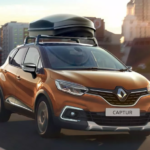 Renault Captur or Kadjar Australia: Which Used Renault SUV Makes More Sense?
The dual-clutch transmission is generally more satisfying once moving than when crawling around at very low speeds, which is typical of this gearbox style.
How the Mokka Performs
Mokka specifications vary substantially by overseas market and model year.
Depending on configuration, buyers may encounter turbo-petrol or electric versions.
Petrol versions tend to emphasise efficiency rather than raw acceleration.
The interesting exception is the electric Mokka.
Electric motors fundamentally change the low-speed experience because instant torque makes urban acceleration feel punchy and effortless.
But There Is a Catch
An electric Mokka imported into Australia introduces another layer of complexity.
Charging compatibility, servicing expertise, software diagnostics and high-voltage replacement parts are all worth researching carefully.
The EV may be the more technologically interesting car.
The Australian-delivered petrol Captur remains the easier car to own.
Fuel Economy
Neither SUV was conceived as a fuel-hungry machine.
Their compact bodies, modest engines and front-wheel-drive architecture help keep consumption manageable.
In Australian conditions, however, real-world economy depends heavily on where we drive.
Short city journeys?
Expect consumption to rise.
Long motorway trips?
Both become much more efficient.
Constant stop-start traffic with aggressive acceleration?
The petrol pump will notice.
The Captur's Advantage
Because Australian examples share a relatively familiar drivetrain, finding real-world ownership information is much easier.
That means buyers can research local experiences involving:
- Australian fuel,
- Australian temperatures,
- Australian road conditions,
- local servicing intervals,
- actual commuter driving.
That information is surprisingly valuable when shopping used.
Ride Comfort
This is where the Captur begins pulling ahead.
Renault has traditionally understood that a compact crossover doesn't need suspension made from granite to feel sporty.
The Captur generally favours compliance.
It absorbs ordinary road imperfections without constantly reminding passengers that engineers tuned the suspension on a racetrack.
Driving the Captur Around Australian Cities
Our urban roads can be unpredictable.
Smooth asphalt suddenly becomes patched asphalt.
Then comes a pothole.
Then a speed hump.
Then roadworks.
A forgiving suspension setup makes everyday driving far less tiring.
The Captur fits this environment nicely.
Mokka Ride Quality
The Mokka's firmer, more planted character gives it a slightly sportier personality.
Some drivers will prefer that.
The trade-off is that sharp bumps can become more noticeable, particularly when larger wheels and low-profile tyres enter the equation.
Handling and Steering
Neither vehicle belongs at a weekend track day.
Thankfully.
A small SUV should be easy, predictable and confidence-inspiring.
Captur Handling
The Captur prioritises stability over excitement.
Its steering is relatively light, which suits tight parking areas and inner-city streets.
Push harder through corners and the vehicle behaves predictably, but there's no illusion that we're driving a sports car.
That's fine.
Mokka Handling
The Mokka feels a little more alert.
Its compact dimensions and firmer chassis give it a livelier character through corners.
Drivers who enjoy winding roads may therefore prefer the Opel.
Handling Winner
Opel Mokka, narrowly.
Comfort Winner
Renault Captur, more clearly.
Technology and Infotainment
Technology dates faster than almost anything in a modern vehicle.
A dashboard that feels futuristic today can resemble an old smartphone within six years.
Both SUVs embraced digital displays, but the Opel's presentation feels more dramatic.
Captur Technology
Depending on trim, Captur equipment can include features such as:
- touchscreen infotainment,
- smartphone connectivity,
- digital instrumentation,
- reversing camera,
- parking sensors,
- keyless entry,
- driver-assistance technology.
Higher specifications feel suitably premium for the segment.
Mokka Technology
The Mokka's dashboard design gives technology greater visual prominence.
Dual-screen-style layouts dominate the cabin and reinforce its futuristic personality.
This makes the Opel look newer at first glance.
Still, technology isn't just about screen size.
Software stability, connectivity and serviceability matter too.
And once again, official Australian support swings the ownership argument back toward Renault.
Safety
Safety should never be reduced to badge reputation.
Equipment, vehicle generation and testing protocol matter much more.
The modern Opel Mokka carries an ANCAP assessment derived from its New Zealand-market introduction. ANCAP lists autonomous emergency braking, lane-support functions and speed-sign recognition among standard technologies.
The Captur generation sold in Australia was also equipped with a range of modern driver-assistance features depending on variant.
What Should Used Buyers Check?
Don't assume every example has identical equipment.
Before buying either vehicle, verify the actual VIN and specification.
Look specifically for:
- autonomous emergency braking,
- blind-spot monitoring,
- lane-keeping assistance,
- adaptive cruise control,
- reversing camera,
- parking sensors,
- tyre-pressure monitoring,
- airbag configuration.
Used vehicles imported from different markets can have surprisingly different equipment despite looking identical.
Reliability: Renault Captur vs Opel Mokka
Now we enter dangerous internet territory.
Search practically any car followed by the word problems, and five minutes later you'll think the engine explodes every Tuesday.
Reality is more nuanced.
Both models use modern European automotive technology involving turbocharging, electronics and sophisticated automatic transmissions.
Maintenance history therefore matters tremendously.
Captur Reliability Considerations
When inspecting a used Captur, we'd pay attention to:
- complete service history,
- transmission behaviour,
- warning lights,
- infotainment operation,
- battery condition,
- cooling-system maintenance,
- suspension noises,
- evidence of accident repairs.
A well-maintained Captur can be a far safer purchase than a cheaper example with mysterious gaps in its history.
Mokka Reliability Considerations
For a Mokka in Australia, mechanical condition is only half the equation.
The bigger question is:
Who will fix it if something goes wrong?
That's where ownership risk rises.
A perfectly reliable imported car can become frustrating if one electronic module fails and takes months to source.
Servicing and Parts Availability in Australia
Here we reach perhaps the most decisive section of the entire comparison.
Renault continues to operate officially in Australia, and its current servicing documentation still includes Captur within its eligible-model framework. Renault also publishes warranty support applicable to qualifying Captur vehicles.
Opel doesn't offer a comparable mainstream Australian infrastructure for the current Mokka.
Why Parts Availability Matters
Consider something simple.
You damage a mirror.
For the Captur, sourcing one should generally be straightforward through Australian channels, wreckers or international suppliers.
For an imported Mokka?
Maybe it's simple.
Maybe the correct mirror contains heating, blind-spot sensors, power folding and market-specific electronics.
Suddenly, a minor parking accident becomes an international logistics exercise.
That's the sort of ownership inconvenience spec sheets never mention.
Insurance
Another hidden factor in the Renault Captur vs Opel Mokka Australia debate is insurance.
Locally delivered vehicles are usually much easier for insurers to classify, value and repair.
An imported vehicle may require specialist insurance depending on its circumstances.
Premiums aren't necessarily astronomical, but we'd obtain firm quotes before purchasing anything unusual.
Never assume.
A cheap imported SUV stops looking cheap when insurance costs twice what you expected.
Resale Value
Resale value is difficult to predict precisely, but market familiarity matters.
The Captur was never Australia's highest-volume small SUV, yet buyers recognise Renault and there is an established local vehicle history.
The Opel Mokka is much more obscure here.
That gives it exclusivity.
Unfortunately, exclusivity is a double-edged sword.
This content may interest you!Renault Captur vs Symbioz Australia: Which Renault SUV Makes More Sense?Mokka Resale Advantages
Someone specifically looking for a Mokka may pay a premium for the right example.
Mokka Resale Disadvantages
The potential buyer pool is small.
Many ordinary used-car shoppers will simply choose a Toyota, Mazda, Hyundai, Kia, Mitsubishi or Renault rather than investigate an unfamiliar imported Opel.
The Captur is therefore easier to value and potentially easier to move on.
Which Is Better for City Driving?
Both work beautifully as city cars.
Compact dimensions make parking easier than in sprawling family SUVs.
The elevated seating positions improve visibility.
Turbo engines provide enough performance without excessive fuel consumption.
But the Captur edges ahead.
Why?
Comfort.
Practicality.
And Australian support.
The Mokka arguably looks cooler navigating Melbourne laneways or Sydney's inner suburbs, but the Captur feels more sensible once the novelty fades.
Which Is Better for Families?
Again, the Renault.
Not because the Opel is unsuitable for families.
Rather, the Captur simply makes family duties easier.
We prefer its combination of:
- rear-seat flexibility,
- storage,
- luggage versatility,
- softer ride,
- established servicing,
- easier parts availability.
If you've ever tried loading a tired toddler into a car while carrying shopping bags in the rain, you'll understand why boring practical details suddenly become extremely important.
Which Is Better for Enthusiasts?
This one flips.
The Opel Mokka is the more interesting choice.
Seeing one on Australian roads would be unusual.
Its exterior design is distinctive.
Its cabin feels bold.
Imported examples have novelty value that the Captur cannot really match.
For an enthusiast willing to accept additional maintenance and sourcing challenges, the Opel has charm.
Think of it like owning an unusual mechanical watch.
A basic smartwatch is easier.
But that's not always the point.
Renault Captur Advantages
The Captur's strongest qualities include:
- Established Australian history
- Better local servicing prospects
- Good cabin flexibility
- Comfortable urban ride
- Useful turbocharged performance
- More straightforward insurance
- Potentially easier resale
- Greater familiarity among independent mechanics
- Good everyday practicality
The vehicle isn't perfect, but its strengths align well with what Australian small-SUV owners actually need.
Renault Captur Disadvantages
There are drawbacks.
The Captur has now disappeared from Renault Australia's new-car range, with the newer Symbioz taking over its role.
That means buyers considering one today are essentially entering the used market.
Other weaknesses may include:
- dual-clutch transmission behaviour at very low speeds,
- relatively modest brand resale compared with Toyota or Mazda,
- infotainment that may feel dated beside newer rivals,
- limited performance appeal,
- fewer examples available than mainstream competitors.
These aren't deal-breakers.
But they matter.
Opel Mokka Advantages
The Mokka fights back with personality.
Its best qualities include:
- striking exterior styling,
- modern digital cabin,
- compact footprint,
- enjoyable urban dimensions,
- unusual Australian presence,
- sharper driving character,
- availability of interesting overseas powertrains.
For buyers bored with seeing identical SUVs everywhere, the Opel feels refreshing.
Opel Mokka Disadvantages in Australia
Unfortunately, Australian ownership changes the equation dramatically.
Potential disadvantages include:
- no mainstream Australian Opel dealer network,
- import complications,
- uncertain parts availability,
- possible specialist insurance requirements,
- limited local mechanical familiarity,
- potentially slower accident repairs,
- weaker resale liquidity,
- difficulty comparing Australian market values.
That list is difficult to ignore.
A vehicle can be brilliant in Germany and inconvenient in Australia at exactly the same time.
Used Renault Captur vs Imported Opel Mokka
Suppose both cars are sitting in front of us at similar prices.
Which one would we buy?
We'd start with one question:
Is this our only car?
If yes, we'd choose the Captur.
Reliability isn't merely about whether something breaks. It's about how quickly life returns to normal afterward.
When a locally supported vehicle develops a fault, there is usually a clear repair pathway.
An unusual import may turn that pathway into detective work.
When the Mokka Makes Sense
We'd consider the Opel if:
- it were a second vehicle,
- we genuinely loved the styling,
- import documentation were complete,
- an appropriate workshop had already been identified,
- insurance had been confirmed,
- parts sourcing had been researched,
- the purchase price compensated for additional ownership risk.
Under those circumstances, the Mokka becomes an interesting enthusiast choice rather than an impractical gamble.
What About the Renault Symbioz?
Australian shoppers should also know that the more relevant new-car alternative to the Captur is now the Renault Symbioz.
Renault launched the Symbioz locally in 2026, effectively replacing the Captur in its small-SUV lineup. The vehicle also introduced a full-hybrid option to Renault's Australian passenger-car offering.
So if you're reading this comparison because you want a brand-new Renault, we'd investigate the Symbioz rather than hunting for remaining Captur stock.
The Captur remains more relevant as a used-car proposition.
What About the Mitsubishi ASX?
Here's another twist.
The latest Mitsubishi ASX sold in Australia is closely related to the Renault Captur platform and design sold overseas.
In other words, someone who likes the newer Captur concept but wants stronger mainstream Australian market backing has another route.
That makes the Mokka's case even harder.
Australian buyers aren't short of compact SUVs with factory support.
Which One Offers Better Value?
Value isn't the same as price.
A $25,000 car that requires difficult-to-source parts can ultimately provide worse value than a $28,000 vehicle that's easy to maintain.
That's why we'd calculate ownership value using more than the purchase figure.
Our Value Checklist
Before choosing either SUV, compare:
- purchase price,
- service history,
- insurance premium,
- tyre replacement cost,
- scheduled maintenance,
- estimated depreciation,
- parts availability,
- fuel requirements,
- registration,
- likely repair downtime.
When we include all of these factors, the Captur normally becomes the safer Australian purchase.
Renault Captur vs Opel Mokka Australia: Our Verdict
If we ignore geography, this comparison is close.
The Mokka has the stronger visual personality.
It feels sharper, more distinctive and arguably more modern.
The Captur responds with better practicality, greater cabin flexibility and a more relaxed character.
Bring Australia back into the equation, however, and the contest changes dramatically.
Best Design: Opel Mokka
Few small crossovers look quite like it.
Best Practicality: Renault Captur
Flexible packaging gives it the advantage.
Best Ride Comfort: Renault Captur
Its softer personality works well for everyday roads.
Best Driver Appeal: Opel Mokka
It feels slightly more eager and distinctive.
Best Australian Ownership Proposition: Renault Captur
This isn't particularly close.
Best Overall Choice for Australia: Renault Captur
The Captur wins because buying a car is about more than the first test drive.
It's about the Tuesday morning three years later when you need a replacement sensor.
It's about finding insurance.
It's about servicing.
It's about resale.
It's about getting back on the road quickly after someone reverses into your bumper.
The Opel Mokka may make our hearts beat faster, but the Renault Captur lets our heads sleep more comfortably.
Closing Thoughts
The Renault Captur vs Opel Mokka Australia comparison demonstrates something we often forget when discussing cars online: location matters.
A vehicle doesn't exist in isolation.
It exists inside an ecosystem of dealers, mechanics, insurers, parts suppliers and future buyers.
The Opel Mokka is a charismatic European crossover with striking styling and plenty of appeal. In a market where Opel officially sells and supports it, we'd happily put it on a small-SUV shopping list.
Australia is different.
Here, the locally delivered Renault Captur makes substantially more sense, particularly as a used vehicle. It combines attractive European styling with useful cabin flexibility, comfortable road manners and a far clearer servicing pathway.
Yes, the Captur itself has now left Renault's Australian new-car range.
But Renault hasn't left Australia.
That difference is crucial.
For most people, we'd therefore choose a well-maintained Australian-delivered Captur over an imported Opel Mokka.
The Mokka is the more intriguing choice.
The Captur is the easier one to live with.
And when we're spending our own money, ease of ownership counts for a lot.
Frequently Asked Questions
1. Is the Opel Mokka available in Australia?
The current Opel Mokka is not officially sold through a mainstream Opel dealer network in Australia. The model is available in certain overseas markets, including right-hand-drive markets, so Australian examples may occasionally appear through alternative import channels. Buyers should investigate compliance, insurance, servicing and parts availability before purchasing one.
2. Is the Renault Captur still available new in Australia?
Renault has stopped offering the Captur as part of its current Australian new-car lineup. In 2026, the Renault Symbioz effectively replaced it in the brand's local small-SUV strategy. Used Capturs remain available, and Renault Australia's servicing documentation continues to recognise the model.
3. Which is more practical, the Renault Captur or Opel Mokka?
We give the Renault Captur the advantage. Its emphasis on flexible passenger and luggage space makes it particularly useful for small families and buyers who regularly alternate between carrying passengers and cargo. The Mokka remains practical enough for daily life but prioritises styling and compact proportions more heavily.
This content may interest you!Renault Captur vs Skoda Kamiq Australia: Which Small European SUV Makes More Sense?4. Which is better to drive, the Opel Mokka or Renault Captur?
The Opel Mokka arguably feels sportier and more distinctive, while the Captur focuses more strongly on comfort. Buyers who enjoy sharper responses may prefer the Mokka, whereas commuters dealing with imperfect urban roads are likely to appreciate the Renault's more relaxed setup.
5. Should I buy an imported Opel Mokka in Australia?
Only after researching the ownership implications carefully. Confirm insurance eligibility, parts supply, servicing expertise, import compliance and resale prospects before committing. For someone wanting a distinctive second vehicle, a Mokka could be entertaining. For buyers needing dependable everyday transport, an Australian-delivered Captur is generally the lower-risk option.
Leave a Reply