
Toyota HiLux vs Tundra Australia: Which Toyota Ute Makes More Sense?

The Toyota HiLux vs Tundra Australia comparison has become much more interesting now that Toyota officially sells the full-size Tundra alongside the hugely popular HiLux.
At first glance, they appear to perform the same basic job. Both are Toyota 4x4 utes with a separate tray, strong towing capability and the ability to travel well beyond sealed roads.
In reality, however, they belong to very different categories.
The HiLux is a conventional Australian mid-size ute designed to compete with vehicles such as the Ford Ranger, Isuzu D-Max and Mitsubishi Triton. The Tundra is a full-size American pickup designed to rival vehicles such as the Ford F-150, Chevrolet Silverado 1500 and Ram 1500.
The difference becomes obvious when we look at the numbers.
Australia's Tundra uses Toyota's i-FORCE MAX 3.5-litre twin-turbo V6 petrol hybrid system producing 326kW and 790Nm, while the current HiLux 2.8-litre turbo-diesel produces up to 150kW and 500Nm. Maximum braked towing capacity is 4500kg for the Tundra compared with 3500kg for 4x4 HiLux variants.
But bigger numbers do not automatically make the Tundra the smarter choice.
For many Australian buyers, the smaller HiLux remains considerably easier and cheaper to live with.
- Toyota HiLux vs Tundra Australia Specifications
- HiLux vs Tundra Engine and Performance
- Is the Toyota Tundra Much Faster Than the HiLux?
- Toyota HiLux vs Tundra Towing Capacity
- GVM and GCM Matter When Towing
- HiLux vs Tundra Payload
- Toyota HiLux vs Tundra Size Comparison
- HiLux vs Tundra Interior Space
- Toyota HiLux vs Tundra Fuel Economy
- Toyota HiLux vs Tundra Off-Road
- HiLux vs Tundra for Touring Australia
- Toyota HiLux vs Tundra Reliability
- HiLux vs Tundra Running Costs
- HiLux vs Tundra for Everyday Driving
- Toyota HiLux vs Tundra Price Australia
- Toyota HiLux vs Tundra: Pros and Cons
- Toyota HiLux vs Tundra for Caravans
- Toyota HiLux or Tundra for Work?
- Is the Toyota Tundra Worth the Extra Money Over a HiLux?
- Toyota HiLux vs Tundra: Which Should We Buy in Australia?
- Frequently Asked Questions
- Final Thoughts
Toyota HiLux vs Tundra Australia Specifications
For a useful comparison, we can put a high-spec 2026 HiLux Rugged X against the entry Toyota Tundra Limited.
| Specification | Toyota HiLux Rugged X | Toyota Tundra Limited |
|---|---|---|
| Engine | 2.8L 4-cylinder turbo-diesel with V-Active | 3.5L twin-turbo V6 hybrid |
| Maximum power | 150kW | 326kW |
| Maximum torque | 500Nm | 790Nm |
| Transmission | 6-speed automatic | 10-speed automatic |
| Drivetrain | 4x4 | Part-time 4WD |
| Braked towing capacity | 3500kg | 4500kg |
| Length | 5320mm | 5955mm |
| Width | 1885mm | 2040mm |
| Wheelbase | 3085mm | 3700mm |
| Approx. maximum kerb weight | 2327kg | 2792kg |
| GVM | 3120kg | 3536kg |
| GCM | 6300kg | 8030kg |
| Seats | 5 | 5 |
| Australian list price* | $71,990 | $155,990 |
*Indicative prices before on-road costs. Toyota HiLux pricing starts substantially lower depending on body style and specification.
Toyota's May 2026 specification sheets confirm the Tundra's 3536kg GVM and up to 8030kg GCM, while the relevant HiLux 4x4 variants use a 3120kg GVM and 6300kg GCM.
The price difference is particularly important. Toyota announced the Tundra Limited at $155,990 before on-road costs, while the Platinum sits at $172,990. By comparison, the 2026 HiLux Rogue and Rugged X are listed at $71,990 before on-road costs.
HiLux vs Tundra Engine and Performance
There is no real contest if maximum performance is the priority.
Toyota HiLux 2.8 Diesel
The HiLux continues with Toyota's well-known 2.8-litre four-cylinder turbo-diesel.
In current automatic versions it produces:
150kW of power and 500Nm of torque.
The latest Australian HiLux range also includes V-Active 48V technology on selected grades, designed to improve drivability and efficiency.
Those figures are more than sufficient for normal Australian ute duties, including carrying equipment, towing caravans and driving on rough tracks.
The diesel engine also delivers its torque relatively low in the rev range, something particularly useful when towing or driving slowly off-road.
Toyota Tundra i-FORCE MAX
The Tundra operates on an entirely different level.
Its 3445cc twin-turbo V6 petrol engine works with an electric motor as part of Toyota's i-FORCE MAX system.
Combined output is:
326kW and 790Nm.
Power is sent through a 10-speed automatic transmission to a part-time 4WD system with an electronically controlled two-speed transfer case.
The additional 176kW and 290Nm compared with the HiLux give the Tundra significantly stronger acceleration and considerably more effortless performance when moving a heavy trailer.
Is the Toyota Tundra Much Faster Than the HiLux?
Yes.
The HiLux feels reasonably strong for a four-cylinder diesel ute, particularly once the turbo is producing maximum torque.
The Tundra feels much more like a powerful large SUV or American performance pickup.
Its hybrid motor provides additional torque assistance, while the twin-turbo V6 has considerably greater power available at higher speeds.
That difference becomes particularly noticeable during highway overtaking.
A loaded HiLux may require some planning before overtaking with a caravan attached. The Tundra has much larger performance reserves.
For buyers travelling long distances with heavy loads, that reserve can make highway driving considerably more relaxed.
Toyota HiLux vs Tundra Towing Capacity
Towing is probably the strongest argument for considering the Tundra.
HiLux Towing Capacity
Current Australian 4x4 HiLux models are rated to tow up to 3500kg braked.
This content may interest you!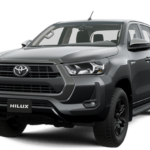 Toyota Hilux vs Mitsubishi Triton Australia: Which Ute Is Better?
That figure has effectively become the benchmark for Australia's mainstream dual-cab ute segment.
A 3500kg rating covers most conventional caravans, boats, horse floats and recreational trailers.
Tundra Towing Capacity
The Australian Toyota Tundra increases maximum braked towing capacity to 4500kg.
That extra tonne is significant.
A buyer with a 3800kg or 4000kg caravan simply cannot legally tow it behind a standard HiLux rated to 3500kg.
The Tundra gives owners significantly more headroom.
However, maximum towing capacity should never be considered independently.
GVM and GCM Matter When Towing
A common mistake when comparing the Toyota Tundra vs HiLux towing capacity is looking only at the headline 4500kg and 3500kg figures.
We also need to understand GVM and GCM.
GVM is the maximum permitted weight of the vehicle when loaded.
GCM is the maximum permitted combined mass of the vehicle and trailer.
The current HiLux 4x4 has a GCM of approximately 6300kg, while the Tundra Limited reaches approximately 8030kg.
Passengers, luggage, accessories, bull bars, canopies, towball mass and anything placed in the tray all affect the available capacity.
Anyone planning to tow close to either vehicle's maximum rating should therefore calculate the complete vehicle-and-trailer combination rather than relying on the advertising figure alone.
HiLux vs Tundra Payload
This category produces an interesting result.
You might assume that because the Tundra is substantially larger, its payload would also be dramatically higher.
That isn't necessarily the case.
Using Toyota's May 2026 maximum kerb-weight figures, the Tundra Limited's 3536kg GVM minus its approximately 2792kg maximum kerb weight leaves around 744kg before passengers, accessories and cargo are added.
The Platinum is heavier again, so its available payload is lower.
Meanwhile, a HiLux Rugged X with a 3120kg GVM and approximate maximum kerb weight of 2327kg leaves roughly 793kg.
Other lighter HiLux configurations can provide considerably more payload.
Therefore, the Tundra's major advantage is not necessarily how much weight you can place directly in the tray.
Its biggest advantage is its towing capacity, GCM, power and physical size.
Toyota HiLux vs Tundra Size Comparison
Size may ultimately determine which vehicle is practical for you.
The Tundra measures approximately 5955mm long, 2040mm wide and 1985mm tall, with a huge 3700mm wheelbase.
A HiLux Rugged X measures approximately 5320mm long and 1885mm wide, with a 3085mm wheelbase.
That means the Tundra is roughly:
635mm longer and 155mm wider.
That may not sound enormous on paper, but the difference feels substantial in an Australian shopping-centre car park.
Parking the Tundra in Australia
This is one of the strongest arguments for choosing the HiLux.
Australian parking spaces, apartment garages and inner-city streets were generally not designed around American full-size pickups.
A HiLux is already a fairly large vehicle.
A Tundra adds more than half a metre of length.
The Tundra's cameras and parking sensors certainly help, but they cannot physically make the vehicle smaller.
This content may interest you!Toyota Hilux or Ford Ranger Australia: Which Ute Should You Buy?Owners who spend most of their time in regional areas may barely notice the inconvenience.
Drivers regularly visiting central Sydney, Melbourne or Brisbane may notice it every day.
HiLux vs Tundra Interior Space
This is where the Tundra's exterior dimensions become an advantage.
Its cabin is enormous.
Both vehicles seat five people, but five seats does not mean equal accommodation.
The Tundra provides far more width across the cabin and considerably more space for adults in the second row.
Three adults sitting across the rear seat of a HiLux can feel crowded during a long trip.
The Tundra is much better suited to five large adults travelling substantial distances.
Tundra Platinum Luxury
The Tundra also moves further into luxury-SUV territory in Platinum specification.
Toyota equips the Platinum with premium leather-accented seats, heated and ventilated front and rear seats, front massage functionality, a panoramic roof, heated steering wheel and head-up display.
Both Tundra grades use a 14-inch touchscreen, 12-speaker JBL audio and 12.3-inch digital instrument display.
The Tundra therefore feels less like a traditional commercial ute and more like a luxury touring vehicle with a tray attached.
Toyota HiLux vs Tundra Fuel Economy
Fuel consumption strongly favours the HiLux.
Toyota quotes combined consumption of approximately 7.1-7.6L/100km for several current HiLux 4x4 configurations, depending on variant. The Rugged X is rated at 7.6L/100km under laboratory testing.
The situation is different with the Tundra.
Toyota does not publish an Australian combined fuel-consumption figure for the Tundra because of its vehicle classification and GVM.
Independent Australian testing provides a useful indication instead.
CarExpert reported approximately 14L/100km during one mixed driving loop and 19.4L/100km across a longer test period, while CarsGuide recorded around 15.8L/100km in its testing. Real-world results will obviously change according to traffic, towing, terrain and driving style.
The Tundra also requires 95 RON premium unleaded petrol and has a substantial 122-litre fuel tank.
Does the Tundra Hybrid Save Fuel?
The word "hybrid" can be slightly misleading if we approach the Tundra expecting Prius-style fuel consumption.
Toyota's i-FORCE MAX system is primarily designed to complement the large V6 and deliver strong torque and performance.
It can improve efficiency in certain operating conditions, but this remains an almost six-metre-long vehicle weighing close to 2.8 tonnes before cargo.
Anyone buying a Tundra should budget accordingly for fuel.
Toyota HiLux vs Tundra Off-Road
Bigger isn't always better off-road.
The Tundra has excellent mechanical ingredients including part-time 4WD, low-range gearing and substantial torque.
For open trails, sand, long-distance touring and relatively spacious tracks, it can be extremely capable.
But Australia also has plenty of narrow bush tracks.
This is where the HiLux has a major advantage.
Its narrower body, shorter wheelbase and lower overall mass make it easier to position between trees, rocks and washouts.
The shorter wheelbase also reduces the possibility of the vehicle becoming hung up over sharp crests.
Which Is Better for Australian Bush Tracks?
For narrow and technical off-road driving, we would generally prefer the HiLux.
For wide tracks, long-distance touring and towing into remote areas, the Tundra's additional power and cabin space become more valuable.
Terrain therefore matters more than simply comparing engine outputs.
HiLux vs Tundra for Touring Australia
Both vehicles make sense for Australian touring, but they suit very different setups.
This content may interest you!Toyota HiLux vs LandCruiser Australia: Which One Should You Buy?The HiLux is ideal for conventional touring builds.
There is already an enormous Australian aftermarket supporting bull bars, snorkels, canopies, suspension upgrades, long-range tanks, roof racks and camping accessories.
Replacement parts and Toyota servicing are also widely available throughout Australia.
The Tundra becomes particularly attractive when the touring setup involves an exceptionally heavy caravan.
A traveller towing a 3000kg caravan probably does not need the Tundra's full capability.
Someone towing close to or beyond 3500kg has a much stronger reason to consider it.
Toyota HiLux vs Tundra Reliability
Toyota has built much of its Australian reputation around durability, particularly with vehicles such as the HiLux and LandCruiser.
However, we should separate reputation from long-term Australian evidence.
The HiLux has decades of Australian ownership history behind it, and its 2.8-litre turbo-diesel engine has already been used extensively.
The current Tundra is much newer to the Australian market.
Toyota conducted an Australian evaluation program before introducing the vehicle officially, but there simply is not the same depth of local long-term ownership data available yet.
For conservative buyers prioritising an established Australian platform with a huge existing servicing and parts ecosystem, the HiLux remains the more familiar option.
HiLux vs Tundra Running Costs
Purchase price is only the beginning.
A Tundra owner will generally need to budget more for fuel, tyres, insurance and potentially registration depending on the state.
Its 20-inch tyres are considerably larger than those fitted to many work-oriented HiLux models.
The Tundra also consumes premium unleaded petrol rather than diesel.
Most importantly, its initial purchase price is enormous compared with a HiLux.
The 2026 HiLux range begins at $33,990 before on-road costs for the 4x2 WorkMate single-cab chassis manual, although dual-cab 4x4 variants naturally cost substantially more.
Even comparing flagship HiLux versions around $71,990 with the $155,990 Tundra Limited leaves a price difference of roughly $84,000 before on-road costs.
That money could fund a substantial amount of fuel, accessories or caravan upgrades.
HiLux vs Tundra for Everyday Driving
For everyday commuting, the HiLux makes considerably more sense.
It is easier to park, easier to place in narrow traffic and less expensive to fuel.
The Tundra counters with substantially greater cabin comfort, effortless acceleration and huge interior space.
On an open Australian highway, the Tundra can feel exceptionally relaxed.
Inside a tight underground car park, the HiLux suddenly becomes much more appealing.
Your normal driving environment should therefore influence the decision heavily.
Toyota HiLux vs Tundra Price Australia
The price gap deserves its own section because these vehicles are not really competing at the same financial level.
A mainstream HiLux SR or SR5 can cost less than half the price of a Tundra.
Even Toyota's adventure-focused HiLux Rogue and Rugged X remain dramatically cheaper.
Current indicative pricing includes:
| Model | Price before on-road costs |
|---|---|
| HiLux WorkMate 4x2 single-cab manual | $33,990 |
| HiLux SR5 4x4 double-cab V-Active auto | $65,990 |
| HiLux Rogue 4x4 | $71,990 |
| HiLux Rugged X 4x4 | $71,990 |
| Tundra Limited | $155,990 |
| Tundra Platinum | $172,990 |
HiLux pricing comes from the announced 2026 range, while Toyota's published Tundra pricing lists the Limited and Platinum at $155,990 and $172,990 respectively before on-road costs. Prices can change, so buyers should check current Toyota Australia pricing before ordering.
Toyota HiLux vs Tundra: Pros and Cons
| Category | HiLux | Tundra |
|---|---|---|
| Purchase price | Much cheaper | Very expensive |
| Power | Strong enough for most uses | Exceptional |
| Torque | 500Nm | 790Nm |
| Towing | 3500kg | 4500kg |
| Fuel economy | Major advantage | Much higher consumption |
| Parking | Easier | Challenging in tight spaces |
| Cabin room | Good | Outstanding |
| Rear-seat space | Adequate | Excellent |
| Off-road size | Easier on narrow trails | Better suited to wider trails |
| Heavy caravan towing | Capable | Major advantage |
| Australian aftermarket | Enormous | Growing |
| Long-term local history | Extensive | Relatively limited |
Toyota HiLux vs Tundra for Caravans
For a caravan below roughly 3000kg, the HiLux deserves serious consideration because it provides sufficient rated towing capability without the considerable additional expense and physical size of the Tundra.
As caravan mass starts approaching the HiLux's 3500kg limit, the argument changes.
Running constantly near a vehicle's maximum capability leaves less flexibility for future caravan upgrades and requires careful management of payload, GVM, towball mass and GCM.
This content may interest you!Toyota HiLux vs Prado Australia: Which Toyota 4WD Makes More Sense?The Tundra's 4500kg towing rating and much larger GCM provide additional capacity for genuinely heavy towing.
That is arguably the clearest reason to spend the extra money.
Toyota HiLux or Tundra for Work?
For most tradespeople, farms and conventional commercial use, the HiLux remains the more practical tool.
It offers more body configurations, including single-cab, extra-cab, double-cab and cab-chassis variants.
The Tundra sold officially in Australia is much more specialised.
Its enormous cabin and towing capacity make it attractive for businesses moving substantial trailers or equipment, but its purchase price makes it difficult to justify as an ordinary work ute.
The HiLux range provides far more flexibility for commercial buyers.
Is the Toyota Tundra Worth the Extra Money Over a HiLux?
It depends entirely on whether we are going to use its extra capability.
Spending more than twice the price of a well-equipped HiLux simply to commute around town is difficult to justify financially.
But consider someone who regularly tows a four-tonne caravan while carrying a family across Australia.
The HiLux cannot tow a 4000kg trailer within its standard 3500kg maximum rating.
The Tundra can.
Suddenly the extra money is buying a capability the HiLux simply does not provide.
That is why comparing the two only on price misses the point.
Toyota HiLux vs Tundra: Which Should We Buy in Australia?
For the majority of Australian ute buyers, the Toyota HiLux is the more practical choice.
It costs dramatically less, uses substantially less fuel, fits more easily into Australian parking spaces and still offers up to 3500kg of braked towing capability.
It is also supported by one of Australia's largest 4x4 aftermarket ecosystems.
The Toyota Tundra becomes the more logical option when heavy towing, huge cabin space and outright performance are priorities.
Its 326kW/790Nm hybrid powertrain and 4500kg towing capacity give it capabilities the standard HiLux simply cannot match.
We can therefore simplify the decision this way.
If we need an everyday ute that can work, tour, tow and handle Australian tracks, the HiLux covers more situations at a much lower cost.
If we genuinely need to tow beyond 3500kg or want the space and performance of a full-size American pickup, the Tundra makes far more sense.
Frequently Asked Questions
Is a Toyota Tundra bigger than a HiLux?
Yes. Considerably bigger.
The Australian Tundra is approximately 5955mm long and 2040mm wide, while a HiLux Rugged X is approximately 5320mm long and 1885mm wide. The Tundra is therefore about 635mm longer and 155mm wider.
Can a Toyota Tundra tow more than a HiLux?
Yes. The Toyota Tundra sold in Australia has a maximum braked towing capacity of 4500kg. Current 4x4 HiLux models are rated to 3500kg braked. Actual towing suitability also depends on GVM, GCM, payload and towball mass.
Is the Toyota Tundra more powerful than the HiLux?
Yes. The Tundra's twin-turbo V6 hybrid produces 326kW and 790Nm. The current 2.8-litre turbo-diesel HiLux automatic produces up to 150kW and 500Nm.
Is the Toyota Tundra good for Australia?
The Tundra is particularly well suited to Australian buyers who need substantial towing capacity, large interior space and strong highway performance. Its main disadvantages in Australia are its physical size, fuel consumption and high purchase price.
Which is better for towing a caravan, HiLux or Tundra?
It depends on caravan weight. A HiLux can be an excellent tow vehicle for caravans comfortably within its 3500kg braked towing limit. For very heavy caravans approaching or exceeding 3500kg, the Tundra's 4500kg towing capacity and larger GCM provide considerably more capability.
Final Thoughts
The Toyota HiLux vs Tundra Australia comparison is less about identifying one universally superior ute and more about choosing the correct size of vehicle for the job.
The HiLux represents the traditional Australian formula: relatively compact dimensions, diesel torque, good fuel economy, 3500kg towing capability and enormous aftermarket support.
The Tundra takes almost everything to another level.
It provides more than twice the HiLux's power, considerably more torque, an extra tonne of rated towing capacity and a cabin large enough to rival luxury SUVs.
But it also brings full-size pickup dimensions, much greater fuel consumption and a purchase price beginning around $156,000 before on-road costs.
For normal work, recreational off-roading, commuting and towing moderate caravans, we would struggle to justify paying Tundra money when a HiLux performs those jobs so effectively.
This content may interest you!Can a Toyota Hilux Tow a Caravan? Towing Capacity, Limits and Practical GuideFor buyers regularly towing extremely heavy caravans, boats or trailers, however, the comparison changes completely.
In those situations, the Toyota Tundra offers something the standard HiLux cannot: 4500kg towing capability combined with 326kW, 790Nm and genuine full-size pickup space.
And that is ultimately what separates these two Toyotas.
Leave a Reply