
Isuzu D-Max Generations Australia: Complete Model History

The story of the Isuzu D-Max generations in Australia is less about flashy reinvention and more about steady, purposeful evolution. Since arriving under the Isuzu badge in 2008, the D-Max has grown from a simple, hard-working ute into a safer, more comfortable and technologically advanced all-rounder.
That transformation matters because Australians ask a lot from their utes. We expect them to carry tools during the week, tow caravans on holidays, cross rough tracks on weekends and still feel civilised enough for the school run. That is a tall order. It is like asking a pair of work boots to perform as running shoes without losing their steel caps.
Across its three Australian generations, the D-Max has retained the characteristics that built its reputation: a robust ladder-frame chassis, turbo-diesel power, practical cabin choices and a strong focus on durability. However, each generation approaches those fundamentals differently.
In this guide, we will explore every Australian D-Max generation, the major updates within each era, the differences between them and the versions that may make the most sense on the used market.
- How Many Isuzu D-Max Generations Are There in Australia?
- Australian Isuzu D-Max Generation Timeline
- The D-Max Before the D-Max Badge in Australia
- First-Generation Isuzu D-Max in Australia: 2008–2012
- First-Generation D-Max Updates
- Second-Generation Isuzu D-Max in Australia: 2012–2020
- The 3.0-Litre Diesel Identity
- Second-Generation Facelifts Explained
- Third-Generation Isuzu D-Max in Australia: 2020–Present
- Third-Generation Safety Revolution
- Third-Generation Engine Choices
- Third-Generation Cabin and Technology
- The 2024 Third-Generation Facelift
- Current D-Max Variants in Australia
- Is the 2024 Update a Fourth Generation?
- Which Isuzu D-Max Generation Is the Most Reliable?
- Best D-Max Generation for Towing
- Best Generation for Off-Road Touring
- Best Generation for Families
- Best Generation for Tradies
- Common Used-Buying Checks Across All Generations
- How the Three Generations Compare
- Which D-Max Generation Offers the Best Value?
- Understanding Generation Names and Model Codes
- Has the D-Max Changed Its Core Personality?
- Which Isuzu D-Max Generation Should We Buy?
- Conclusion
- Frequently Asked Questions
How Many Isuzu D-Max Generations Are There in Australia?
There have been three main Isuzu D-Max generations sold in Australia:
- First generation: 2008–2012
- Second generation: 2012–2020
- Third generation: 2020–present
The first-generation D-Max existed internationally from 2002, but Isuzu UTE Australia did not begin selling the vehicle under its own brand until 2008. Before that, closely related Isuzu-developed utes were sold locally through Holden, including the Rodeo.
This distinction can create confusion when we compare overseas timelines with Australian model histories. A website may describe the first D-Max generation as beginning in 2002, while an Australian buyer usually encounters it as a 2008-onward model. Both timelines can be correct—they simply describe different markets.
Australian Isuzu D-Max Generation Timeline
| Generation | Australian years | General character | Major development |
|---|---|---|---|
| First generation | 2008–2012 | Simple and work-focused | Isuzu UTE established the D-Max locally |
| Second generation | 2012–2020 | Stronger and more refined | Improved chassis, towing and everyday comfort |
| Third generation | 2020–present | Safer and more sophisticated | New platform, modern safety and advanced technology |
Model years can overlap with registration years. A vehicle registered early in 2013, for example, might have been manufactured in 2012. We should therefore check the build plate, vehicle identification details and physical features rather than relying exclusively on the registration date.
The D-Max Before the D-Max Badge in Australia
Although the D-Max badge officially entered Australia in 2008, Isuzu’s influence on the local ute market goes back much further. Isuzu supplied engines, platforms and engineering to vehicles sold under other badges, particularly Holden commercial models.
The early D-Max also shared important architecture with the Holden Rodeo and later Colorado. That family connection is why some mechanical components and design elements may look familiar to owners of older Holden utes.
However, the launch of Isuzu UTE Australia gave the company direct control over its local identity. Instead of standing behind another manufacturer’s badge, Isuzu could market the D-Max around its own diesel expertise, commercial heritage and reputation for long-term toughness.
That move laid the foundation for the D-Max we know today.
First-Generation Isuzu D-Max in Australia: 2008–2012
The first Australian D-Max was refreshingly straightforward. It arrived at a time when many utes still prioritised work over lifestyle, and it wore that philosophy proudly.
There were no enormous tablet-style screens, elaborate drive modes or luxury-inspired dashboards. This generation focused on the basics: a sturdy frame, a practical tray, a diesel engine and the ability to handle punishing conditions.
Think of it as a dependable toolbox on wheels. It might not impress passengers with ambient lighting, but it was built to finish the job.
First-Generation Body Styles
Australian buyers could choose from several configurations, including:
- Single Cab
- Space Cab
- Crew Cab
- Cab-chassis bodies
- Pickup or tub bodies
- 4x2 drivetrains
- 4x4 drivetrains
This variety helped the D-Max appeal to farmers, tradespeople, councils, fleets and private owners. A basic single-cab chassis could carry a customised work body, while a crew-cab 4x4 provided more passenger space and recreational flexibility.
First-Generation Engine and Performance
The Australian-market first-generation D-Max became closely associated with Isuzu’s 3.0-litre four-cylinder turbo-diesel engine. Its outputs may appear modest beside those of newer twin-turbo and V6 utes, but outright speed was never the central attraction.
Its appeal came from low-speed pulling ability, relatively uncomplicated engineering and a reputation for handling high kilometre totals when maintained properly.
Owners often value this generation because it feels mechanical rather than digital. Controls are direct, the interior is easy to understand and fewer advanced electronic systems mean fewer layers between the driver and the vehicle.
That simplicity can be comforting, although it does not automatically make every old D-Max trouble-free. Age, corrosion, towing history, modifications and neglected servicing still matter enormously.
What the First Generation Feels Like Today
By modern standards, the first-generation D-Max can feel agricultural. The ride may be firm when the tray is empty, steering responses are not especially sharp and cabin refinement trails newer models.
Road and diesel noise are more noticeable, particularly at highway speeds. Safety equipment is also much more limited than in later generations.
Nevertheless, buyers searching for an affordable work ute may still find it appealing. Its straightforward character suits drivers who value function above presentation.
Who Should Consider a First-Generation D-Max?
This generation may suit:
- Buyers needing a lower-cost farm or work vehicle
- Drivers comfortable with older diesel technology
- Owners who prefer simple controls
- People who do not require modern driver-assistance systems
- Buyers prepared to inspect an older vehicle carefully
It may be less suitable for families prioritising crash protection, quiet highway travel and modern comfort features.
First-Generation D-Max Updates
The first generation’s Australian lifespan was relatively short because it arrived locally several years after its global introduction. Consequently, Australian buyers did not see the same lengthy sequence of updates experienced in some overseas markets.
Changes across trim levels and model years included equipment revisions, cosmetic details and specification adjustments, but the fundamental platform remained recognisably the same.
When purchasing one today, condition is generally more important than chasing a particular year. A carefully serviced earlier example may be a much smarter purchase than a later vehicle that has spent its life towing at maximum load or working in corrosive environments.
Second-Generation Isuzu D-Max in Australia: 2012–2020
The second-generation D-Max represented a much larger step forward. It retained the rugged personality of the original but added greater strength, improved road manners, a more spacious interior and a more contemporary appearance.
This content may interest you!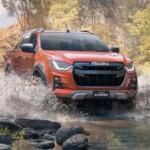 Isuzu D-Max vs Ford Ranger Australia: Which Ute Is Better?
This was the generation that moved the D-Max deeper into Australia’s mainstream ute market. It was no longer merely an alternative for buyers already familiar with Isuzu engines. It became a serious competitor for the Toyota HiLux, Ford Ranger, Mitsubishi Triton, Nissan Navara and Holden Colorado.
The second-generation platform used a stronger ladder frame and a longer wheelbase, helping improve stability, load carrying and towing behaviour.
Second-Generation Exterior Design
The styling became broader and more confident. Swept-back headlights, a larger grille and more sculpted bodywork replaced some of the upright simplicity of the first model.
It still looked like a working ute, but it no longer appeared as though it had arrived directly from a construction site. Higher grades gained alloy wheels, chrome trim, side steps, fog lights and more polished exterior detailing.
Crew-cab versions became particularly popular with private buyers because they blended usable rear seating with a practical cargo tub.
Second-Generation Cabin Improvements
Inside, the second generation felt noticeably more modern. The dashboard gained a more integrated design, storage improved and higher specifications offered better infotainment and comfort equipment.
Depending on year and variant, available features included:
- Touchscreen infotainment
- Bluetooth connectivity
- Reversing camera
- Satellite navigation
- Climate control
- Leather-accented upholstery
- Steering-wheel controls
- Improved trip information
- Multiple storage compartments
We should keep expectations realistic. Even in higher trims, the D-Max did not attempt to imitate a luxury SUV. Hard-wearing materials and practical design remained priorities.
For many owners, that was precisely the point. Muddy boots, dusty clothes and work equipment are less intimidating when the interior has been designed to tolerate real use.
The 3.0-Litre Diesel Identity
The second-generation Australian D-Max continued to rely heavily on Isuzu’s 3.0-litre turbo-diesel engine. This became one of the model’s defining characteristics.
Rather than chasing the highest power figure in the class, Isuzu focused on usable torque, durability and predictable delivery. Some competitors felt quicker, but the D-Max developed a loyal following among buyers who valued a proven, relatively low-stressed diesel.
Earlier second-generation models produced lower torque than later versions and were paired with five-speed transmissions. The significant 2017 Australian update brought a Euro 5-compliant version of the 3.0-litre diesel producing 430Nm, along with six-speed manual and automatic transmissions. Isuzu stated that this drivetrain was developed specifically for Australian requirements.
Why the 2017 Update Matters
The 2017 update is one of the most important dividing points within the second-generation range.
The additional torque improved flexibility, while the six-speed transmissions gave drivers a broader spread of ratios. On the highway, the extra gear helped the engine settle into a more relaxed rhythm. When towing or climbing, the stronger torque output made the vehicle feel less strained.
The update also introduced revised exterior styling and equipment changes. It did not create an entirely new generation, but it made the D-Max feel more competitive against increasingly sophisticated rivals.
For used buyers, this means a 2017–2020 vehicle can feel meaningfully different from a 2012–2016 example.
Second-Generation Facelifts Explained
The Australian second-generation D-Max passed through several phases rather than remaining unchanged for eight years.
Early Second Generation: 2012–2016
These models introduced the new body, chassis and cabin but retained the earlier engine tune and five-speed gearbox arrangements.
Their strengths include:
- Proven mechanical package
- Straightforward operation
- Broad choice of body styles
- Often lower used prices
- Strong work-oriented character
Potential compromises include older infotainment, fewer safety features and less torque than later models.
Major Mechanical Update: 2017
The 2017 update delivered the 430Nm Euro 5 engine and six-speed transmissions. It is often treated as the sweet spot where the familiar second-generation body gained a more capable drivetrain.
The extra transmission ratio did not magically turn the D-Max into a performance ute. Instead, it made the powertrain feel more complete.
Later Second Generation: 2018–2020
Later examples received further styling and specification revisions. Depending on the trim and year, buyers may encounter updated headlights, improved multimedia features, revised cabin materials and additional safety or convenience equipment.
These vehicles represent the most developed version of the second-generation formula. However, they can also command prices close to early third-generation models, so careful comparison is worthwhile.
Who Should Consider a Second-Generation D-Max?
This generation is likely to appeal to:
- Used-ute buyers wanting solid towing ability
- Tourers planning remote-area travel
- Tradespeople needing a durable daily vehicle
- Families wanting a dual-cab without paying new-car prices
- Buyers who prefer proven mechanicals over cutting-edge technology
It remains a popular middle ground: more refined than the first generation but generally simpler and cheaper than the third.
Third-Generation Isuzu D-Max in Australia: 2020–Present
The third-generation D-Max arrived in Australia in September 2020 and represented the most comprehensive redesign in the model’s local history. Isuzu offered it in Single Cab, Space Cab and Crew Cab forms, initially across SX, LS-M, LS-U and the new flagship X-TERRAIN grades.
This generation did not abandon the D-Max’s workhorse roots. Instead, it wrapped them in a safer, stiffer, more refined and more technologically advanced package.
The result was a ute capable of appealing to traditional commercial buyers while also attracting families and recreational owners who might otherwise have chosen an SUV.
A New Platform and Stronger Structure
The third generation received a substantially redesigned frame and body structure. Improvements were aimed at rigidity, handling, crash performance and overall refinement.
This content may interest you! Toyota LandCruiser Alternatives Australia: The Best 4WDs to Consider
On the road, it feels more settled than earlier models. Steering is more precise, cabin insulation is improved and body movement is better controlled.
It remains a body-on-frame ute with a load-carrying rear suspension, so we should not expect it to float over bumps like a soft family crossover. Nevertheless, the difference from the original 2008 model is dramatic.
Driving the generations back-to-back would feel like moving from a durable workbench to a modern workstation. Both serve a practical purpose, but one offers considerably more support and technology.
Third-Generation Safety Revolution
Safety is where the third generation made one of its greatest leaps.
The 2020 D-Max introduced Isuzu’s Intelligent Driver Assistance System, commonly called IDAS. Depending on the variant and transmission, the safety package included technologies such as:
- Autonomous emergency braking
- Forward-collision warning
- Lane-departure warning
- Lane-keeping assistance
- Blind-spot monitoring
- Rear cross-traffic alert
- Traffic-sign recognition
- Adaptive cruise control
- Driver-attention monitoring
- Multiple airbags
The all-new D-Max achieved a five-star ANCAP rating under the stricter 2020 testing criteria. It was the first vehicle assessed by ANCAP under those revised protocols.
This matters when comparing generations. A well-maintained older D-Max may be mechanically dependable, but it cannot replicate the third generation’s ability to help prevent certain collisions.
For family buyers, that difference may outweigh savings offered by an older model.
Third-Generation Engine Choices
The familiar 3.0-litre turbo-diesel continued into the third generation with revised outputs and improved response. It remained the obvious choice for many buyers planning to tow, carry heavier loads or travel off-road.
Australia later received a smaller 1.9-litre turbo-diesel option in selected variants. This expanded the range for customers who prioritised lower purchase costs, lighter-duty use or fuel efficiency over maximum torque.
The two-engine strategy gives the current D-Max broader appeal:
3.0-Litre Turbo-Diesel
Best suited to:
- Regular towing
- Heavy accessories
- Touring builds
- Workloads approaching payload limits
- Drivers wanting stronger low-speed torque
1.9-Litre Turbo-Diesel
Best suited to:
- Urban and light commercial work
- Drivers carrying moderate loads
- Buyers seeking a lower entry price
- Fleets prioritising operating efficiency
- Owners who rarely tow heavy trailers
Choosing between them should depend on real usage rather than ego. Buying the larger engine solely because it sounds tougher can be unnecessary, while choosing the smaller engine for regular heavy towing may leave us wishing for more effortless performance.
Third-Generation Cabin and Technology
The third-generation interior is more polished and passenger-friendly than those of its predecessors.
Higher grades introduced features such as:
- Nine-inch infotainment display
- Apple CarPlay
- Android Auto
- Digital driver information
- Dual-zone climate control
- Keyless entry and start
- Leather-accented seating
- Heated front seats
- Additional USB connectivity
- Improved audio systems
The layout remains practical, with large controls and sensible storage. That is good news when we are driving on rough tracks or wearing work gloves. Tiny touch-sensitive buttons might look futuristic, but they are not always helpful when the vehicle is bouncing over corrugations.
The D-Max continues to balance technology with usability rather than turning every function into a screen-based puzzle.
The 2024 Third-Generation Facelift
For 2024, the Australian D-Max received a substantial facelift rather than a complete generational change.
Updates included refreshed exterior styling, a revised dashboard and multimedia presentation, improved driver-assistance technology and additional off-road functionality. Rough Terrain Mode became a notable feature, while selected variants gained rear autonomous emergency braking and upgraded safety hardware.
The core 3.0-litre engine and underlying third-generation platform remained in place. Therefore, the 2024 vehicle belongs to the same generation as the 2020 model, even though it looks and feels newer.
How to Recognise the 2024 Facelift
The facelift can be identified by its redesigned front end, revised lighting, updated grille treatment and changes to the rear styling.
Inside, the displays and trim appear fresher, while the infotainment system is clearer and more contemporary.
These changes matter to buyers who value technology and presentation. However, a carefully priced pre-facelift model may offer better value for someone mainly interested in the platform, engine and towing ability.
Current D-Max Variants in Australia
The contemporary Australian D-Max range has expanded well beyond a simple work-ute lineup. The official range now includes numerous configurations across different bodies, drivetrains and grades, with both commercial and lifestyle-focused variants represented.
Common grade names include:
- SX
- LS-M
- LS-U
- LS-U+
- X-RIDER
- X-TERRAIN
Specialised versions and accessory-focused editions may also appear. Equipment can change between model years, so the badge alone does not tell the full story.
An LS-U from one production year may not have exactly the same technology as an LS-U from another. We should confirm the actual specification using the vehicle identification number, brochure or manufacturer information.
Is the 2024 Update a Fourth Generation?
No. The updated 2024 Australian D-Max is still part of the third generation.
Manufacturers regularly refresh a vehicle midway through its life. A facelift may alter:
This content may interest you!
- Headlights
- Grille
- Bumpers
- Tail-lights
- Interior trim
- Infotainment
- Safety calibration
- Variant names
A true generational change typically involves more fundamental redevelopment, such as a new or heavily redesigned platform, body structure and electrical architecture.
The 2024 D-Max changed significantly enough to be easy to distinguish, but its foundation remains tied to the third-generation model introduced in 2020.
Which Isuzu D-Max Generation Is the Most Reliable?
There is no universal winner because reliability depends heavily on maintenance, use and modifications.
The first generation benefits from simplicity, but its age means seals, bushes, cooling systems, injectors, turbochargers and electrical components may already have experienced years of wear.
The second generation has a strong following and a large pool of owner experience. Later 2017–2020 examples combine the established platform with the higher-torque engine and six-speed transmissions.
The third generation is newer and carries less age-related risk, but it also contains more sensors, cameras, control modules and safety technology.
A better question is: Which individual D-Max has been treated properly?
A complete service history, sensible modifications and evidence of careful use usually matter more than a one- or two-year difference in build date.
Best D-Max Generation for Towing
For regular towing, the second and third generations are generally the strongest choices.
The later second-generation models offer the useful 430Nm engine and six-speed transmissions without the full complexity of the newest vehicle. This makes them attractive to caravan owners seeking a proven used tow vehicle.
The third generation adds improved safety, stronger outputs, more refined road behaviour and better towing-related driver assistance. Current D-Max marketing highlights towing capacity of up to 3.5 tonnes, although the legal capacity varies by configuration and must never be considered in isolation.
Payload, tow-ball mass, gross vehicle mass and gross combined mass are equally important. A ute can reach its payload limit before the trailer reaches the advertised maximum towing figure.
Best Generation for Off-Road Touring
The second generation is enormously popular among budget-conscious tourers because accessories, replacement parts and community knowledge are widely available.
It can be equipped with:
- Bullbar
- Winch
- Snorkel
- Underbody protection
- Suspension upgrade
- Long-range fuel tank
- Canopy
- Roof platform
- All-terrain tyres
The third generation provides a more sophisticated starting point, especially in variants with a locking rear differential and Rough Terrain Mode. Its stronger safety package also provides reassurance during long highway sections between remote destinations.
The first generation can still make a capable off-road vehicle, but age-related preparation becomes more important. Replacing worn cooling, suspension and driveline components before a major journey may cost more than expected.
Best Generation for Families
The third generation is the clear leader for most families.
Its advantages include modern crash protection, active safety systems, improved rear-seat accommodation, quieter cruising and more convenient connectivity.
A late second-generation Crew Cab may still work well for a family on a tighter budget, particularly when fitted with a reversing camera and appropriate child-seat anchorage points. However, it lacks many of the collision-avoidance technologies found in the newer model.
The first generation is more difficult to recommend as a primary family vehicle unless price and utility are the dominant concerns.
Best Generation for Tradies
The answer depends on the business.
A first-generation D-Max may be suitable as an inexpensive secondary workhorse. It can handle dirty jobs without owners worrying about scratching a pristine new tub.
The second generation often provides the strongest value balance. It is modern enough for daily use, widely available in cab-chassis form and generally more affordable than the third generation.
The third generation makes sense for professionals who spend long hours on the road. Better seats, quieter operation, smartphone integration and advanced safety can reduce fatigue and make the working day less punishing.
A vehicle is a workplace, after all. Saving money upfront is not always wise when we will spend hundreds of hours behind the wheel.
Common Used-Buying Checks Across All Generations
Regardless of generation, we should inspect a used D-Max systematically.
Service History
Look for consistent oil and filter changes, not merely a stamped book with unexplained gaps. Confirm that servicing matches the required time and distance intervals.
Towing History
A towbar does not automatically indicate abuse, but it should prompt additional questions. Check for transmission behaviour, cooling-system condition, rear-suspension sag and excessive driveline play.
Off-Road Damage
Inspect underneath for:
- Bent protection plates
- Chassis impacts
- Damaged steps
- Scraped differentials
- Torn boots
- Oil leaks
- Mud trapped in difficult areas
- Corrosion from beach use
Aftermarket Modifications
Accessories add value only when they are appropriate and professionally installed. Poor wiring, excessive suspension lifts and heavily loaded canopies can create future problems.
This content may interest you!
Diesel System Condition
Watch for hard starting, excessive smoke, warning lights, uneven idle or unusual injector noise. A pre-purchase inspection by a diesel specialist can be money well spent.
Payload Compliance
Heavy steel trays, bullbars, batteries, drawers, canopies and roof equipment consume payload before passengers or luggage enter the vehicle.
A touring build that looks impressive may already be uncomfortably close to its legal limits.
How the Three Generations Compare
| Feature | First generation | Second generation | Third generation |
| Australian debut | 2008 | 2012 | 2020 |
| Overall feel | Basic and rugged | Strong and versatile | Modern and refined |
| Safety technology | Limited | Improved gradually | Comprehensive |
| Cabin comfort | Functional | More comfortable | Most passenger-friendly |
| Mechanical simplicity | Highest | Moderate | Lowest |
| Used affordability | Usually cheapest | Strong value | Usually most expensive |
| Towing suitability | Adequate by variant | Very capable | Most refined |
| Family suitability | Limited | Reasonable | Best |
| Technology | Minimal | Moderate | Advanced |
| Ideal buyer | Budget work user | Used all-rounder buyer | Safety-focused buyer |
Which D-Max Generation Offers the Best Value?
For many used buyers, a 2017–2020 second-generation D-Max offers the most attractive balance.
It provides the updated 430Nm engine, six-speed transmissions, strong towing potential and a more mature specification than earlier second-generation examples. At the same time, it avoids the higher purchase prices associated with the newest vehicles.
However, value is personal.
A tradesperson requiring a basic cab chassis may find an older SX far more economical. A family may reasonably pay extra for the safety package of a third-generation model. A remote-area traveller may prefer the newest vehicle available with a complete warranty and roadside support.
The cheapest D-Max is not always the best value, and the newest one is not automatically the smartest purchase.
Understanding Generation Names and Model Codes
Buyers often see generation descriptions mixed with internal chassis or model codes. These can vary between markets, configurations and information sources.
For Australian shopping, it is usually clearer to classify vehicles by:
- Build year
- Generation
- Cab type
- Drivetrain
- Transmission
- Engine
- Grade
- Pre- or post-facelift specification
For example, “2018 D-Max LS-U Crew Cab 4x4 automatic” tells us more than a generation code alone.
When ordering parts, however, model codes, build dates and VIN information become essential. A component listed for a 2017 D-Max may differ depending on whether the vehicle was built before or after a running production change.
Has the D-Max Changed Its Core Personality?
Yes and no.
The D-Max has undoubtedly become more polished. It now offers active safety, smartphone connectivity, premium trim levels and styling intended to attract lifestyle buyers.
Yet its core philosophy remains recognisable. Isuzu has not attempted to turn the D-Max into a sports car wearing work boots. It remains a diesel-powered, ladder-frame ute built around carrying, towing and travelling over difficult terrain.
That continuity helps explain its loyalty among Australian owners. Each generation feels like an evolution of the same tool rather than an unrelated product wearing a familiar badge.
Which Isuzu D-Max Generation Should We Buy?
Choose the first generation when affordability, simplicity and basic work capability matter most.
Choose the second generation when we want a proven used all-rounder with good towing ability, broad parts support and reasonable comfort.
Choose the third generation when safety, refinement, modern technology and family usability are priorities.
Within those groups, we would generally approach the market this way:
- Lowest-cost work ute: First-generation cab chassis
- Best used-value all-rounder: 2017–2020 second generation
- Best family D-Max: Third-generation Crew Cab
- Best modern tourer: Third-generation 3.0-litre 4x4
- Best simple caravan tow vehicle: Late second-generation 3.0-litre
- Best urban light-duty option: Third-generation 1.9-litre variant
No generation can compensate for poor maintenance. Always prioritise a clean history and professional inspection over paint colour, oversized wheels or an impressive list of accessories.
Conclusion
The history of Isuzu D-Max generations in Australia shows how a traditional work ute can evolve without losing its identity.
The first generation established Isuzu UTE as a standalone Australian brand and offered honest, uncomplicated capability. The second generation improved strength, comfort and towing performance, becoming a favourite among workers and recreational owners. The third generation added the safety, refinement and technology required to compete in today’s increasingly sophisticated ute market.
For used buyers, the second generation—especially models built from 2017 to 2020—often delivers the sweet spot between cost, capability and mechanical familiarity. For families and buyers who place safety first, the third generation is difficult to overlook.
The best D-Max is ultimately not defined by generation alone. It is the one whose condition, configuration and ownership history match what we genuinely need. A gleaming flagship is wasted if we only require a basic tray-back, while an ageing bargain can become expensive when asked to tow a large caravan across Australia.
Choose the tool for the job, check it carefully and let the D-Max do what it has always done best: keep moving when the road becomes difficult.
Frequently Asked Questions
1. What year did the Isuzu D-Max first arrive in Australia?
The Isuzu D-Max officially arrived under the Isuzu UTE Australia brand in 2008. Although the first generation had been sold internationally since 2002, Australian sales under the D-Max name began later.
2. How many D-Max generations have been sold in Australia?
Australia has received three main generations: the first from 2008 to 2012, the second from 2012 to 2020 and the third from 2020 onward.
3. Is the 2024 Isuzu D-Max a new generation?
No. The 2024 model is a major facelift of the third-generation D-Max introduced in 2020. It includes design, technology and safety updates but retains the same basic generation and platform.
4. Which D-Max generation is best to buy used?
A 2017–2020 second-generation D-Max is often a strong choice because it combines the updated 430Nm 3.0-litre engine and six-speed transmissions with comparatively affordable used pricing. Condition and service history remain more important than year alone.
This content may interest you! Toyota Yaris Cross Years: Complete Model-Year Guide
5. Which D-Max generation is best for towing a caravan?
Late second-generation and third-generation 3.0-litre models are usually the most appealing options. The third generation provides greater safety and refinement, while the late second generation may offer better value. Always calculate payload, tow-ball mass and gross combined mass rather than relying only on the headline towing capacity.
Leave a Reply