
Toyota LandCruiser Alternatives Australia: The Best 4WDs to Consider

The Toyota LandCruiser has become part of the Australian landscape. It feels almost as familiar as a corrugated outback track, a dusty road sign, or a caravan heading north before winter. For decades, Australians have trusted the LandCruiser for remote touring, towing, farm work, family adventures, and serious off-road travel.
That reputation is not accidental. The current LandCruiser 300 combines a 3.3-litre twin-turbo diesel V6, a 10-speed automatic transmission, full-time four-wheel drive, and a braked towing capacity of up to 3,500kg. Its diesel engine produces 227kW and 700Nm in models such as the GR Sport.
However, owning one can require a substantial budget. Availability, insurance, fuel use, servicing requirements, vehicle size, and purchase price may encourage us to look elsewhere. Some drivers also want sharper road manners, a roomier third row, more technology, a petrol engine, simpler mechanicals, or better value.
Fortunately, the Australian market is not a one-horse race. Several vehicles can tow, tour and tackle rough country without wearing a Toyota badge.
In this guide, we explore the best Toyota LandCruiser alternatives in Australia, from affordable seven-seat diesel wagons to premium expedition machines.
- Why Look Beyond the Toyota LandCruiser?
- What Makes a Genuine LandCruiser Alternative?
- Best Toyota LandCruiser Alternatives in Australia at a Glance
- 1. Nissan Patrol: The Big Petrol-Powered Rival
- 2. Ford Everest: The Best All-Round Family Alternative
- 3. Isuzu MU-X: The Practical Towing Workhorse
- 4. Lexus GX: A Luxurious LandCruiser Alternative
- 5. Ineos Grenadier: The Purpose-Built Expedition Choice
- 6. Land Rover Defender: Capability Meets Technology
- 7. Mitsubishi Pajero Sport: The Budget-Conscious Tourer
- 8. Toyota LandCruiser Prado: The Smaller Toyota Solution
- Which Alternative Is Best for Towing a Caravan?
- Which LandCruiser Alternative Is Best Off-Road?
- Which Alternative Offers the Best Value?
- Petrol or Diesel: Which Should We Choose?
- New Versus Used LandCruiser Alternatives
- How to Choose the Right Alternative
- Our Verdict: What Is the Best Toyota LandCruiser Alternative in Australia?
- Conclusion
- Frequently Asked Questions
Why Look Beyond the Toyota LandCruiser?
Choosing an alternative does not mean the LandCruiser is a poor vehicle. It means we are matching the vehicle to the job rather than buying purely on reputation.
The LandCruiser 300 is large, sophisticated and highly capable, but not every buyer needs its full mechanical armoury. A family towing a 2,500kg caravan on sealed roads has different requirements from a cattle-station operator or someone crossing the Simpson Desert.
We may prefer an alternative because of:
- A lower purchase price
- Better urban manoeuvrability
- More affordable servicing or insurance
- A more comfortable third row
- Petrol rather than diesel power
- Modern interior technology
- Greater on-road refinement
- More generous standard equipment
- A specific off-road configuration
- Shorter expected delivery times
The smartest alternative is not necessarily the vehicle that copies the LandCruiser most closely. It is the one that performs our actual tasks without making us pay for capability we rarely use.
What Makes a Genuine LandCruiser Alternative?
A compact crossover may be pleasant around town, but it is not a direct substitute for a heavy-duty LandCruiser. To make this list, a vehicle needs to offer a meaningful combination of touring ability, towing strength, four-wheel-drive hardware, passenger space and Australian-market support.
Towing Capacity
For many buyers, towing is non-negotiable. A 3,500kg headline rating is common among serious four-wheel drives, but that figure is only the beginning.
We must also examine:
- Gross vehicle mass
- Gross combined mass
- Payload
- Rear-axle capacity
- Tow-ball download
- Accessory weight
- Passenger and luggage weight
A vehicle may legally tow 3,500kg while carrying very little else once the caravan is attached. That is why payload calculations matter more than brochure bravado.
Low-Range Four-Wheel Drive
Low-range gearing remains valuable for steep descents, rocky climbs, deep sand and controlled caravan manoeuvring. Electronic traction systems are clever, but proper gearing is like a strong pair of hiking boots: it gives us confidence before conditions become difficult.
Touring Range and Practicality
Australia is vast. Fuel range, spare-wheel placement, cargo space, cooling performance and parts availability can matter more than a panoramic roof or ambient lighting once we leave the city behind.
Comfort and Safety
A capable vehicle should not punish us during the 800km drive to the trail. Supportive seats, stable highway behaviour, effective driver-assistance systems and good cabin insulation all influence whether a touring vehicle feels relaxing or exhausting.
Best Toyota LandCruiser Alternatives in Australia at a Glance
| Alternative | Best suited to | Maximum braked towing* | Main advantage |
|---|---|---|---|
| Nissan Patrol | Petrol power and spacious touring | 3,500kg | Strong V8 and large cabin |
| Ford Everest | Families and everyday use | 3,500kg | Excellent all-round balance |
| Isuzu MU-X | Value-conscious towing | 3,500kg | Simple, practical diesel package |
| Lexus GX | Premium off-road touring | Up to 3,500kg | Luxury with genuine capability |
| Ineos Grenadier | Serious off-road exploration | 3,500kg class | Purpose-built mechanical hardware |
| Land Rover Defender | Luxury and advanced technology | Up to 3,500kg | Superb road and off-road versatility |
| Mitsubishi Pajero Sport | Affordable family touring | Model-dependent | Strong value and compact dimensions |
| Toyota LandCruiser Prado | Buyers wanting a smaller Toyota | Model-dependent | Familiar Toyota ownership experience |
*Towing limits depend on variant, equipment and operating conditions. Always verify the specific vehicle’s compliance plate, handbook, payload and gross-combination limits.
1. Nissan Patrol: The Big Petrol-Powered Rival
The Nissan Patrol is one of the most obvious LandCruiser alternatives in Australia. It is enormous, comfortable and wonderfully unapologetic.
Its 5.6-litre naturally aspirated V8 produces 298kW and 560Nm, sends power through a seven-speed automatic transmission, and provides a maximum braked towing capacity of 3,500kg. Nissan lists an overall length of 5,175mm and width of 1,995mm, so nobody will mistake it for a compact city SUV.
Why the Patrol Makes Sense
Where the diesel LandCruiser delivers a thick wave of low-rev torque, the Patrol responds with smooth petrol power and V8 theatre. It accelerates with less diesel clatter and feels relaxed on long highway journeys.
The cabin is broad, the seating is generous, and the vehicle has the physical presence many buyers expect from a full-size 4WD. For families with teenagers, camping equipment and a trailer, that space can feel like opening the doors to a mobile lounge room.
The Patrol also has a long history in Australia. It is not an experimental newcomer trying to prove itself after one summer in the bush.
Where the Patrol Falls Behind
Fuel consumption is the elephant sitting in the third row. The V8 requires premium unleaded petrol, and enthusiastic acceleration or heavy towing can make service-station visits frequent.
Its size also demands patience in shopping centres, older car parks and narrow suburban streets. We should measure our garage before falling in love with the engine note.
Best For
The Nissan Patrol suits buyers who want maximum passenger space, effortless petrol performance and traditional full-size 4WD character without choosing a LandCruiser.
2. Ford Everest: The Best All-Round Family Alternative
The Ford Everest may not have the physical bulk of a LandCruiser 300, but that can be an advantage. It is easier to place on urban roads, more approachable in car parks and still equipped for serious touring.
Ford offers the Everest with diesel power, including an available 3.0-litre V6 turbo-diesel across the 2026 range. Properly equipped variants can tow up to 3,500kg braked.
Why the Everest Stands Out
The Everest is one of the strongest answers for buyers who need one vehicle to perform several jobs. It can handle school runs during the week, tow a caravan on Friday afternoon and crawl along a forest track on Saturday morning.
Its modern cabin, user-friendly infotainment and composed road manners make it feel less agricultural than some ute-based wagons. Available selectable drive modes also help drivers adapt the vehicle to changing terrain. Ford notes up to seven modes on four-wheel-drive versions, depending on specification.
We also like that the Everest does not force us to drive a giant vehicle merely to obtain strong towing capacity.
This content may interest you!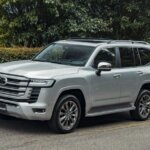 Toyota Land Cruiser Year Models Australia: Complete Generation Guide
Potential Drawbacks
Although highly capable, the Everest is not a direct substitute for a LandCruiser in every extreme-use scenario. Buyers carrying large accessory loads or towing near the legal maximum must carefully check payload and axle limits.
Its third row is useful, but those planning regular adult occupancy should test it personally rather than trusting a specification sheet.
Best For
The Everest is ideal for families seeking modern technology, comfortable road manners, seven-seat flexibility and credible towing performance at a more accessible level than a LandCruiser 300.
3. Isuzu MU-X: The Practical Towing Workhorse
The Isuzu MU-X takes a refreshingly straightforward approach. It does not pretend to be a luxury limousine wearing all-terrain tyres. Instead, it offers diesel engines, seven seats, proper four-wheel-drive capability and a strong towing proposition.
Current MU-X models offer a choice of 3.0-litre and 2.2-litre turbo-diesel engines on selected grades. Isuzu states that the range can tow up to 3.5 tonnes when fitted with the required genuine tow bar kit and electronic brake controller. The 3.0-litre engine produces 140kW and 450Nm.
Why Australians Choose the MU-X
The MU-X is easy to understand. Its controls are familiar, its diesel engine is designed around useful low-rev performance, and the vehicle has strong appeal among caravan owners.
It also occupies a sensible middle ground. It is large enough for family touring without feeling like a ship navigating a supermarket car park.
Isuzu has built much of its Australian identity around durability, towing and practical ownership. The MU-X therefore attracts buyers who care more about arriving confidently than impressing the neighbours.
Compromises to Consider
The engine is effective rather than silky. Under acceleration, it may sound more commercial than premium. Ride quality can also feel firm when the vehicle is lightly loaded, depending on tyres and grade.
The cabin is comfortable, but buyers moving directly from a top-spec LandCruiser or European luxury SUV may notice simpler materials and fewer indulgent details.
Best For
The MU-X suits caravan owners, regional families and buyers who prioritise value, diesel towing strength and uncomplicated touring ability.
4. Lexus GX: A Luxurious LandCruiser Alternative
The Lexus GX is one of the most convincing alternatives for buyers who admire the LandCruiser’s capability but want a more distinctive and luxurious package.
The Australian GX 550 range uses a 3.5-litre twin-turbo V6 petrol engine producing 260kW and 650Nm. The range initially opened from $116,000 before on-road costs, although current transaction prices and model-year pricing should always be confirmed. Luxury and Overtrail versions offer up to 3,500kg braked towing, while some Sports Luxury configurations are rated lower.
Why the GX Is More Than a Fashion Statement
The GX is not simply a road-focused luxury SUV with rugged-looking bumpers. The Overtrail grade was created specifically to deliver stronger off-road performance, while the broader range combines four-wheel-drive hardware with a refined cabin.
Inside, Lexus offers features such as a 14-inch multimedia display, heated seating, a head-up display and connected services, depending on grade.
It feels like a high-quality hiking jacket: expensive and polished, yet designed to work when the weather turns ugly.
Reasons to Think Twice
The petrol engine may consume more fuel than a diesel alternative on extended towing trips. Premium pricing, insurance and replacement parts also need to be considered.
The GX is best viewed as an alternative to higher-spec LandCruiser 300 models rather than an economical replacement for an entry-level touring wagon.
Best For
The Lexus GX is a strong choice for buyers wanting LandCruiser-style capability, bold design and a more luxurious ownership experience.
5. Ineos Grenadier: The Purpose-Built Expedition Choice
The Ineos Grenadier looks as if somebody designed a vehicle by first asking what could survive a remote expedition and only later wondering where to place the cupholders.
It uses a full box-section ladder frame, beam axles at both ends, heavy-duty coil suspension, permanent four-wheel drive, a centre differential lock and a two-speed transfer case. Trialmaster versions add front and rear differential locks and a raised air intake. Australian station-wagon pricing currently starts from $108,000, with Trialmaster and Fieldmaster versions listed from $121,000, subject to change and additional costs.
Why the Grenadier Is Special
The Grenadier appeals to buyers who feel modern four-wheel drives have become too soft, too complicated or too dependent on touchscreens. Its cabin uses physical switches, including an overhead control panel that resembles something from a small aircraft.
Petrol and diesel six-cylinder engines are paired with an eight-speed automatic transmission. The design focuses on durability, repairability and serious off-road use rather than chasing sports-car acceleration.
For remote touring, the squared-off body, strong recovery potential and accessory-friendly construction are major attractions.
What We Give Up
The Grenadier is a niche product with a smaller dealer and service network than Toyota, Nissan, Ford or Isuzu. INEOS provides Australian servicing support, but buyers travelling remotely should investigate workshop coverage along their intended routes.
Its heavy steering, substantial mass and utilitarian character may also feel unnecessary for buyers who spend 95% of their time on suburban roads.
Best For
Choose the Grenadier when genuine expedition capability matters more than mainstream familiarity, light steering or a vast dealership network.
6. Land Rover Defender: Capability Meets Technology
The modern Land Rover Defender takes a very different path from the Grenadier. Rather than recreating an old-school workhorse, it blends advanced electronics, sophisticated suspension and premium road manners.
Defender 90 and 110 configurations can tow up to 3,500kg in suitable specifications, while some electrified versions and the Defender 130 have lower limits of around 3,000kg. Exact capacity depends on the selected powertrain and body style.
Why the Defender Is So Appealing
Few vehicles move between city streets and rough trails as naturally. The Defender feels stable and polished on the highway, yet its terrain systems, suspension travel and available off-road technology give it serious ability away from bitumen.
This content may interest you!Are Toyota Land Cruisers Reliable in Australia? An Honest Ownership GuideThere is also far more configuration choice than with many rivals. We can choose different body lengths, engines, seating arrangements and equipment packages.
The result is a vehicle that can look at home outside a restaurant on Saturday night and halfway up a muddy mountain on Sunday morning.
Ownership Considerations
Complexity brings questions. Buyers planning long-term remote ownership should research servicing access, tyre availability, electronic-system support and repair costs.
Pricing can also climb rapidly when desirable option packages are added. The online configurator may begin politely, but a few clicks can turn it into a financial avalanche.
Best For
The Defender works for buyers who want premium comfort, striking design, modern technology and legitimate off-road performance in one vehicle.
7. Mitsubishi Pajero Sport: The Budget-Conscious Tourer
The Mitsubishi Pajero Sport is often overlooked because it lacks the size and prestige of a LandCruiser 300. That is precisely why it deserves attention.
It is a ute-based seven-seat 4WD designed to balance family duties, towing and recreational off-roading. In most situations, it feels more manageable than a full-size wagon and generally costs considerably less.
What the Pajero Sport Does Well
The Pajero Sport offers low-range gearing, a proven diesel layout and Mitsubishi’s Super Select four-wheel-drive system on relevant models. That system gives drivers flexibility across sealed roads, gravel and more demanding terrain.
Its narrower body can be useful on forest tracks and in older city infrastructure. Running costs, tyre prices and insurance may also be more manageable than those of a six-figure luxury 4WD.
Where It Cannot Match the LandCruiser
The cabin is narrower, the third row is less generous, and outright towing performance may feel more strained with a large caravan. It is better matched to moderate loads than to buyers determined to tow at the upper edge of the legal limit.
We should think of it as a leaner, more economical touring tool—not a heavyweight LandCruiser clone.
Best For
The Pajero Sport is worth considering when affordability, seven seats and occasional off-road touring matter more than enormous payload or full-size cabin space.
8. Toyota LandCruiser Prado: The Smaller Toyota Solution
Sometimes the best alternative to a LandCruiser is another LandCruiser.
The Prado sits below the 300 Series in size and positioning, yet retains the traditional ingredients many Australian buyers value: four-wheel-drive capability, touring practicality, a strong dealer network and broad aftermarket support.
Why Choose Prado Over LandCruiser 300?
The Prado is easier to use in daily driving. It feels less intimidating in narrow streets and may be more economical to purchase and operate, depending on grade.
It also offers the advantage of Toyota familiarity. Buyers worried about moving to a smaller brand or less established model can remain within the Toyota network while selecting a vehicle that better matches family life.
The Trade-Off
We sacrifice some performance, cabin width and heavy-duty presence compared with the 300 Series. A Prado loaded with passengers, accessories and a large caravan may reach its practical limits sooner.
Nevertheless, many owners do not need more. Buying the 300 Series for occasional camping can be like wearing mountaineering boots to walk through a shopping centre.
Best For
The Prado suits buyers wanting genuine touring ability and Toyota support without the size or cost of a LandCruiser 300.
Which Alternative Is Best for Towing a Caravan?
For frequent towing, the decision depends on the caravan’s fully loaded weight—not its optimistic empty figure.
For Heavy Caravans
The Nissan Patrol, Ford Everest, Isuzu MU-X, Lexus GX, Ineos Grenadier and suitable Defender variants all offer maximum braked towing ratings around 3,500kg.
However, we should not select a tow vehicle using that number alone. Before purchasing, calculate:
- The caravan’s actual loaded aggregate trailer mass
- Expected tow-ball download
- Vehicle kerb weight
- Passengers and luggage
- Bull bar, winch, roof rack and drawer weight
- Gross vehicle mass
- Gross combination mass
- Front and rear axle limits
A lower-priced MU-X or Everest may be ideal for a medium caravan, while a Patrol may appeal to buyers wanting petrol power and a broad cabin. The Grenadier prioritises off-road strength, whereas the Lexus GX and Defender add luxury.
Which LandCruiser Alternative Is Best Off-Road?
For serious remote off-roading, we would place the Ineos Grenadier near the top because of its ladder frame, beam axles, low-range gearing and available front and rear differential locks.
The Lexus GX Overtrail and Land Rover Defender are also highly capable, though they deliver their performance with more electronic sophistication.
The Ford Everest, Isuzu MU-X, Pajero Sport and Prado may make greater sense for mixed use. They can handle challenging tracks while remaining easier to live with during the working week.
Ultimately, capability includes more than wheel articulation. Fuel range, tyres, recovery points, cooling, spare parts and driver experience can determine whether a trip becomes an adventure or an expensive rescue.
Which Alternative Offers the Best Value?
The Isuzu MU-X is one of the clearest value choices. It combines seven seats, diesel power, strong towing capacity and recognised Australian-market support without entering LandCruiser 300 pricing territory.
The Ford Everest costs more in premium grades but offers a more modern interior and polished driving experience.
The Mitsubishi Pajero Sport may be the budget hero for buyers towing lighter loads. It provides genuine four-wheel-drive equipment at a price that leaves room for tyres, suspension, camping equipment and fuel.
This content may interest you!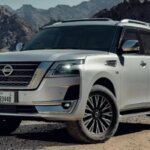 Is Nissan Patrol a Good Car in Australia? Complete Buyer Guide
Value is not simply the cheapest purchase price. A vehicle that needs thousands of dollars in immediate upgrades may cost more than a better-equipped alternative.
Petrol or Diesel: Which Should We Choose?
Why Choose Diesel?
Diesel engines remain popular for touring because they deliver strong low-rev torque and can provide useful fuel range. The Everest, MU-X, Grenadier and Prado all offer diesel-oriented solutions in relevant Australian specifications.
Diesel is especially attractive for repeated towing and remote travel, although modern emissions equipment prefers regular longer journeys over endless short urban trips.
Why Choose Petrol?
Petrol engines are smoother, quieter and often more responsive. The Nissan Patrol’s V8 delivers effortless character, while the Lexus GX uses a powerful twin-turbo petrol V6.
The drawback is fuel consumption, particularly while towing. Buyers should calculate annual fuel cost rather than focusing only on price per litre.
A petrol vehicle that is cheaper to buy may still become more expensive over several years of high-distance touring.
New Versus Used LandCruiser Alternatives
Buying new gives us factory warranty coverage, current safety technology and a known history. It also exposes us to the steepest depreciation.
A used vehicle can provide excellent value, particularly if it has been maintained carefully and fitted with quality touring accessories. Yet modified four-wheel drives deserve close inspection.
Look for:
- Complete servicing records
- Signs of overheating
- Chassis or underbody damage
- Poorly installed electrical accessories
- Rust from beach driving
- Suspension modifications
- Excessive tow-bar wear
- Mismatched tyres
- Oil or coolant leaks
- Evidence of heavy commercial use
An independent pre-purchase inspection is essential. A polished bonnet can hide a life spent dragging a three-tonne caravan through summer heat.
How to Choose the Right Alternative
Before visiting dealerships, write down what the vehicle must actually do.
Ask These Questions
- How many people will travel regularly?
- Will adults use the third row?
- What is the caravan’s loaded weight?
- How much off-road driving will we genuinely do?
- Do we travel beyond major service networks?
- Will we fit a bull bar, winch or roof platform?
- Can the vehicle fit in our garage?
- What annual fuel cost can we accept?
- How long do we plan to keep it?
- Is resale value more important than purchase price?
A test drive should include suburban roads, a highway section and rough surfaces where possible. Bring child seats, measure the cargo area and sit in every row.
The best 4WD should fit our life before we modify our life to fit the 4WD.
Our Verdict: What Is the Best Toyota LandCruiser Alternative in Australia?
There is no single winner because each rival solves a different problem.
The Ford Everest is arguably the strongest all-round alternative for a family that wants comfort, technology, seven seats and 3,500kg towing ability in a manageable package.
The Isuzu MU-X is the practical value choice, particularly for caravan owners who prioritise diesel reliability and straightforward operation.
The Nissan Patrol is the answer for buyers who want size, comfort and the character of a large petrol V8.
The Lexus GX delivers one of the closest blends of premium quality and serious off-road ability.
The Ineos Grenadier is the specialist expedition machine, while the Land Rover Defender is the sophisticated technology-led option.
For tighter budgets, the Mitsubishi Pajero Sport remains a sensible touring wagon. Buyers who want Toyota familiarity in a smaller package should look closely at the LandCruiser Prado.
The LandCruiser may remain the benchmark, but a benchmark is not a command. Australia’s roads, tracks and campsites are wide enough for more than one badge.
Conclusion
Choosing among the best Toyota LandCruiser alternatives in Australia is less about finding an imitation and more about identifying our priorities.
Do we need maximum remote-area confidence? Do we tow a large caravan? Are we carrying seven people, or merely two passengers and a dog? Will the vehicle spend months crossing the outback, or most of its life squeezing between concrete pillars at the local shopping centre?
The Nissan Patrol offers space and V8 power. The Ford Everest is a polished family all-rounder. The Isuzu MU-X keeps things practical, while the Lexus GX adds luxury. The Ineos Grenadier and Land Rover Defender target adventurous buyers from opposite ends of the design spectrum.
Once we define the job clearly, the decision becomes easier. The best alternative is not the one with the loudest reputation. It is the one that carries our passengers, pulls our trailer and reaches our destination with the least compromise.
Frequently Asked Questions
1. What is the closest alternative to a Toyota LandCruiser 300?
The Nissan Patrol is the closest mainstream rival in overall size, passenger space and heavy-duty touring character. The Lexus GX is another strong choice for buyers prioritising luxury and off-road ability, although it is slightly different in size and positioning.
2. What is the most affordable LandCruiser alternative in Australia?
The Mitsubishi Pajero Sport and Isuzu MU-X are usually among the more affordable genuine seven-seat, low-range 4WD alternatives. Final value depends on grade, current offers, required accessories and towing equipment.
3. Is a Ford Everest as capable as a LandCruiser?
The Everest is highly capable and can tow up to 3,500kg when correctly equipped. However, a LandCruiser 300 may provide advantages in cabin width, heavy-duty construction and extreme long-distance touring. For normal family touring, the Everest may be the more practical choice.
4. Which LandCruiser alternative is best for remote Australia?
The Ineos Grenadier, Isuzu MU-X, Ford Everest, Nissan Patrol and LandCruiser Prado are all credible options. The best choice depends on fuel availability, service coverage, payload, tyre selection and the remoteness of the route. A mechanically capable vehicle is only part of a safe remote-travel plan.
5. Which alternative has a 3,500kg towing capacity?
Suitable variants of the Nissan Patrol, Ford Everest, Isuzu MU-X, Lexus GX, Ineos Grenadier and Land Rover Defender can offer towing capacities of up to 3,500kg. Exact limits vary by model and equipment, so always check the handbook, compliance information and payload before towing.
This content may interest you!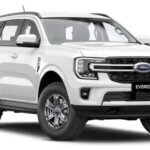 Is Ford Everest a Good Car in Australia? An Honest Buyer’s Guide
Leave a Reply