
Skoda Karoq Boot Size: Dimensions, Litres and Practical Space

The Skoda Karoq boot size is one of the strongest reasons this compact SUV makes such a convincing family car. On paper, the numbers are already impressive. In everyday life, though, what matters is whether those litres translate into space we can actually use. Can we fit a pushchair without dismantling it like a puzzle? Will several suitcases disappear behind the tailgate? And what happens when we fold the rear seats for a trip to the furniture shop?
Thankfully, the Karoq approaches luggage space with the sort of practicality Skoda has become known for.
With the standard rear seats in position, the Karoq provides 521 litres of luggage capacity. Fold those seats down and the available volume increases to 1,630 litres. Models equipped with VarioFlex rear seating can offer up to 588 litres with the seats in place, 1,605 litres with them folded, or as much as 1,810 litres when the removable rear seats are taken out completely.
Those are strong numbers for a compact SUV, but capacity tells only part of the story.
Let's open the tailgate and look at what the Skoda Karoq boot is actually like to live with.
- How Big Is the Skoda Karoq Boot?
- Is a 521-Litre Boot Big?
- Skoda Karoq Boot Dimensions
- Skoda Karoq Boot Size With Seats Up
- Skoda Karoq Boot Size With Seats Down
- What Is Skoda Karoq VarioFlex Seating?
- Skoda Karoq Boot Space for a Pushchair
- Is the Skoda Karoq Boot Good for Dogs?
- Can You Fit a Bike in a Skoda Karoq?
- Skoda Karoq Boot Space for Camping
- Skoda Karoq Boot Versus Passenger Space
- Skoda Karoq Boot Opening and Accessibility
- Is There Underfloor Storage?
- How Practical Is the Karoq Boot in Everyday Use?
- Does the Karoq Have More Boot Space Than You Really Need?
- Skoda Karoq Boot Space for Family Life
- How to Get More From the Skoda Karoq Boot
- Skoda Karoq Boot Size for Moving House
- Does Boot Size Change Between Karoq Versions?
- Is the Skoda Karoq Boot Big Enough for a Family of Four?
- Should You Choose VarioFlex?
- Skoda Karoq Boot Size: The Bottom Line
- Frequently Asked Questions About Skoda Karoq Boot Size
How Big Is the Skoda Karoq Boot?
For most versions fitted with conventional rear seating, the headline Skoda Karoq boot capacity is 521 litres.
That's the figure with all five seats available for passengers. It means we don't necessarily need to sacrifice rear passenger space every time we carry luggage, groceries, sports equipment or holiday bags.
Fold the rear backrests and the luggage area expands dramatically to 1,630 litres.
For a vehicle measuring roughly 4.39 metres long, that's a healthy amount of usable cargo room. The Karoq manages to remain fairly compact outside while behaving like a larger vehicle once we lift the tailgate.
That's important.
A huge SUV can obviously swallow luggage, but it also occupies more parking space, costs more to run and can feel cumbersome around town. The Karoq tries to find the sweet spot between those extremes.
Skoda Karoq Boot Size in Litres
Here are the key figures:
| Seating configuration | Approximate boot capacity |
|---|---|
| Standard seats upright | 521 litres |
| Standard seats folded | 1,630 litres |
| VarioFlex seats upright | Up to 588 litres |
| VarioFlex seats folded | 1,605 litres |
| VarioFlex seats removed | 1,810 litres |
Škoda's technical information lists 521 litres for the standard seating layout and 588 litres for the VarioFlex arrangement, while the latter can reach 1,810 litres when its removable seats are taken out.
That's quite a transformation.
In its most flexible configuration, the Karoq starts to behave less like an ordinary crossover and more like a small cargo van wearing smarter clothes.
Is a 521-Litre Boot Big?
Yes, 521 litres is a generously sized boot for this type of SUV.
But litres can feel strangely abstract.
Nobody arrives at a supermarket carrying a 521-litre measuring jug. We carry shopping bags, suitcases, backpacks, pushchairs, golf equipment, dog crates and boxes.
So let's translate the figure into everyday reality.
A boot of this size should be capable of dealing comfortably with common family duties such as:
- several medium suitcases for a holiday;
- a weekly supermarket shop;
- a folded pushchair alongside additional bags;
- sports bags and children's equipment;
- multiple backpacks for a weekend away;
- medium-sized boxes or household items;
- luggage for four people, depending on case dimensions.
Naturally, the exact amount we can fit depends on the shape of the objects.
That's where the Karoq performs particularly well. A useful boot isn't simply a large cavity; it needs to be shaped sensibly.
A 500-litre boot full of awkward intrusions can sometimes be less convenient than a smaller but more rectangular luggage area.
Skoda Karoq Boot Dimensions
Boot capacity receives most of the attention, but actual Skoda Karoq boot dimensions can be more useful when we're trying to determine whether a particular suitcase, pushchair, crate or piece of furniture will fit.
Škoda's technical diagrams give the vehicle an overall length of approximately 4,390 mm, an overall width of 1,841 mm, and show an interior rear width measurement of about 1,003 mm in the illustrated dimensions. The same technical information indicates a loading-sill height of roughly 680 mm, although specifications can vary slightly by drivetrain, model year and market.
The lesson is simple: always measure the object itself if we're planning to transport something bulky.
Litres tell us volume.
Millimetres tell us whether the wardrobe actually goes through the opening.
Why Boot Shape Matters as Much as Volume
Imagine two boxes.
Both hold exactly the same amount of water, but one is long and rectangular while the other is narrow, deep and full of strange corners.
Which one would we rather pack with suitcases?
Exactly.
The Karoq benefits from a comparatively sensible SUV body shape. Its luggage area is broad enough for regular family use, while the upright rear bodywork helps us make use of vertical space.
That can make packing far less frustrating.
Rather than playing luggage Tetris every Friday evening, we have a space that generally works with us.
Loading Height
Loading height is another detail that rarely gets glamorous advertising photos, yet it matters every week.
Škoda's technical data gives the loading sill height at approximately 680 mm for the referenced petrol models.
That's worth knowing if we regularly lift:
- heavy shopping crates;
- suitcases;
- mobility equipment;
- dog carriers;
- pushchairs;
- tools;
- large bags of gardening supplies.
A reasonably accessible load height makes those tasks less awkward than repeatedly hoisting heavy objects over a very tall bumper.
Skoda Karoq Boot Size With Seats Up
With the regular rear bench upright, we get 521 litres.
This is probably the figure that matters most to the average owner because it represents the space available during normal five-seat driving.
We can carry passengers in the rear while still enjoying a substantial luggage compartment.
That's a major advantage for families.
Some crossovers advertise impressive maximum capacities, only for us to discover that those figures require the rear seats to disappear. That's useful occasionally, but not when two children are sitting in them.
The Karoq's everyday figure is strong before we start rearranging anything.
Can the Skoda Karoq Carry Holiday Luggage?
For most families, yes.
The Karoq is well suited to airport runs, road trips and weekend breaks.
Packing efficiently will obviously help. Hard-shell cases often waste more space than soft bags because they cannot deform around wheel arches or other luggage.
For a family holiday, we'd normally load the widest cases first, place smaller bags around them, and keep frequently needed items near the tailgate.
Think of the boot as a game of three-dimensional chess—but thankfully, a fairly forgiving one.
A Practical Packing Strategy
A useful approach is:
- Put large, heavy suitcases at the bottom.
- Position heavier luggage closer to the rear seatbacks.
- Fill remaining gaps with soft bags.
- Keep emergency equipment accessible.
- Avoid stacking loose objects above the seatback line unless they're properly secured.
- Use the load cover only when luggage remains below it.
This gives us better use of the available space without turning the cabin into a luggage avalanche.
Skoda Karoq Boot Size With Seats Down
Fold the standard rear seats and the available luggage volume rises to approximately 1,630 litres.
This content may interest you!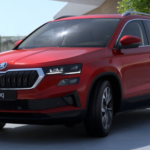 Skoda Karoq Towing Capacity Australia: Complete Guide
Now we're entering genuinely useful cargo territory.
This setup works when transporting things that simply won't fit inside the regular boot:
- flat-pack furniture;
- bicycles with some preparation;
- camping equipment;
- large televisions in suitable packaging;
- DIY supplies;
- moving boxes;
- bulky sports gear;
- garden equipment.
The important distinction is that maximum capacity doesn't necessarily mean maximum object length or width.
A 1,630-litre boot still has physical limits.
Before collecting anything especially large, measure it.
That five-minute job can save us the deeply awkward experience of standing in a shop car park wondering why our enormous new purchase refuses to enter the car.
What Is Skoda Karoq VarioFlex Seating?
This is where things get interesting.
The VarioFlex seating system replaces the conventional rear bench arrangement with three individual rear seats that can be adjusted and, importantly, removed.
Škoda describes the system as allowing each of the three rear seats to be adjusted individually, with the seats removable to create up to 1,810 litres of luggage volume.
For owners who regularly alternate between carrying passengers and cargo, that's genuinely useful.
Instead of choosing between "rear seats" and "no rear seats," we gain several possible layouts.
Skoda Karoq VarioFlex Boot Size
The key figures are:
Up to 588 litres with the VarioFlex seats in place.
Around 1,605 litres with the VarioFlex seats folded.
Up to 1,810 litres with the rear seats removed.
Interestingly, the VarioFlex configuration doesn't produce the highest number in every position.
With the seats simply folded, the official figure of 1,605 litres is slightly below the 1,630 litres quoted for the standard seating configuration.
Remove those seats altogether, however, and the Karoq reveals its party trick.
Suddenly we have 1,810 litres.
That's a serious cargo area for a compact SUV.
Why VarioFlex Can Be More Useful Than a Bigger Boot
Flexibility can sometimes matter more than absolute volume.
Suppose we're carrying two passengers in the rear plus a long piece of equipment. Individual seating allows us to configure the cabin around the load rather than sacrificing the entire second row.
Or maybe we rarely need five seats but regularly transport bulky equipment.
Removing the unused rear seats creates much more cargo space.
It's like having rooms in a house with movable walls.
We reshape the interior around whatever the day throws at us.
Skoda Karoq Boot Space for a Pushchair
Parents searching for Skoda Karoq boot size often have one particularly important question:
Will the pushchair fit?
In most cases, the Karoq's 521-litre standard boot should accommodate a typical folded pushchair, although the result obviously depends on the specific model.
Compact travel strollers leave plenty of room around them.
Large travel systems with chunky wheels and separate carrycots are more demanding, but the Karoq's useful overall cargo volume gives us a good starting point.
Before buying either vehicle or pushchair, take measurements.
Seriously.
Bring the pushchair to the dealership if necessary.
A manufacturer's litre figure cannot tell us how annoyingly one particular wheel sticks out.
Can We Fit a Pushchair and Shopping?
Usually, yes, especially with a reasonably compact pushchair.
The practical 521-litre capacity means many owners should still have room for grocery bags around or beside it.
If our buggy occupies virtually the entire luggage compartment, removing detachable wheels or using vertical storage may create additional room.
Again, real objects matter more than theoretical volume.
Is the Skoda Karoq Boot Good for Dogs?
The Karoq can work well for dog owners because of its SUV-style tailgate and substantial luggage area.
A small or medium dog will obviously require far less room than a Great Dane, so there's no universal answer.
If we're using a rigid dog crate, its external measurements are more important than boot litres.
Check:
- crate width;
- crate height;
- crate depth;
- tailgate-opening dimensions;
- available room above the load floor.
We should also consider ventilation and secure the animal appropriately.
A roomy boot is useful, but safe transportation comes first.
Can You Fit a Bike in a Skoda Karoq?
Potentially, yes.
With the rear seats folded, 1,630 litres of standard maximum boot volume gives us useful scope for transporting bicycles.
Depending on bike type and frame size, we may need to remove the front wheel, lower the saddle or angle the handlebars.
Mountain bikes with large wheels naturally occupy more space than compact road or children's bikes.
The VarioFlex system can be especially helpful because the individual seats allow more creative interior arrangements.
If cycling is part of our weekly routine, however, a roof-mounted or towbar-mounted bike carrier may still be more convenient than repeatedly putting muddy bicycles inside the cabin.
Skoda Karoq Boot Space for Camping
Camping has an extraordinary ability to make a large boot feel tiny.
Tent.
This content may interest you!Skoda Karoq Dashboard Symbols: Warning Lights ExplainedSleeping bags.
Chairs.
Cool box.
Cooking equipment.
Clothes.
Food.
More chairs because somebody always forgets theirs.
Fortunately, the Karoq's 521-litre everyday luggage capacity gives us a useful base.
If only two people are travelling, folding part or all of the rear seating dramatically increases our options.
With the normal seats down, 1,630 litres becomes available, while VarioFlex-equipped cars can reach 1,810 litres with their rear seats removed.
For camping trips, soft bags are particularly useful because we can squeeze them into gaps between rigid equipment.
Skoda Karoq Boot Versus Passenger Space
There's always a balancing act in compact SUVs.
Stretch the boot too far and rear passengers may feel like they're sitting inside a shoe box.
Prioritise rear legroom and luggage capacity suffers.
The Karoq benefits from a wheelbase of roughly 2,638 mm in front-wheel-drive form, although four-wheel-drive versions have a slightly different figure.
That helps explain how Skoda has managed to combine decent passenger accommodation with a substantial boot without making the vehicle enormous.
The VarioFlex system takes the idea further by giving owners additional control over how the available interior space is distributed.
When VarioFlex Makes the Most Sense
We'd seriously consider VarioFlex if our lifestyle regularly involves changing cargo requirements.
For example:
- photographers carrying bulky equipment;
- dog owners;
- cyclists;
- campers;
- families with large pushchairs;
- DIY enthusiasts;
- people regularly transporting business equipment.
If we simply want a conventional five-seat SUV with a large boot, the standard 521-litre configuration is already very capable.
Skoda Karoq Boot Opening and Accessibility
Capacity figures won't tell us how easy a boot is to use.
A huge luggage compartment behind a narrow opening can be like having a warehouse with a letterbox for a door.
Fortunately, the Karoq's conventional SUV hatchback layout makes the luggage area relatively straightforward to access.
Depending on version and equipment, the Karoq has also been offered with features such as hands-free tailgate operation, which Škoda has described as its "virtual pedal" system on relevant models.
That sounds like a minor luxury until both hands are occupied by shopping bags.
Then it suddenly feels brilliant.
Is There Underfloor Storage?
Equipment and floor arrangements can vary between Karoq versions, trim levels and markets, so we'd avoid assuming every example has an identical underfloor setup.
Nevertheless, hidden or secondary storage can be extremely valuable.
It's ideal for the objects we want in the car but don't want rolling around the main luggage compartment:
- tyre equipment;
- charging cables;
- shopping bags;
- emergency kit;
- cleaning cloths;
- small tools.
If we're considering a used Karoq, inspecting the actual load floor is more reliable than relying on photos from another trim.
How Practical Is the Karoq Boot in Everyday Use?
Very practical.
And that's perhaps more important than saying it is merely "large."
Plenty of vehicles look good in a specifications table. Fewer remain convenient when we're tired, it's raining, the supermarket trolley is overflowing and someone is asking why we bought six bottles of water.
The Karoq's strength lies in how ordinary the boot feels to use.
There's substantial capacity without requiring a huge exterior footprint.
That's exactly what many compact-SUV buyers need.
Everyday Advantages of the Karoq Boot
We particularly like the combination of:
- 521 litres with the regular rear seats upright;
- 1,630 litres with standard seats folded;
- available VarioFlex seating on relevant versions;
- up to 588 litres in the VarioFlex five-seat arrangement;
- as much as 1,810 litres with VarioFlex seats removed;
- a conventional wide-opening SUV tailgate;
- a relatively manageable loading height.
The capacity figures are confirmed across Škoda's technical and model information for the referenced Karoq generation.
Does the Karoq Have More Boot Space Than You Really Need?
That's an interesting question because bigger isn't automatically better.
If our normal cargo consists of one laptop bag and a jacket, 521 litres is probably overkill.
But boot space is one of those features we rarely regret having.
We don't notice unused litres during the weekday commute. We certainly notice missing litres when four people arrive with suitcases.
Extra capacity gives a car breathing room.
It's the difference between casually closing the tailgate and sitting on it while someone tries to force the latch.
Skoda Karoq Boot Space for Family Life
Family cars live difficult lives.
One morning they're carrying school bags.
By afternoon it's football equipment.
On Saturday the boot becomes a mobile supermarket warehouse.
On Sunday somebody decides we need a new bookcase.
This is where the Karoq makes sense.
A 521-litre boot is large enough for normal daily tasks without immediately forcing us to fold seats. When a bigger load appears, 1,630 litres provides substantially more flexibility.
VarioFlex versions go further still.
That adaptability may be worth more than a few additional horsepower or another decorative trim package.
This content may interest you! Toyota Yaris Cross Boot Size: Complete Space Guide
We interact with the boot constantly.
How to Get More From the Skoda Karoq Boot
Even a big boot can be wasted through poor packing.
We can make the Karoq significantly more useful with a few simple habits.
Use Soft Bags Where Possible
Suitcases are neat.
Duffel bags are sneaky.
They squeeze into irregular spaces and allow us to use corners that rigid luggage leaves empty.
For road trips, combining one or two hard cases with several soft bags often works better than using only suitcases.
Put Heavy Items Low
Heavy objects should remain low and securely positioned.
Apart from being easier to pack, this helps prevent them becoming dangerous projectiles during sudden braking.
Use the Rear Seat Split
Don't automatically fold every rear seat.
If only one long item needs additional space, folding a section of the rear seating may allow us to keep passenger seats available.
VarioFlex makes this sort of adaptability even more useful.
Remove VarioFlex Seats Only When Necessary
The 1,810-litre maximum sounds tempting, but removing seats takes more effort than simply lowering a backrest.
Use that configuration when we genuinely need maximum capacity.
For ordinary shopping trips, turning the Karoq into a miniature delivery van would be excessive.
Skoda Karoq Boot Size for Moving House
Can we move house with one?
Technically, we can move house with a bicycle if we're patient enough.
The better question is whether the Karoq can transport useful quantities of household possessions.
Absolutely.
With 1,630 litres in the standard seats-down configuration—or up to 1,810 litres with VarioFlex seats removed—the Karoq can carry plenty of moving boxes and smaller household items.
It's not a van, though.
Large furniture may still require professional transport.
But for university moves, apartment moves or repeated trips with boxes, it can be remarkably capable.
Does Boot Size Change Between Karoq Versions?
This requires some care.
Published specifications can differ depending on model year, country, trim, seating configuration and equipment.
The core figures most commonly associated with the referenced Karoq generation are 521 litres with standard seating and up to 588 litres with VarioFlex, but buyers shouldn't assume every Karoq advertised around the world has identical equipment.
If we're purchasing a specific vehicle, particularly a used one, check:
- model year;
- trim level;
- standard or VarioFlex seats;
- drivetrain;
- spare-wheel arrangement;
- load-floor configuration;
- market-specific specification.
The actual car in front of us wins every argument with an internet specification sheet.
Is the Skoda Karoq Boot Big Enough for a Family of Four?
For most families, yes.
A 521-litre luggage compartment should be enough for everyday family use and many longer journeys.
Families carrying baby equipment will use the space more aggressively, especially when a large travel system, travel cot and bags all arrive at once.
Even then, the Karoq remains a strong proposition because we're starting with a substantial amount of luggage capacity.
And when the children aren't travelling?
Fold the rear seats and the car becomes dramatically more useful for cargo.
Should You Choose VarioFlex?
VarioFlex isn't essential for everyone.
If we want straightforward luggage space and rarely reconfigure the cabin, the standard seating arrangement already gives us a healthy 521 litres.
VarioFlex becomes appealing when versatility matters more.
Its key advantage isn't simply the 588-litre maximum figure with the rear seats fitted.
It's the fact that those individual seats can be rearranged or removed, opening the possibility of 1,810 litres of maximum luggage capacity.
For the right owner, that's fantastic.
For someone who never moves anything bigger than supermarket bags, it may be unnecessary.
Skoda Karoq Boot Size: The Bottom Line
The Skoda Karoq boot size is one of this compact SUV's most convincing practical qualities.
With 521 litres behind the standard rear seats, there's enough room for normal family life without constantly rearranging the cabin. Fold those seats and the space expands to approximately 1,630 litres.
The cleverer option is VarioFlex.
Depending on seat position and configuration, it can provide up to 588 litres with the seats installed, around 1,605 litres with them folded, and a substantial 1,810 litres when they are removed altogether.
But the numbers aren't the entire story.
What makes the Karoq appealing is the combination of capacity, flexibility and sensible exterior dimensions. It's large enough to swallow the messy collection of objects that follows modern family life around, yet compact enough that we don't feel like we're piloting a removal truck to buy milk.
That's the real trick.
A good boot shouldn't make us think about litres every time we use it.
It should simply make our stuff disappear.
And the Karoq does that rather well.
Frequently Asked Questions About Skoda Karoq Boot Size
1. How many litres is the Skoda Karoq boot?
The Skoda Karoq provides 521 litres of boot capacity with standard rear seating in place. Folding those rear seats increases the volume to approximately 1,630 litres. VarioFlex-equipped versions can offer up to 588 litres with the seats fitted.
2. What is the Skoda Karoq boot size with the seats down?
With the conventional rear seats folded, the Karoq provides approximately 1,630 litres of luggage capacity. A VarioFlex-equipped Karoq offers about 1,605 litres with those seats folded.
This content may interest you! Renault Koleos Boot Space: Size, Capacity and Real-World Practicality
3. How much boot space does the Karoq have with VarioFlex seats removed?
Removing the three VarioFlex rear seats increases maximum luggage capacity to approximately 1,810 litres. This is the largest official cargo figure associated with the VarioFlex Karoq configuration.
4. Can you fit a pushchair in a Skoda Karoq?
A typical folded pushchair should fit comfortably in many cases thanks to the Karoq's 521-litre standard luggage capacity. Large travel systems differ significantly in shape, however, so we recommend comparing the folded pushchair dimensions with the actual boot before purchasing.
5. Is the Skoda Karoq boot big enough for family holidays?
For most families, yes. The 521-litre standard boot provides useful room for suitcases and travel bags while keeping all five passenger seats available. For especially bulky loads, folding some or all of the rear seating greatly increases available space.
Leave a Reply