
Toyota Hilux Engine Oil: Type, Capacity, Viscosity and Change Guide

Choosing the correct Toyota Hilux engine oil is one of the simplest ways we can protect the engine, turbocharger and emissions system while keeping our pickup running smoothly for many years.
However, there is no single oil specification that works for every Hilux ever produced. Toyota has sold the Hilux with several petrol and diesel engines around the world, including the popular 1GD-FTV 2.8-litre turbo diesel, 2GD-FTV 2.4-litre diesel, 1KD-FTV 3.0-litre diesel and 2KD-FTV 2.5-litre diesel.
The correct viscosity and oil specification can also depend on the model year, emissions standard, climate and whether the vehicle has a diesel particulate filter (DPF).
In this guide, we will explain the recommended Toyota Hilux oil types, capacities, viscosity grades, change intervals and some common mistakes we should avoid.
- What Engine Oil Does a Toyota Hilux Use?
- Toyota Hilux Engine Oil Chart
- Toyota Hilux 2.8 Diesel Engine Oil
- Toyota Hilux 2.8 Engine Oil Capacity
- Toyota Hilux 2.4 Diesel Engine Oil
- Toyota Hilux 3.0 Diesel Engine Oil
- 0W-30 vs 5W-30 in a Toyota Hilux
- Toyota Hilux Engine Oil With DPF
- Synthetic Oil for Toyota Hilux
- How Often Should Toyota Hilux Engine Oil Be Changed?
- How to Check Toyota Hilux Engine Oil
- What Happens If a Toyota Hilux Has Too Much Oil?
- Signs Your Toyota Hilux Needs an Oil Change
- Toyota Hilux Oil Filter
- Can We Use 10W-40 in a Toyota Hilux?
- Can We Use 15W-40 in a Toyota Hilux?
- Toyota Hilux Engine Oil Warning Light
- Best Engine Oil for Toyota Hilux
- Toyota Genuine Engine Oil vs Other Brands
- Common Toyota Hilux Engine Oil Mistakes
- How Much Toyota Hilux Engine Oil Should We Buy?
- Toyota Hilux Engine Oil Quick Reference
- Is Toyota Hilux Engine Oil Different Between Countries?
- Final Thoughts on Toyota Hilux Engine Oil
- Frequently Asked Questions About Toyota Hilux Engine Oil
What Engine Oil Does a Toyota Hilux Use?
For many modern Toyota Hilux diesel models equipped with the 1GD-FTV or 2GD-FTV engine, Toyota specifies a low-viscosity diesel engine oil.
For Hilux models covered by Toyota's 1GD-FTV and 2GD-FTV Euro V/VI specifications, the manufacturer lists:
- Preferred viscosity: SAE 0W-30
- Alternative viscosity: SAE 5W-30
- Oil specification: ACEA C2
- Approximate capacity with oil filter: 7.5 litres
- Approximate capacity without oil filter: 7.0 litres
Toyota specifically notes that the correct oil specification is important for vehicles equipped with emissions-control equipment.
Older Hilux engines can require different grades, so we should always confirm the exact engine code and owner's manual before buying oil.
Toyota Hilux Engine Oil Chart
The following table gives us a useful general reference.
| Toyota Hilux engine | Typical recommended oil | Approx. capacity with filter |
|---|---|---|
| 2.8L 1GD-FTV diesel | 0W-30 ACEA C2 on many models | 7.5 L |
| 2.4L 2GD-FTV diesel | 0W-30 ACEA C2 on many Euro V/VI models | 7.5 L |
| 2.4L 2GD-FTV non-Euro V/VI | 5W-30 on many versions | Around 7.5 L |
| 3.0L 1KD-FTV diesel | Depends on market/model year | Around 6.9 L on some versions |
| 2.5L 2KD-FTV diesel | Depends on market/model year | Around 6.9 L on some versions |
These figures should be treated as a starting point rather than a replacement for the owner's manual.
Hilux specifications vary considerably between Australia, Europe, Asia, Africa, South America and other markets.
Toyota Hilux 2.8 Diesel Engine Oil
The 2.8-litre 1GD-FTV turbo diesel is one of the most common engines in recent Toyota Hilux models.
Toyota continues to use the 1GD-FTV 2.8-litre turbo-diesel engine in recent Hilux specifications in markets such as Australia.
For many 1GD-FTV Hilux models, especially vehicles meeting Euro V or Euro VI emissions standards, Toyota specifies ACEA C2 oil.
Toyota Hilux 2.8 Oil Viscosity
For the 1GD-FTV and 2GD-FTV engines covered by Toyota's Australian owner's manual, SAE 0W-30 is the preferred viscosity.
Toyota explains that 0W-30 provides good fuel economy and good cold-start performance. A 5W-30 oil is also shown as an alternative within the manufacturer's viscosity chart.
Therefore, for many Hilux 2.8 diesel models, we are generally looking for:
0W-30 ACEA C2 diesel engine oil
However, we should not choose oil using viscosity alone.
An oil labelled 0W-30 can meet several completely different specifications. The required ACEA, API or manufacturer standard matters just as much as the viscosity printed on the bottle.
Toyota Hilux 2.8 Engine Oil Capacity
A common question is:
How much oil does a Toyota Hilux 2.8 take?
For the 1GD-FTV engine covered by Toyota's specifications, the approximate drain-and-refill quantities are:
- With oil filter replacement: 7.5 litres
- Without oil filter replacement: 7.0 litres
Toyota describes these capacities as reference quantities rather than exact final filling targets.
That distinction is important.
After changing the oil, we should allow the engine oil to settle and use the dipstick to verify the actual level rather than automatically pouring exactly 7.5 litres into every Hilux.
Why Oil Capacity Can Vary Slightly
The amount required can change slightly because of:
- Oil remaining inside the engine
- Filter design
- Vehicle angle
- Oil temperature
- Engine configuration
- Model year
- Emissions specification
- Market-specific equipment
This is why the dipstick remains our final reference.
Toyota Hilux 2.4 Diesel Engine Oil
The 2GD-FTV 2.4-litre turbo diesel is another widely used Hilux engine.
Its oil requirement depends particularly heavily on the emissions specification.
For Euro V and Euro VI versions covered by Toyota documentation, the manufacturer specifies ACEA C2, with 0W-30 preferred on applicable models.
Other versions of the 2GD-FTV can use different specifications.
For certain non-Euro IV/V/VI configurations, Toyota documentation lists SAE 5W-30 as the preferred viscosity and references diesel oil standards including API CF-4/CF and several ACEA categories.
That illustrates why identifying the exact Hilux is essential before purchasing oil.
Toyota Hilux 3.0 Diesel Engine Oil
Many older Toyota Hilux models use the legendary 1KD-FTV 3.0-litre turbo diesel.
This engine predates the latest GD-series diesels and should not automatically be given the same oil simply because both engines were installed in a Hilux.
Toyota technical documentation for older 1KD-FTV and 2KD-FTV applications lists diesel oil standards such as API CF-4 or CF, with an approximate drain-and-refill capacity of 6.9 litres when replacing the filter in the referenced configuration.
Toyota Hilux 1KD Oil Capacity
A commonly documented capacity is approximately:
- With filter: 6.9 litres
- Without filter: 6.6 litres
- Dry fill: approximately 7.4 litres
However, 1KD Hilux specifications differ between countries and years.
We should therefore check the owner's manual for our exact vehicle rather than assuming every 3.0 D-4D Hilux takes precisely the same amount.
0W-30 vs 5W-30 in a Toyota Hilux
These are two of the most common viscosities encountered when researching modern Hilux engine oil.
But what is the difference?
What Does 0W-30 Mean?
The 0W portion describes the oil's low-temperature viscosity characteristics.
A lower number before the W generally means the oil flows more easily during a cold start.
The 30 describes its viscosity behaviour when the engine is operating at higher temperatures.
Toyota describes 0W-30 as the preferred choice in its documentation for applicable 1GD-FTV and 2GD-FTV engines.
What Does 5W-30 Mean?
5W-30 is slightly thicker under certain cold-start test conditions than 0W-30 but has the same SAE 30 high-temperature viscosity classification.
It has also been specified for numerous Hilux engines depending on engine and emissions configuration.
Is 0W-30 Better Than 5W-30?
Not universally.
The "best" oil is the one meeting the exact specification required by the engine.
For example, if our Hilux requires ACEA C2 0W-30, we should prioritise an oil meeting that specification rather than choosing a random premium 5W-30.
This content may interest you!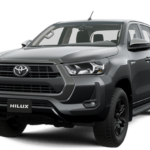 Toyota Hilux Long Range Fuel Tank: Capacity, Range, Cost and Best Options
Likewise, an older Hilux designed for another viscosity may not benefit from switching to 0W-30 simply because it is used in newer trucks.
Toyota Hilux Engine Oil With DPF
Diesel particulate filters make choosing the correct engine oil even more important.
DPF-equipped diesel engines generally require oils formulated to work with modern exhaust after-treatment systems.
These oils control substances such as sulphated ash, phosphorus and sulphur that can negatively affect emissions equipment over time.
For applicable Hilux 1GD-FTV and 2GD-FTV engines, Toyota specifies ACEA C2 and warns that using engine oil outside the specified requirement can harm the catalytic emissions system.
Why DPF-Compatible Oil Matters
Using the correct oil can help protect:
- Diesel particulate filter
- Catalytic converter
- Turbocharger
- Engine bearings
- Timing components
- Oil control system
Using an inappropriate high-ash diesel oil in an engine designed for low-SAPS oil may shorten the service life of the emissions system.
For that reason, we should never select a Hilux engine oil solely because the bottle says "diesel".
Synthetic Oil for Toyota Hilux
Can we use fully synthetic engine oil in a Toyota Hilux?
In modern Hilux diesel engines, a high-quality synthetic oil meeting the specified viscosity and performance standard is generally an excellent choice.
Synthetic oils typically offer strong performance in areas such as:
- Cold starting
- High-temperature stability
- Turbocharger protection
- Deposit control
- Oxidation resistance
- Engine cleanliness
But the specification remains more important than whether the marketing label says synthetic, semi-synthetic or premium.
Is Full Synthetic Oil Worth It?
For modern turbo-diesel Hilux models, we generally prefer a reputable synthetic oil that meets the required specification.
Hilux vehicles are frequently subjected to demanding conditions including:
- Towing
- Off-road driving
- Heavy payloads
- Hot weather
- Long motorway journeys
- Stop-start city driving
Good-quality oil provides an important protective layer under those conditions.
How Often Should Toyota Hilux Engine Oil Be Changed?
The correct Toyota Hilux oil-change interval varies depending on model year, engine, country and operating conditions.
We should always follow the maintenance schedule supplied for our exact vehicle.
However, driving conditions also matter.
Severe Driving Conditions
More frequent oil changes may be appropriate when the Hilux regularly experiences:
- Heavy towing
- Off-road driving
- Dusty roads
- Mining or construction environments
- Repeated short journeys
- Long periods of idling
- Extreme heat
- Frequent stop-start traffic
Engine oil deteriorates as it accumulates heat cycles, combustion contaminants, soot and fuel dilution.
A Hilux used primarily for highway cruising can have a very different oil life from one spending every day towing equipment through dust and mud.
How to Check Toyota Hilux Engine Oil
Checking the oil regularly can help us identify low oil level, leaks or excessive oil consumption before they become expensive problems.
Step 1: Park on Level Ground
The Hilux should be parked on a flat surface.
An incline can produce an inaccurate reading.
Step 2: Allow the Oil to Settle
After switching the engine off, give the oil enough time to return to the sump.
Toyota documentation for applicable Hilux engines recommends waiting more than five minutes when checking the level after warming and switching off the engine.
Step 3: Remove the Dipstick
Pull the dipstick out and wipe it clean.
Step 4: Reinsert It Fully
Insert it completely and remove it again.
Step 5: Check the Level
The oil should be between the minimum and maximum markings.
Avoid automatically filling the engine to above the maximum line.
What Happens If a Toyota Hilux Has Too Much Oil?
Overfilling engine oil can be almost as undesirable as operating with too little.
Excessive oil can potentially result in:
- Increased crankcase pressure
- Oil aeration
- Oil leaks
- Increased emissions-system contamination
- Engine-running problems
Diesel vehicles can also experience apparent increases in engine oil level because of fuel dilution associated with certain operating conditions and DPF regeneration.
If the oil level is noticeably above the maximum mark, we should investigate the cause rather than simply continuing to drive indefinitely.
Signs Your Toyota Hilux Needs an Oil Change
Oil does not always provide obvious warning signs before losing some of its protective qualities.
Nevertheless, possible indications include:
- Oil-change reminder
- Very dark or contaminated oil
- Increased engine noise
- Rougher operation
- Low oil pressure warning
- Oil smell
- Unexplained oil consumption
Diesel engine oil can turn dark relatively quickly because it suspends combustion contaminants, so colour alone is not a reliable measure of remaining oil life.
Following the proper maintenance schedule is much safer.
Toyota Hilux Oil Filter
We generally recommend replacing the oil filter whenever performing a scheduled engine oil change.
The filter traps contaminants circulating through the lubrication system.
Installing fresh oil while leaving an old filter in place reduces some of the benefit of the service.
Why Oil Capacity Changes With the Filter
The oil filter itself contains engine oil.
That is why Toyota lists different refill quantities depending on whether the filter is replaced.
For applicable 1GD-FTV and 2GD-FTV engines, Toyota lists approximately:
- 7.5 L with filter
- 7.0 L without filter
That difference is approximately half a litre.
Can We Use 10W-40 in a Toyota Hilux?
The answer depends entirely on the Hilux engine.
Some older engines and markets may permit heavier viscosities under certain temperature conditions.
But we should not put 10W-40 into a modern 1GD-FTV simply because someone says "diesel engines need thick oil".
Modern engines are engineered around specific oil characteristics.
Factors include:
- Bearing tolerances
- Turbo lubrication
- Oil pump design
- Fuel economy targets
- Emissions equipment
- Cold-start lubrication
Follow the viscosity chart and oil specification for the exact vehicle.
This content may interest you!Toyota HiLux Load Capacity: Payload, GVM and Weight Limits ExplainedCan We Use 15W-40 in a Toyota Hilux?
Again, it depends on the generation.
15W-40 has historically been common in diesel engines and appears in specifications for certain older Hilux configurations.
However, that does not mean it is appropriate for a newer DPF-equipped 1GD-FTV requiring ACEA C2 low-viscosity oil.
We should never apply an older Hilux oil recommendation to a newer engine without checking the manual first.
Toyota Hilux Engine Oil Warning Light
An oil warning light should always be taken seriously.
It can indicate a lubrication-system problem rather than simply telling us that an oil change is due.
Potential causes include:
- Low oil level
- Low oil pressure
- Faulty oil pressure sensor
- Oil pump problem
- Severe oil leak
- Incorrect oil
- Internal engine wear
What Should We Do?
If the red oil-pressure warning light illuminates while driving, continuing to operate the engine could cause major damage.
We should stop safely and investigate the problem.
Adding oil blindly is not always the solution because the engine could already contain the correct amount of oil but have insufficient pressure.
Best Engine Oil for Toyota Hilux
Instead of choosing oil according to brand alone, we recommend checking four things.
1. Correct SAE Viscosity
Examples include:
- 0W-30
- 5W-30
- 10W-30
- 15W-40
The correct choice depends on the engine.
2. Correct Oil Standard
Depending on the Hilux, the manual may reference standards such as:
- ACEA C2
- ACEA B-series specifications
- API diesel specifications
- JASO specifications
3. Correct Engine
Identify whether we have:
- 1GD-FTV
- 2GD-FTV
- 1KD-FTV
- 2KD-FTV
- Petrol engine
4. Correct Model Year and Market
This is often overlooked.
Two Toyota Hilux pickups with similar-looking engines may require different oils because they comply with different emissions regulations.
Toyota Genuine Engine Oil vs Other Brands
Do we have to use Toyota-branded engine oil?
Not necessarily.
Toyota documentation states that Toyota Genuine Motor Oil is used and recommended, while another oil of matching quality may also be used for the applicable specification.
Therefore, the key factor is specification compliance.
Well-known engine-oil manufacturers offer products that may meet Toyota's required standards.
Before purchasing, check the label or technical data sheet and confirm that the product explicitly meets the required oil specification.
Common Toyota Hilux Engine Oil Mistakes
Even experienced owners can make simple mistakes.
Choosing Oil Only by Viscosity
Two 5W-30 oils can have significantly different specifications.
Check the ACEA or API rating too.
Assuming Every Hilux Uses the Same Oil
A 2025 2.8-litre Hilux and an older 3.0-litre Hilux do not necessarily share the same requirements.
Overfilling the Engine
Oil capacity figures are references.
Always confirm the final level using the dipstick.
Ignoring the DPF
DPF-compatible oil is particularly important in modern diesel Hilux models.
Extending Oil Changes Too Far
Oil is cheaper than turbochargers and engines.
If the Hilux operates under severe conditions, maintenance becomes even more important.
How Much Toyota Hilux Engine Oil Should We Buy?
If our Hilux requires around 7.5 litres during an oil and filter service, buying an 8-litre quantity or equivalent combination of containers usually gives enough oil to complete the service.
A little spare oil is also useful for topping up between services.
However, we should never assume the entire purchased quantity must be poured into the engine.
Fill gradually and confirm the level.
Toyota Hilux Engine Oil Quick Reference
For one of the most common modern diesel configurations—the 1GD-FTV/2GD-FTV specification covered by Toyota's Australian manual—the key figures are:
| Specification | Toyota Hilux 1GD/2GD example |
|---|---|
| Preferred viscosity | 0W-30 |
| Alternative shown | 5W-30 |
| Oil standard | ACEA C2 |
| Capacity with filter | Approx. 7.5 L |
| Capacity without filter | Approx. 7.0 L |
| Engine type | Turbo diesel |
| Filter replacement | Recommended during oil service |
Toyota's current Australian Hilux specifications continue to list the 2.8-litre 1GD-FTV turbo diesel among recent models, although lubrication requirements should always be confirmed against the manual for the specific year and variant.
Is Toyota Hilux Engine Oil Different Between Countries?
Yes, it can be.
Hilux models sold in different countries may have different:
- Emissions standards
- DPF systems
- Engine calibrations
- Maintenance schedules
- Oil specifications
- Ambient temperature recommendations
For this reason, a recommendation from an Australian Hilux forum may not necessarily apply to a vehicle sold in South Africa, Thailand, the UK, Colombia or another country.
The owner's manual supplied for our specific vehicle should always have priority.
Final Thoughts on Toyota Hilux Engine Oil
Choosing the correct Toyota Hilux engine oil does not need to be complicated, but we should avoid treating every Hilux as mechanically identical.
For many modern 1GD-FTV and 2GD-FTV diesel Hilux models, Toyota documentation specifies ACEA C2 oil, with 0W-30 as the preferred viscosity on applicable vehicles. The typical drain-and-refill quantity is around 7.5 litres when replacing the oil filter and around 7.0 litres without replacing it.
Older engines such as the 1KD-FTV and 2KD-FTV can have different requirements, including different oil specifications and capacities.
Our safest approach is simple: identify the engine code, model year and emissions specification, check the owner's manual, use a quality oil meeting the required standard, replace the filter at the appropriate interval and verify the final oil level with the dipstick.
Doing those few things can go a long way toward keeping a Hilux reliable for hundreds of thousands of kilometres.
Frequently Asked Questions About Toyota Hilux Engine Oil
What engine oil does a Toyota Hilux 2.8 diesel use?
Many Toyota Hilux models equipped with the 2.8-litre 1GD-FTV diesel use SAE 0W-30 meeting ACEA C2, particularly versions covered by Toyota's Euro V/VI specifications. Other model years or markets may have different requirements, so check the owner's manual before servicing the vehicle.
How many litres of oil does a Toyota Hilux 2.8 take?
Toyota documentation for applicable 1GD-FTV engines lists approximately 7.5 litres with an oil-filter replacement and 7.0 litres without replacing the filter. These are reference capacities; the final level should be checked with the dipstick.
Can I use 5W-30 in a Toyota Hilux?
5W-30 is suitable for certain Toyota Hilux engines and appears as an alternative or preferred viscosity in several Toyota specifications. Whether it is correct for our particular Hilux depends on the engine, model year, emissions system and required ACEA/API standard.
Is 0W-30 good for a Toyota Hilux?
Yes, for Hilux models specifically designed to use it. Toyota lists 0W-30 as the preferred oil viscosity for applicable 1GD-FTV and 2GD-FTV engines, particularly for good fuel economy and cold-start performance.
This content may interest you! Subaru Outback Engine Oil: Complete Guide to Oil Type, Capacity, Changes, and Maintenance
How often should I change Toyota Hilux engine oil?
We should follow the maintenance interval specified in the owner's manual for the exact model. Hilux vehicles regularly used for towing, off-road driving, dusty conditions, short journeys, extended idling or other severe-duty operation may require closer attention to oil condition and maintenance intervals.
Leave a Reply